
Compare
/
Keka vs Zoho People: Which HRMS Wins for Indian Startups in 2026?
Keka vs Zoho People: Which HRMS Wins for Indian Startups in 2026?


Disclosure: This comparison is published by Craze, an all-in-one HR, Payroll and IT platform. We’ve attempted to represent Keka and Zoho People accurately using publicly available information, pricing pages, and user feedback. While we believe Craze addresses gaps we’ve seen in both systems, we encourage readers to demo all three tools and speak with current users before deciding.
Why This Comparison Exists
As teams scale from 20 to 500 employees, payroll complexity, approval friction, and system constraints become part of everyday HR operations. The challenge isn’t missing features; it's whether the HRMS continues to fit as complexity grows.
For Indian startups and mid-sized companies, Keka and Zoho People are two of the most widely adopted HRMS platforms. Both handle payroll, attendance, and leave. Both have strong market adoption and solid reviews. Both claim to scale with growing teams.
The real question isn’t whether they work, it's which trade-offs you’re willing to accept as your organisation grows.
TL;DR
Keka and Zoho People both handle core HR, payroll, and attendance well
Keka is designed around predefined structure and process consistency
Zoho People is designed around flexibility and configurable workflows
Keka works best when HR rules are stable and clearly defined
Zoho People works best when processes evolve frequently
Craze takes a unified approach that avoids most of these trade-offs
Introducing the Two Players: Keka vs Zoho People
Before diving into a detailed comparison, here’s a quick snapshot of both platforms.
Keka at a Glance
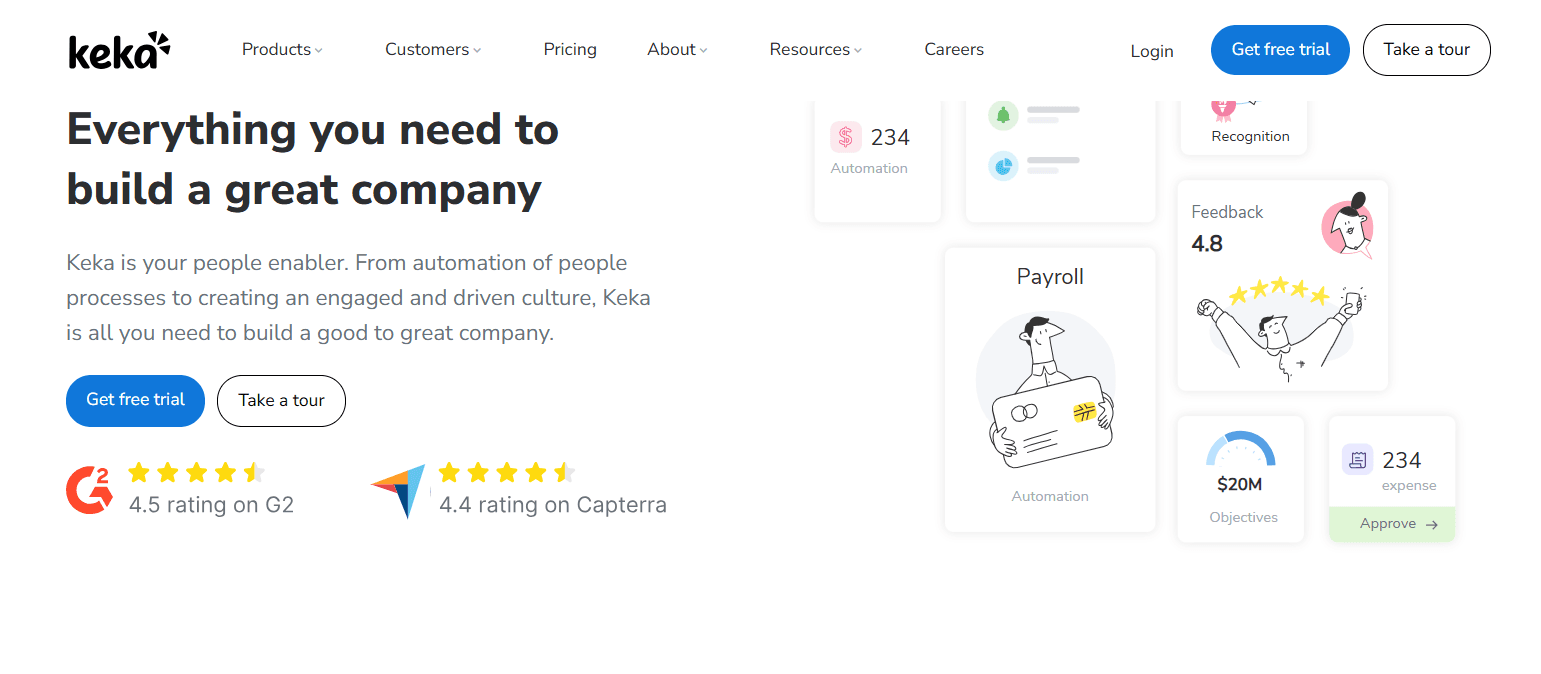
Keka is a structured HRMS built to standardise payroll, attendance, leave, and compliance. It assumes HR rules are defined upfront and applied consistently across teams.
It’s commonly used by mid-to large companies looking for operational discipline and predictable payroll runs.
Zoho People at a Glance
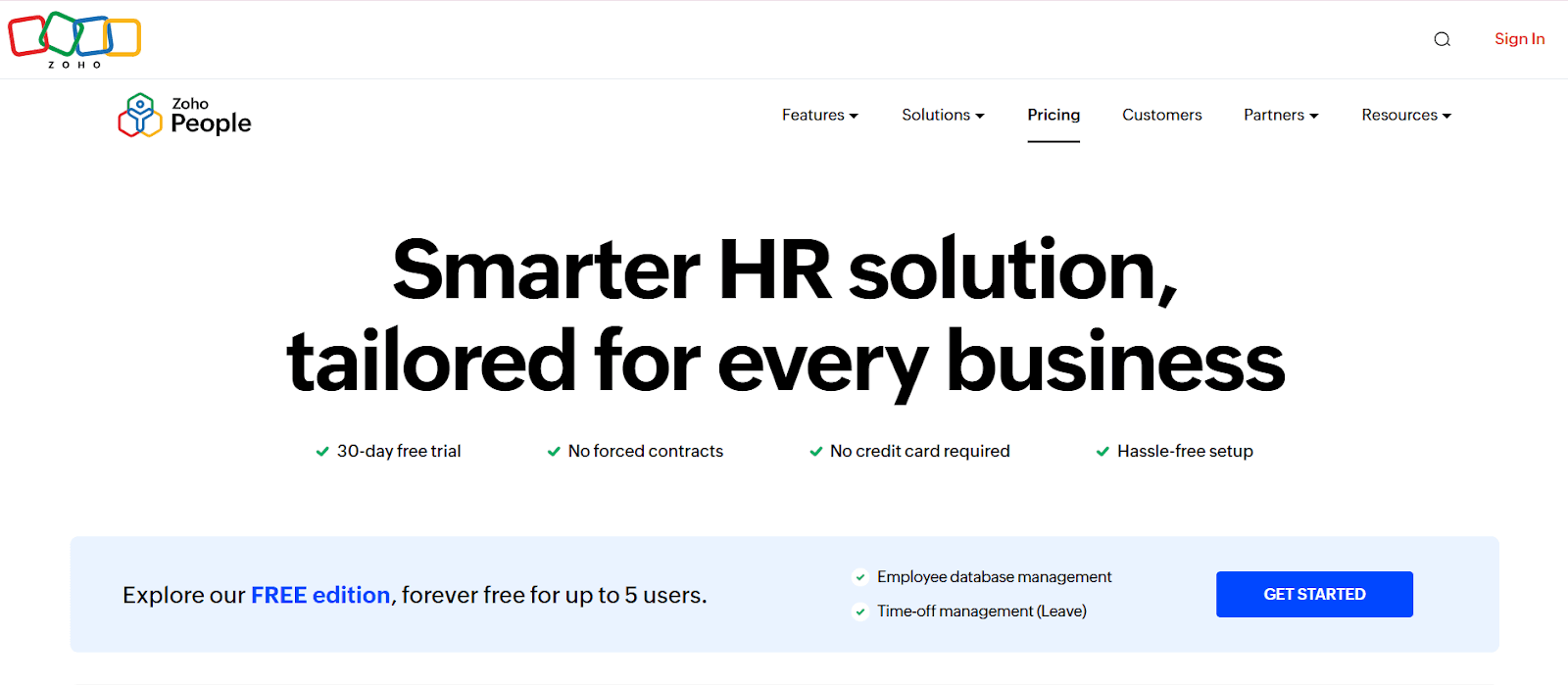
Zoho People is a highly configurable HRMS that allows HR teams to build and modify workflows as organisational needs change. It integrates deeply with the wider Zoho ecosystem.
It’s often adopted by startups and teams that want flexibility and gradual feature adoption.
Keka vs Zoho People: What Actually Matters for Indian Startups & SMEs
We’re centring this comparison around four practical factors that affect HR teams daily:
Core HR features
Payroll & statutory compliance
Attendance & leave management
Pricing and affordability at scale
The Real Question: How Do You Expect HR to Evolve?
Before comparing features or pricing, one question matters:
Do you expect your HR processes to remain largely stable or to change continuously?
That assumption explains most of the long-term differences between Keka and Zoho People.
Keka: Built to Enforce Order at Scale
Keka is built for organisations that prioritise structure and operational discipline. Payroll, attendance, and approvals are expected to be defined upfront and applied uniformly. This leads to predictable payroll runs, clear compliance workflows, fast adoption, and fewer day-to-day exceptions.
Keka works best when HR teams want the system to enforce rules, not frequently adapt them. The trade-off is flexibility; frequent changes or exceptions can feel restrictive in a tightly structured setup.
In practice, Keka performs best when HR teams want the system to enforce rules rather than adapt to them. The platform brings stability as headcount grows, especially in environments where policies are standardised across teams.
Zoho People: Built to Absorb Change
Zoho People assumes HR workflows will change over time. Approval chains, attendance rules, and workflows can be customised across teams, and integrations within the Zoho ecosystem support evolving requirements.
This makes Zoho People well-suited for organisations that value adaptability. The trade-off is overhead configuration, testing, and ongoing system management become part of HR operations as complexity grows..
Keka vs Zoho People: Key Metrics at a Glance
Before diving into detailed features and pricing, here’s a quick snapshot of how Keka and Zoho People compare on reviews and overall market perception.
Platform | G2 Reviews & Ratings |
Keka | G2 score of ~4.5/5 based on 1,300+ reviews, with strong feedback on overall satisfaction, ease of use, and reliability in payroll and attendance workflows. |
Zoho People | Rated ~4.4/5 on G2, with users highlighting flexibility, configurability, and suitability for evolving HR workflows. |
Core HR Features: Structure vs Flexibility
Both Keka and Zoho People offer essential HR capabilities:
Employee self-service portals
Centralised employee records
Document management
Automated workflows
Mobile access
Where they differ is how much control you have.
Both platforms provide employee self-service, centralised records, document management, workflows, and mobile access.
The difference lies in control.
Keka enforces predefined workflows. This simplifies onboarding and daily usage but limits how much roles, approvals, and exceptions can be customised without higher plans.
Zoho People allows deeper configuration, including department-level rules and custom approval paths. This flexibility comes with setup effort and ongoing maintenance.
Winner: Zoho People (for flexibility)
Feature | Keka | Zoho People |
Employee self-service portal | Yes | Yes |
Centralised employee database | Yes | Yes |
Document management | Yes | Yes |
Workflow automation | Yes (limited flexibility) | Yes (highly configurable) |
Accessibility (devices & operating systems) | Web & mobile apps | Web, mobile apps, broader OS compatibility |
Attendance & Leave Management: Comparable on Paper, Different in Practice
Both platforms support:
Custom leave policies
Location-specific compliance
Shift and overtime management
Mobile attendance and geo-fencing
Integrations with tools like Slack
Keka’s attendance and leave setup is simpler and more tightly coupled with payroll. This reduces ambiguity but makes frequent changes harder.
Zoho People allows more variation across teams, but misconfigurations can lead to sync issues between attendance, leave, and payroll.
Winner: Draw
Feature | Keka | Zoho People |
Custom leave policies | Yes | Yes |
Geo-fencing and self-attendance | Yes | Yes |
Compliance with location-specific leave regulations | Yes | Yes |
Integration with workspace tools (e.g. Slack) | Yes | Yes |
Shift & overtime management | Yes | Yes |
Mobile-based attendance | Yes | Yes |
Payroll & Compliance: Opinionated vs Configurable
Both Keka and Zoho People support Indian payroll requirements, including PF, ESI, TDS, and statutory compliance, but they approach execution differently.
Keka takes an opinionated approach. Payroll runs are predictable, tightly linked to attendance, and designed to minimise manual intervention.
Zoho People offers payroll through configuration and integrations, giving HR teams more control but also more responsibility to ensure accuracy.
The difference isn’t capability, it's where responsibility sits: with the system or with the HR team.
With Keka, the system decides
With Zoho People, the HR team decides
Payroll Features
Feature | Keka | Zoho People |
Instant payroll processing | Yes | Yes (often via configuration/integrations) |
Compliance with Indian legislation | Yes | Yes |
Customisable salary components | Yes | Yes |
Reimbursements and benefit management | Yes | Yes |
Payroll tightly linked to attendance & leave | Yes (built-in, opinionated) | Depends on configuration |
Reliability with minimal manual intervention | High | Medium (requires oversight) |
Pricing & Affordability: Where Most Startups Feel the Pain
Before looking at feature differences, it’s useful to understand how total cost changes as headcount grows. The tables below show estimated monthly costs for Keka and Zoho People at different team sizes, based on publicly available pricing ranges, common plan selections, and payroll add-ons typically required by Indian teams.
Note: These are directional estimates, not official quotes. Actual pricing varies by plan, negotiation, and add-ons.
Estimated Monthly Cost (HR + Attendance + Payroll)
Team Size | Keka (₹ / month) | Zoho People + Payroll (₹ / month) |
50 employees | ₹9,999 – ₹15,999 (minimum commitment applies even below 100 users) | ₹22,500 – ₹32,500 |
100 employees | ₹9,999 – ₹15,999 | ₹45,000 – ₹65,000 |
200 employees | ₹29,800 – ₹45,000 | ₹90,000 – ₹1,30,000 |
500 employees | ₹75,000 – ₹1,05,000 | ₹2,25,000 – ₹3,25,000 |
How These Numbers Are Calculated
Keka assumptions
Base plan minimum of ₹9,999–₹15,999/month (often covers up to ~100 employees)
Additional users priced at ₹99–₹150 per employee/month
Core workflows, like onboarding, custom roles, GPS attendance, SSO, and advanced workflows, require higher plans
Zoho People assumptions
HR core priced at ₹60–₹180 per employee/month
Payroll not included in Zoho People; requires Zoho People Plus / Payroll add-on
Payroll add-on costs approximately ₹450 per employee/month
Advanced workflows and automation typically require plan upgrades
What This Means in Practice
50–80 employees: Keka feels expensive due to minimum commitments; Zoho People feels affordable until payroll is added
100–200 employees: Keka pricing stabilises but feature gating becomes visible; Zoho People costs rise steadily
500+ employees: Both platforms become materially expensive, and cost predictability becomes harder
Structural Pricing Comparison
Item | Keka | Zoho People |
Free plan available? | Yes | Yes |
Entry paid plan | Foundation | Essential |
Base pricing model | Minimum commitment + slabs | Per-user pricing |
Cost behaviour at scale | Step-wise increases | Linear increase |
Feature gating | Yes | Yes |
Payroll included? | Yes | No (paid add-on) |
Upgrade pressure as needs grow | Medium - High | High |
Winner: Neither (both become costly as complexity grows)
Adoption & Daily Usage
Keka tends to feel simpler in daily use. Employees and managers typically require less guidance, and HR teams can get the platform running with minimal setup.
Zoho People offers depth, but that depth can take time to unlock. Teams that invest in configuration gain flexibility, while teams that don’t may underutilise the platform.
For lean HR teams, this distinction often becomes noticeable within the first few months.
Common Pain Points Reported by Users
Based on user feedback across review platforms:
Keka Cons
Limited flexibility when processes change
Feature access tied closely to plan upgrades
Support is ticket-based and can feel slow
Zoho People Cons
Sync issues across payroll, leave, and attendance
Ongoing configuration and testing overhead
Complexity increases as workflows evolve
How These Differences Play Out Over Time
As organisations scale, HR complexity rarely increases in neat phases. New teams form. Policies diverge. Approval paths shift. Compliance remains strict.
At this stage, teams often realise the challenge isn’t choosing between structure or flexibility, it's managing the cost of switching between them.
Every new requirement becomes a decision:
Reconfigure workflows
Upgrade plans
Add integrations
Create workarounds
This is where the underlying philosophy of an HRMS matters most.
Keka vs Zoho People: Final Verdict
Both Keka and Zoho People are capable HRMS platforms with solid adoption among Indian organisations. The right choice depends less on features and more on how much change your HR operations are expected to handle over time.
Select Zoho People if:
You are a startup or early-stage team looking for lower entry cost and gradual adoption
You need a basic HRIS and prefer to handle payroll as a separate system or add-on.
You want flexibility and configurability, and are comfortable managing setup and integrations
You already use or plan to use the Zoho ecosystem
Select Keka if:
You are a large-sized organisation with clearly defined HR policies
Payroll accuracy and predictable execution are top priorities
You prefer a structured, payroll-led system that reduces day-to-day decisions
Budget is less of a constraint, and you’re willing to pay extra to access critical HR and payroll features.
The Common Challenges (from a Startup / SME Perspective)
Despite their strengths, both platforms share some critical limitations as organisations scale:
Feature gating and upgrade pressure as requirements grow
Increasing costs with headcount, impacting pricing predictability
Support that is largely ticket-based and slower during critical payroll cycles
Integration and coordination overhead as HR processes overlap
Craze: Avoid the Structure vs Flexibility Trade-Off. Get the best of both worlds.
Keka and Zoho People solve HRMS from different ends: one enforces structured, payroll-led processes, the other relies on configurable workflows. As teams grow, both approaches can introduce friction either through rigidity (when processes change) or overhead (when configuration becomes an ongoing job).
Craze is built to avoid that trade-off. It’s a unified, real-time HRMS where core HR, attendance, leave, and payroll inputs stay in sync by default, so you don’t have to keep choosing between “order” and “flexibility” every time your organisation evolves.
Why Craze works well for fast-growing Indian teams
Real-time sync across attendance → leave → payroll inputs: fewer exceptions, fewer corrections, cleaner payroll cycles.
Flexible policies without heavy configuration overhead: set accruals, carry-forward, holidays/weekends, comp-offs, encashment, and approval chains without turning HR into a system admin function.
No feature gating pressure: core workflows are available upfront, so scaling doesn’t force plan jumps just to unlock basics.
Predictable pricing as headcount grows: no setup/implementation fee, no upgrade shocks when requirements expand.
Craze modules (relevant to this comparison)
Core HR: central employee records, document workflows, employee self-service.
Attendance + Leave: configurable policies, approvals, comp-off, holiday/weekend logic, balance tracking.
Payroll inputs: leave encashment and LoP calculations aligned to attendance/leave.
(Other modules like Recruitment, Performance, IT Asset Management, and Access Management are available, but the biggest difference is that they run on the same real-time database so you don’t stitch systems together later.)
Craze pricing: simple and scalable
Craze follows per-user pricing, starting with minimal costing /user/month with no feature restrictions. You pay only for the modules you use, and because everything runs on one system, turning on a module doesn’t require re-imports or patchwork integrations it works with the same employee and policy data already in place.
Bottom line: If you’re comparing Keka and Zoho People and already thinking about future upgrades, workarounds, or system maintenance, Craze is often the cleaner path because it reduces the structural decisions you need to make as HR complexity grows.

Sources:
https://www.keka.com/pricing
https://www.zoho.com/people/zohopeople-pricing.html
https://www.g2.com/products/keka/reviews
https://www.capterra.in/software/149253/keka
https://www.gartner.com/reviews/market/cloud-hcm-suites-for-regional-and-or-sub-1000-employee-enterprises/vendor/keka/product/keka-hr
https://www.gartner.com/reviews/market/workforce-management-applications/vendor/zoho/product/zoho-people
https://www.capterra.in/software/110931/zoho-people
https://www.g2.com/products/zoho-people/reviews
