


First impressions matter, especially in the workplace. Your onboarding process sets the tone for a new hire’s entire journey with your organisation, yet it’s often rushed, inconsistent, or treated as a paperwork exercise. As a result, new hires slip through the cracks, productivity drops, and early resignations quietly erode your hiring investment.
In contrast, employees who experience effective onboarding are more engaged, more productive, and more likely to stay for the long term. Successful onboarding is a strategic process that transforms new hires into confident, productive team members who understand not just what they do, but why it matters.
This guide provides a clear blueprint: why the onboarding process matters for a new hire, 12 proven steps to enhance employee engagement in onboarding, common mistakes to avoid, and best practices you can apply immediately.
A well-planned onboarding ensures new hires feel prepared, supported, and integrated from day one.
A structured employee onboarding improves retention, speeds up time-to-productivity, boosts discretionary effort, and strengthens your employer brand during the crucial first 90 days.
Improve engagement by using a clear, phase-wise roadmap that includes preboarding, mentor support, centralised resources, interactive learning, and early ownership opportunities.
Treating onboarding as just paperwork, overloading information, ignoring social integration, and lacking manager accountability all undermine engagement and increase early turnover.
Success requires tracking early indicators, using surveys throughout the journey, monitoring performance milestones, and extending support through continuous learning and growth opportunities.
Employee engagement in the onboarding process refers to how emotionally connected and motivated new hires feel as they join the company. It's about how well new employees are welcomed, informed, and integrated into their role, team, and company culture during their early days.
A well-designed onboarding process typically includes:
Preboarding: Engage new hires before their first day with essential paperwork, key information, and welcome resources.
Orientation: Introduce your organisation’s mission, values, and policies to set expectations clearly.
Training: Deliver role-specific skills and knowledge to enable employees to contribute effectively.
Mentorship: Assign a buddy or mentor to guide employees through your culture and workflows.
Feedback & Evaluation: Check in regularly to address concerns and track integration progress.
By being thorough and supportive from the start, you ensure new hires feel confident and connected, leading directly to higher engagement and a more productive team.
Now, let’s explore why getting the employee onboarding process right is crucial.
Your investment in a new hire is at risk the moment they walk in the door. If they feel confused or unsupported in the first 90 days, they often leave, wasting time and money. A structured process is your best defence, turning that risk into a guaranteed commitment.
Here are a few reasons why a structured employee onboarding process matters for your organisation:
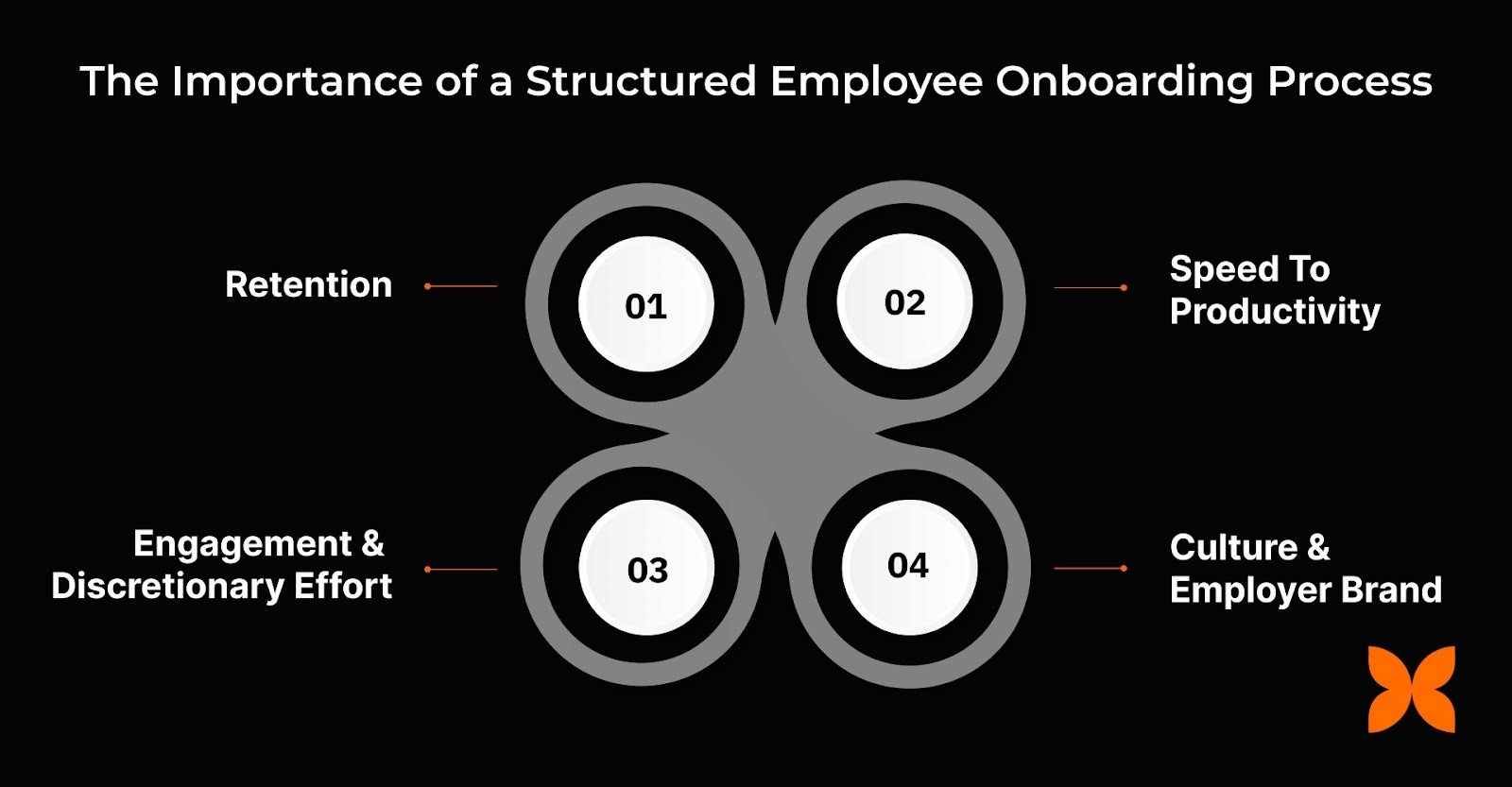
Retention: Organisations with structured onboarding retain significantly more new hires. A strong onboarding process helps employees feel supported and valued, increasing the likelihood that they will stay with your company.
Speed to Productivity: Standardised onboarding helps new hires reach key milestones faster. Companies with robust programmes report quicker time-to-productivity and earlier attainment of first performance goals.
Engagement & Discretionary Effort: Employees who experience a positive onboarding process are more likely to go the extra mile, stay longer, and advocate for your company.
Culture & Employer Brand: The first weeks shape perception. A structured onboarding experience signals competence and care, reinforcing your company culture and strengthening your employer brand.
Investing in a structured onboarding process is how you improve employee engagement and turn a new hire into a high-performing, long-term asset.
Also Read: A Complete Guide to Successful Remote Onboarding of Employees
Next, we will break down the practical strategies that can elevate your onboarding process and create an engaging experience for new hires.
An employee’s first impression can shape their entire journey with your organisation. A well-designed onboarding process helps new hires feel equipped, supported, and connected from the very start, improving the overall employee engagement.
Here’s a guide to 12 proven steps that can transform your employee onboarding process and create an engaging experience from Day 1 through to the first 90 days.
Step 1. Set the Stage for Success by Starting Onboarding Before Day 1
The engagement process shouldn’t begin on the first day of work; it must start the moment the offer is accepted. Preboarding builds anticipation and excitement for new hires, making them feel valued before they even step through the door. By providing a Welcome Kit with branded materials and essential tools, you send a powerful signal that the organisation is prepared and values their contribution.
This early engagement immediately reduces first-day anxiety. Sharing the Day 1 agenda and team member bios eliminates the fear of the unknown. Leaders should also offer early access to FAQs, videos, and tutorials to help new hires feel informed and confident. This approach establishes an emotional connection, reinforcing the organisation's commitment and setting a positive, trusting tone for their entire journey.
Step 2. Make New Hires Feel Special from the Start
The first day of work should be an exciting and welcoming experience, not a stressful one. When new employees step into the office, they should already feel like part of the team.
A well-prepared workspace with the right tools, a welcome kit, and a few personalised touches like branded swag shows your investment in them. Instead of letting new hires feel like they’re just another paperwork task, make them feel valued by setting them up for success on day one.
New employees feel recognised and excited, increasing their engagement right from the start. A personalised welcome boosts morale and establishes an emotional connection, making the first day memorable.
Step 3. Foster Connection to Company Purpose and Values Early On
Your company’s mission and values should be clear from the moment new hires walk in. By sharing your company’s story, its culture, and the ‘why’ behind what you do, new employees can immediately connect their personal purpose to the broader organisational vision. This connection creates a sense of belonging, transforming employees from mere workers to contributors in a shared journey.
New hires are more engaged when they understand how their work fits into the company’s broader purpose. They feel aligned with the organisation’s mission, leading to stronger commitment and long-term retention.
Step 4. Centralise Onboarding Resources to Enhance Clarity and Accessibility
Nothing is more disengaging than making a new hire search five different places for a single document. To enhance clarity and show competence, create a single, centralised hub for everything they need. This hub removes confusion, helping employees feel immediately organised and empowered. When they know exactly where to turn for answers, they feel supported and valued, reinforcing their decision to join your company.
The hub should include more than just HR policies; ensure it features inspiring content like videos explaining the company's mission, values, and Culture & DEI initiatives. Empowering them with clear, centralised resources drastically reduces stress and guarantees a smooth, well-organised onboarding experience right from the start.
Step 5. Ensure Compliance Early On with Policy Training
One of the most stressful parts of onboarding is understanding the legal and operational side of the job. Addressing this early by providing clear compliance training and policy guidelines helps new hires feel more secure in their role. They aren’t left wondering what’s expected of them. Instead, they are armoured with knowledge that builds trust and security.
Early training helps new hires navigate policies with confidence, reducing anxiety about doing things “the right way.” Clear, concise policy training ensures employees understand their rights and responsibilities from day one, fostering trust.
Step 6. Personalise Role-Specific Checklists to Boost Clarity and Focus
The first few weeks on the job should be dedicated to truly understanding the role and how to excel in it. Giving new hires customised checklists of what they need to learn, who they need to meet, and what projects they will tackle early on creates a roadmap for success. This clarity reduces the overwhelm of an unfamiliar job and empowers employees to own their role confidently.
Employees feel clear about their goals and responsibilities, which builds confidence and reduces confusion. Early clarity fosters a sense of accomplishment and purpose, accelerating their ability to contribute effectively.
Step 7. Invest in Early Manager Relationships for Alignment and Trust
Relationships matter, and the connection with a manager is the most critical one a new employee makes. By ensuring new hires have regular one-on-one meetings with their manager, you create an essential support system that strengthens both engagement and performance. These check-ins should focus on transparent communication, immediate goal alignment on metrics and priorities, and clarifying communication preferences and team norms early on.
This consistent engagement builds immediate trust and emotional connection. Managers should provide continuous feedback & coaching during these sessions, mandating scheduled weekly check-ins throughout the first 90 days. When managers invest this time, new hires feel connected, supported, and empowered, directly boosting morale and long-term retention.
Step 8. Make Onboarding Interactive to Boost Engagement and Retention
Onboarding should never feel like a series of long, monotonous presentations. Instead, make the learning process interactive, memorable, and enjoyable by gamifying the experience and encouraging participation. This approach keeps employees excited and motivated from the start, proving that your culture values dynamic involvement.
The best methods include using gamified learning (like quizzes about company history), assigning short, impactful mini-projects to build confidence, and facilitating cross-functional interactions (such as virtual coffee chats). When onboarding is an experience, employees retain information better, integrate faster, and are far more likely to remain highly engaged for the long term.
Step 9. Encourage Personal Connections to Build a Sense of Belonging
Allowing new hires to share personal details and connect with colleagues on a deeper level is fundamental to fostering psychological safety and strengthening team cohesion. When employees feel they can be their authentic selves, they feel like valued members of the team.
Leaders should encourage this through simple methods like creating a welcome slide with hobbies and fun facts, or facilitating thoughtful team introductions on internal forums. Utilising icebreakers in team meetings also builds genuine connections quickly. This simple investment ensures employees feel more comfortable, supported, and connected, dramatically reducing isolation and boosting long-term engagement and retention.
Step 10. Provide Early Learning and Ownership Opportunities to Boost Confidence
Assigning new hires meaningful tasks early on gives them a sense of ownership and accomplishment. Whether it’s a manageable project or contributing to a larger team effort, allowing employees to take responsibility early in their onboarding process boosts confidence and fosters a sense of belonging.
Early ownership opportunities help employees feel valued and capable, increasing their sense of engagement and contribution. Taking responsibility early encourages proactive behaviour and deeper integration into the company.
Step 11. Use Familiar Tools to Track Progress and Increase Visibility
Using familiar tools for onboarding activities not only ensures efficiency but also helps new employees feel more connected to the rest of the team. Platforms like Asana for task management or Notion for knowledge sharing offer a seamless onboarding experience, enabling new hires to get up to speed faster and more effectively.
The familiarity of tools and systems accelerates learning, reduces friction, and makes new hires feel part of the workflow. Greater visibility and progress tracking through familiar platforms increase the speed of onboarding.
Step 12. Use Feedback and Exit Insights for Continuous Improvement
Onboarding is not a one-time event; it should be a continuous, iterative process. Collecting feedback through regular check-ins and exit interviews helps identify what worked, what didn’t, and where improvements can be made for future hires. Listening to employee feedback and making adjustments ensures your onboarding experience evolves to meet the needs of new hires.
Continuous feedback improves the onboarding process, enhancing engagement and satisfaction with every new hire. Refining onboarding based on insights boosts retention and builds a culture of continuous improvement.
Also Read: A Simple Guide to Understanding Employee Onboarding and Offboarding
Even well-planned onboarding can fail if common mistakes are overlooked, resulting in reduced engagement and lower retention rates. Let’s take a closer look.
Common onboarding mistakes aren't just minor inconveniences; they actively frustrate new hires and drain organisational resources. Recognising these frequent missteps is the first crucial step toward creating a truly effective and supportive onboarding experience.
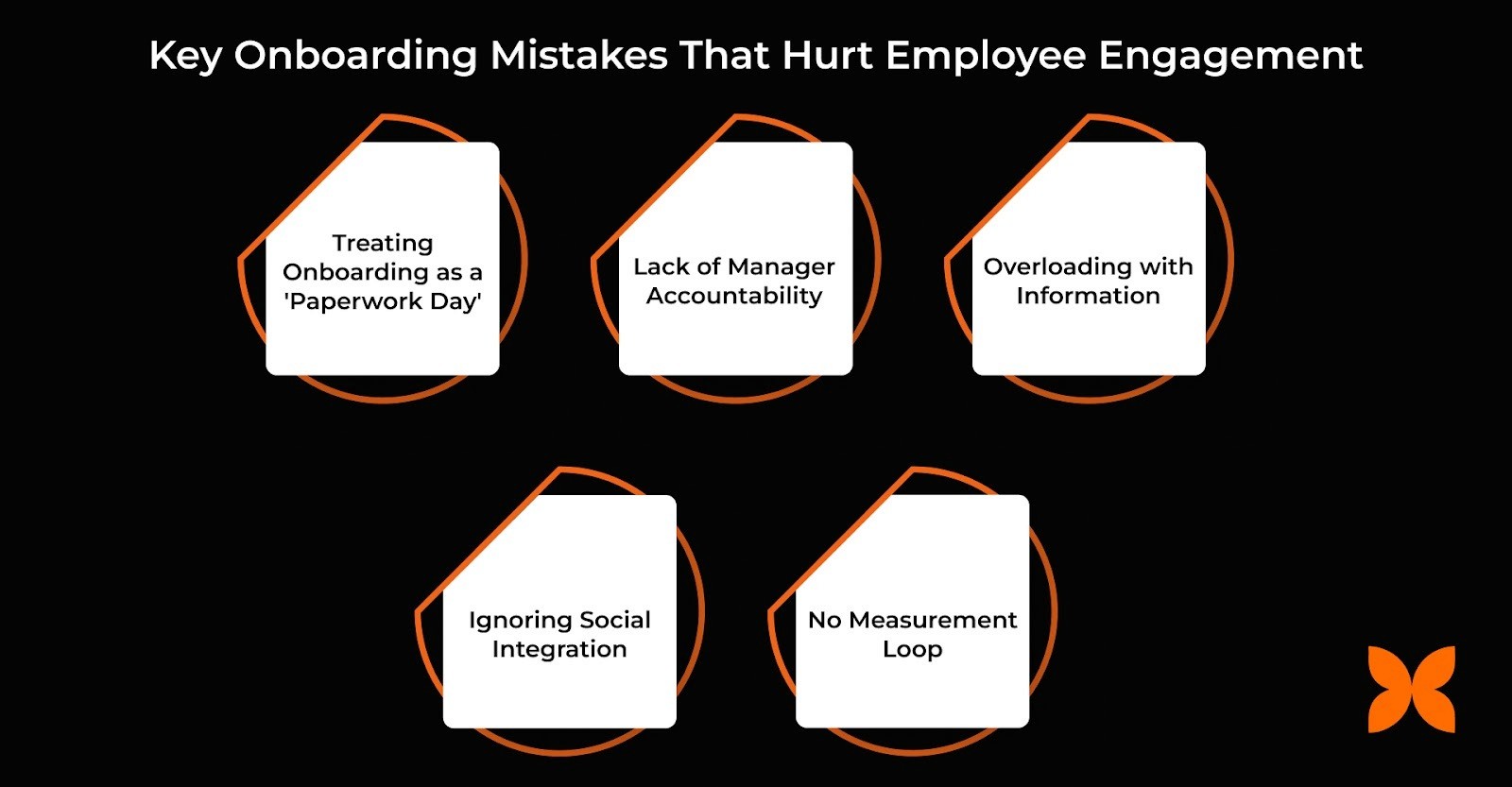
Treating Onboarding as a 'Paperwork Day': Focusing solely on forms, compliance, and administrative tasks on the first day misses a critical opportunity to engage new hires. Use Day 1 to build a connection. Introduce the company mission, team culture, and role expectations, and give new hires a sense of purpose.
Lack of Manager Accountability: When managers stay hands-off, new hires feel unsupported and disconnected from the team. Structure manager involvement with scheduled check-ins, early goal-setting, and a 30–60–90-day roadmap. Manager visibility builds confidence and clarity.
Overloading with Information: Dense training sessions and lengthy documents cause cognitive overload, reducing learning retention and increasing anxiety. Adopt a phased learning model: break training into bite-sized modules, spread it across weeks, and reinforce with hands-on practice.
Ignoring Social Integration: Focusing solely on technical or compliance training neglects the human side of onboarding. Enable early social connection through buddy systems, meet-and-greets, coffee chats, and informal team interactions.
No Measurement Loop: If onboarding progress is not tracked, it’s impossible to identify gaps or improve the process. Build simple measurement loops like engagement surveys and eNPS for new hires. These checkpoints help refine your onboarding continuously.
Correcting these common failures ensures your new hires feel welcomed, informed, and set up for success. With this understanding of how-to and what-not-to-do, let's look at the metrics that prove your process is actually working.
Designing a strong onboarding programme is only half the job. The real impact comes from measuring how engaged new hires actually feel during the process. By tracking the right data points and capturing timely feedback, organisations can identify gaps early, strengthen the onboarding experience, and improve long-term retention.
Here’s how to evaluate employee engagement during onboarding effectively:
The Immediate Foundation (Weeks 1–2)
The first two weeks are crucial for establishing comfort and clarity. Focus on simple usage metrics to confirm the new hire is accessing resources and feeling supported.
Participation Rates: Track attendance at orientation, completion of Day 1/Week 1 tasks, and involvement in team meetings. Low rates signal confusion or disengagement.
Tool & Resource Adoption: Monitor logins to the LMS or knowledge platforms and completion of mandatory training modules. This confirms readiness and motivation.
Quick Pulse Check (Day 3): Use a brief survey focusing on the initial experience, such as clarity of instructions and setup, before major training begins.
Communication Responsiveness: Note the speed and quality of interaction in team forums or during task follow-ups, reflecting early comfort and confidence.
The Growth & Clarity Phase (Weeks 3–6/30 Days)
Once the basics are covered, the focus shifts to ensuring the employee understands their role and has managerial support.
Role Clarity Score: Collect feedback using quick pulse questions like: "Do you understand what is expected in your role?" and "Do you know whom to reach out to for support?"
Manager Check-in Quality: Use short, anonymous surveys to track the frequency and quality of manager check-ins. Manager influence is the strongest predictor of retention.
Skills Readiness & Training: Track module completion, time spent on role-specific training, and assessment scores. This evaluates if the process is equipping the new hire effectively.
Day 30 Engagement Survey: Conduct a deeper survey assessing the employee's sense of belonging, workload, and long-term confidence in the role.
The Impact & Performance Phase (Days 60–90+)
This phase assesses how effectively the onboarding process translates into tangible performance, social ties, and reduced risk.
Time-to-Productivity (TTP): Measure the exact time it takes for the employee to hit their first major performance milestone or reach expected output levels. Shorter TTP signals successful onboarding.
Social & Cultural Integration: Evaluate the success of the buddy/mentor programme by tracking the frequency and quality of their interactions. Also, gather peer feedback on collaboration and team fit.
Early Performance Milestones: Track the completion of 60 and 90-day goals and the quality of assigned work. This shows how engaged contribution manifests in the job.
Key Retention Metrics: Continuously track the First 90-day Retention Rate and identify early Retention Risk Indicators (e.g., missed deadlines, signs of withdrawal) to intervene before costly attrition occurs.
Continuous Feedback & Analysis (The Iteration Loop)
To ensure ongoing improvement, formalise data collection and analysis across the entire journey.
Structured Feedback Timeline: Schedule mandatory surveys at Day 3, Week 2, Day 30, Day 60, and Day 90 to capture specific insights at each touchpoint.
Key Metrics to Track: Centralise the Onboarding Satisfaction Score, eNPS (Employee Net Promoter Score) for new hires, Training Completion Rates, and TTP.
Actionable Insights: Use the collected data to prioritise improvements, such as enhancing specific training modules, fixing workflow bottlenecks, or guiding managers on better coaching practices. Data-driven decisions ensure onboarding becomes stronger with every batch.
Timeline | Feedback Type | Sample Focus |
Day 3 | Quick check-in survey | First-day experience, clarity of instructions |
Week 2 | Role clarity pulse | Support, training, and manager interactions |
Day 30 | Engagement survey | Sense of belonging, workload, confidence |
Day 60 | Training feedback | Skill readiness, resource gaps |
Day 90 | Full onboarding review | End-to-end experience, long-term readiness |
We've covered how to start strong and how to measure success. But engagement often plateaus after the first 90 days. Here is the strategy for maintaining that momentum.
Also Read: Employee Engagement Calendar: Key Dates and Activities for Year-Round Engagement
Onboarding doesn't end at the three-month mark. To maintain your employees' momentum and prevent the engagement dip, you must transition them into a system of continuous learning and strategic support. This post-onboarding development is what transforms initial engagement into sustained performance and long-term loyalty.
Why Continuous Learning Matters?
The following are a few key reasons why continuous learning plays a crucial role in long-term employee growth and engagement:
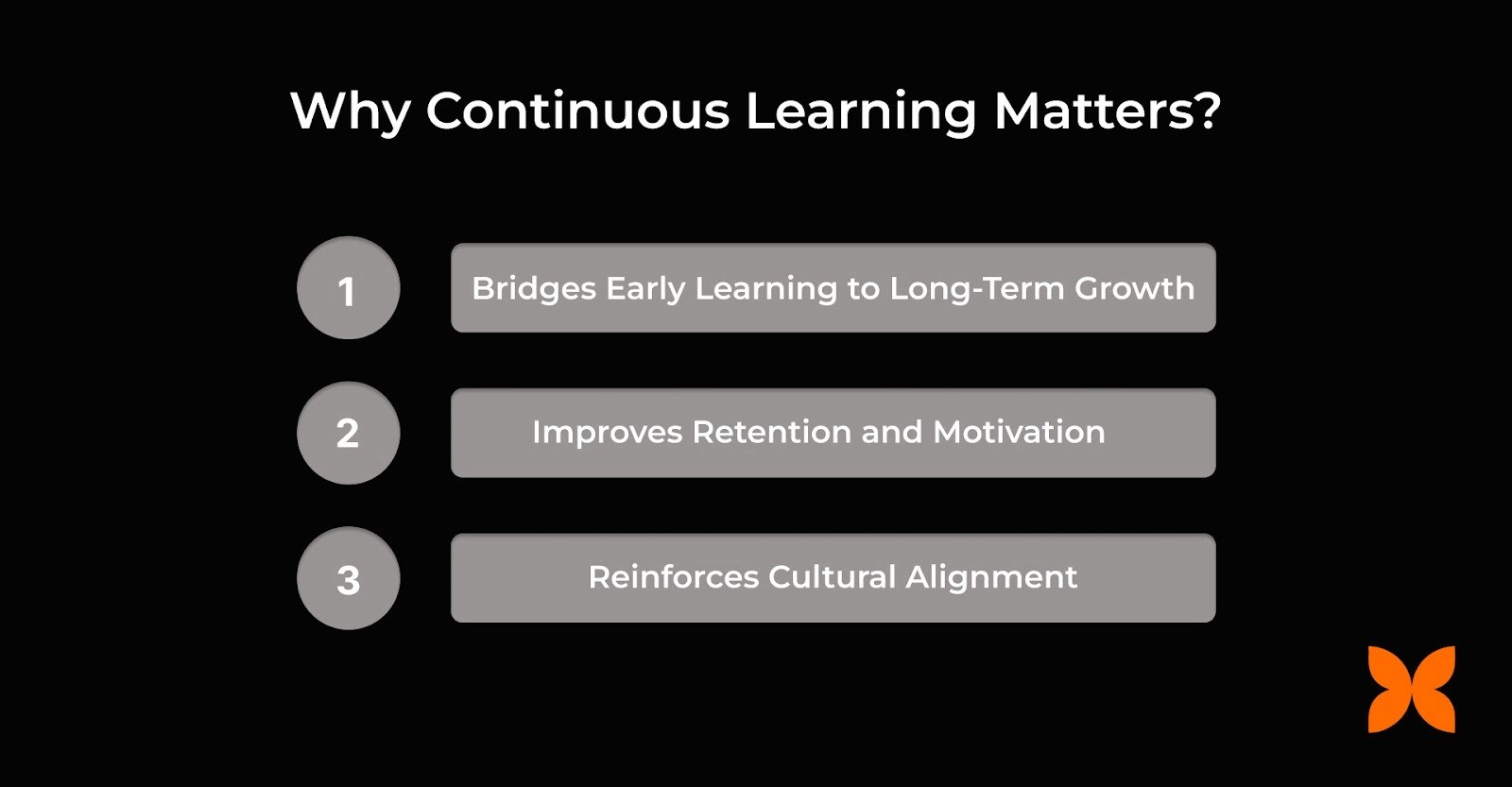
Bridges Early Learning to Long-Term Growth: Employees who continue learning after onboarding adapt faster to new tools, technologies, and responsibilities.
Improves Retention and Motivation: Continuous skill development demonstrates organisational commitment to career progression, reducing turnover.
Reinforces Cultural Alignment: Ongoing development programmes reinforce company values, collaboration, and leadership expectations beyond the initial onboarding phase.
Practical Ways to Implement Continuous Learning
You can build a culture of ongoing growth through the following focused initiatives:
Personalised Learning Paths: Create structured growth plans that build on onboarding insights and target specific skills.
Manager-Led Development Check-ins: Expand onboarding check-ins into quarterly coaching sessions that focus on learning goals and achievements.
Peer Learning and Communities: Encourage employees to participate in internal knowledge-sharing circles and mentorship programmes.
Microlearning Platforms: Use tools like Coursera for Teams, LinkedIn Learning, or internal LMS modules for quick, role-specific skill refreshers.
Learning Analytics: Track completion rates, engagement levels, and performance improvement to measure the ROI of continuous learning efforts.
By integrating continuous learning into the employee lifecycle, you ensure engagement doesn't plateau; you fuel long-term growth, innovation, and loyalty.
Onboarding is the most important welcome gift you can give a new employee. When you commit to a structured onboarding process, from pre-day paperwork to regular check-ins, you ensure that your new hire feels engaged, supported, and genuinely connected to your team. This investment in employee engagement pays off significantly, resulting in happier employees who stick around for the long haul.
To skip the hassle of spreadsheets and manual reminders, platforms like Craze offer comprehensive solutions for managing every aspect of onboarding, from preboarding to continuous engagement. Craze centralises resources, tracks progress, and enables collaboration between managers and new hires, making onboarding more efficient, structured, and impactful.
Ready to transform your onboarding experience? Book a demo with Craze today to explore how it can help your organisation engage employees effectively, reduce turnover, and accelerate productivity from day one.
1. How long should an effective onboarding process last?
While Day 1 introductions are essential, onboarding should extend for 60–90 days or more. This allows time for skill development, cultural integration, and regular check-ins, ensuring employees feel supported and productive.
2. Can remote employees be effectively onboarded?
Yes. Remote onboarding requires a structured virtual preboarding process, digital resources, scheduled video check-ins, and virtual social interactions. Proper planning ensures remote hires feel engaged and connected despite physical distance.
3. How can technology enhance onboarding engagement?
Onboarding platforms centralise training, track progress, automate workflows, and provide resources. Technology increases clarity, consistency, and interactivity, making the process more efficient and engaging for new hires.
4. Should onboarding differ by role or department?
Absolutely. Each role has unique responsibilities, tools, and workflows. Personalising onboarding ensures employees receive relevant guidance, reducing confusion and accelerating performance.
5. How can onboarding impact long-term employee retention?
Structured onboarding builds clarity, confidence, and social connection. Employees who feel supported and integrated early are more likely to stay longer, contribute meaningfully, and advocate for the company.
