


Did you know that in 2024, employee engagement declined to 21% worldwide? This shows how widespread disengagement has become.
When engagement is low, the effects are evident. Employees may show up, but their commitment wanes, leading to decreased productivity and a lack of enthusiasm. As a result, top talent tends to leave, making replacements costly and time-consuming. This cycle can harm both workplace culture and overall business performance.
In this blog, we will explore what employee engagement at work means and why it matters for long-term success. We will also cover practical strategies organisations can use to build a motivated and high-performing workforce.
Employee Engagement: It’s the dedication, motivation, and emotional investment employees bring to their work and the organisation.
Impact on Business Success: Engaged employees boost productivity, collaboration, innovation, and retention, driving overall organisational performance.
Core Drivers: Meaningful work, supportive leadership, recognition, alignment with purpose, and access to resources foster engagement.
Best Practices: Role design, open communication, recognition, continuous learning, well-being, and collaborative culture sustain motivation.
Measure and Improve: Surveys, one-on-ones, performance metrics, and feedback help track engagement and guide effective strategies.
Employee engagement refers to the level of dedication and emotional investment employees have in their work and the organisation. It is about employees actively investing their time, skills, and energy in achieving company objectives.
Engaged employees are motivated to contribute their best work because they feel personally connected to the company's success. They are more likely to go above and beyond, offer innovative solutions, and take pride in their contributions.
Engagement vs Satisfaction: What’s the Difference?
It’s crucial to distinguish between employee satisfaction and engagement, as both concepts are often confused but have different implications for the workplace.
Satisfaction refers to contentment. An employee may be satisfied with their job if their expectations regarding working conditions, benefits, or daily responsibilities are met. However, this doesn't necessarily mean they are emotionally invested in the company's goals.
Engagement, on the other hand, goes much deeper. It’s about involvement, enthusiasm, and the willingness to put in extra discretionary effort. Engaged employees are passionate, proactive, and invested in contributing to the organisation’s success. They bring energy, creativity, and problem-solving skills to the table, qualities that go far beyond just completing assigned tasks.
For example, an employee may be satisfied with their salary and benefits (satisfaction). However, an engaged employee will actively look for ways to improve processes, contribute ideas during meetings, and demonstrate a long-term commitment to the company’s mission.
Why the Difference Matters in the Workplace
The difference is vital for business leaders and HR managers to understand because while satisfied employees might stay in their jobs, engaged employees are the ones who will actively drive business success. Engaged employees are more likely to show resilience during challenging times, adapt to change, and take ownership of their work, ultimately leading to better performance and a more positive work environment.
Let’s explore this in detail.
Employee engagement directly impacts a company’s performance and its bottom line. Organisations that invest in creating an engaged workforce benefit from higher productivity, reduced turnover, and a stronger work culture.
Here’s why employee engagement at work matters and how it contributes to overall business success:
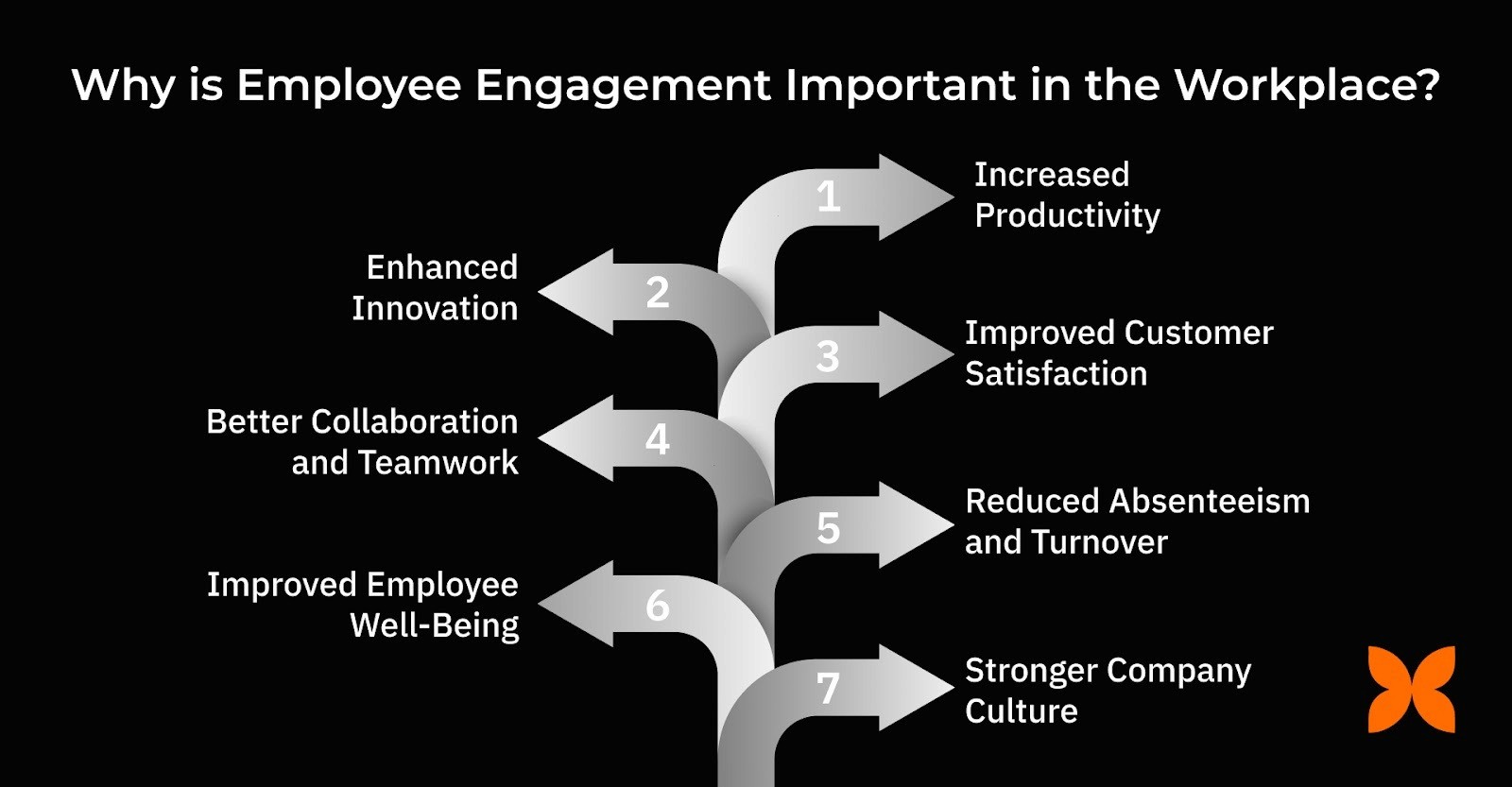
Increased Productivity
When employees are emotionally invested, their focus and energy naturally translate into better work results.
Higher Output: Engaged employees tend to be more productive and efficient.
Focus and Quality: Engagement builds focus, leading employees to consistently produce higher-quality work and complete tasks more promptly.
Energy and Enthusiasm: With a sense of purpose and motivation, engaged employees bring energy that drives overall productivity, even in challenging situations.
Enhanced Innovation
A motivated workforce is more willing to experiment and find creative solutions to challenges.
Creative Problem-Solving: Engaged employees feel empowered to share new ideas, fostering innovation.
Ownership and Initiative: They actively suggest improvements, test new concepts, and lead initiatives.
Culture of Experimentation: Teams with high engagement cultivate an environment where innovation is expected, not optional.
Improved Customer Satisfaction
Engaged employees naturally go the extra mile to delight customers, creating memorable experiences and lasting loyalty.
Customer-Centric Mindset: Engaged employees prioritise client needs, enhancing satisfaction.
Stronger Relationships: Investment in work translates into stronger, trust-based client connections.
Consistency in Service: Engaged staff consistently follow through, delivering reliable, high-quality experiences.
Better Collaboration and Teamwork
Engagement strengthens interpersonal connections, promoting smoother teamwork and problem-solving.
Enhanced Communication: Open communication improves collaboration across teams.
Problem-Solving as a Team: Engaged employees actively participate in group problem-solving, accelerating solutions.
Team Cohesion: Engagement strengthens bonds and aligns everyone toward shared goals.
Reduced Absenteeism and Turnover
When employees feel valued and motivated, they are more likely to remain committed to their roles.
Lower Absenteeism: Engaged employees take fewer unnecessary leaves.
Reduced Turnover: Loyalty increases, cutting recruitment and training costs.
Cost Savings: Fewer departures and absences lead to long-term financial benefits for the organisation.
Improved Employee Well-Being
A positive connection to work enhances overall satisfaction and reduces workplace stress.
Increased Job Satisfaction: Engagement improves employees’ sense of purpose and happiness.
Stress Reduction: Feeling supported and valued reduces burnout and anxiety.
Work-Life Balance: Engaged employees maintain healthier work-life integration, boosting well-being.
Stronger Company Culture
Engaged employees reinforce shared values and create a supportive work environment.
Aligned Values and Mission: Engagement encourages alignment with company goals and culture.
Positive Work Environment: Employees build a collaborative, encouraging atmosphere.
Employee Advocacy: Motivated employees promote the company externally, strengthening employer branding.
Understanding the benefits of engagement is crucial, but to make it happen, we need to identify the factors that truly motivate employees day to day.
Employee engagement grows when organisations understand what truly motivates their workforce. Specific aspects of work, leadership, and culture act as key drivers that inspire employees to invest their time, energy, and skills thoroughly. By focusing on these motivators, companies can create meaningful experiences that enhance commitment and performance.
1. Work That Energises Employees
Employees are motivated when they feel challenged and can use their strengths daily. Roles that allow autonomy, skill utilisation, and growth opportunities make work meaningful and rewarding.
2. Leadership and Team Influence
Supportive leaders and collaborative teams inspire trust and commitment. Employees are motivated when they feel valued, experience integrity in decision-making, and build positive relationships with managers and peers.
3. Alignment with Organisational Purpose
Employees engage more when they understand and believe in the company’s mission. Motivation increases when they see how their contributions drive organisational success and feel part of a bigger purpose.
4. Recognition and Influence
Being heard, recognised, and rewarded fuels motivation. Employees are inspired when feedback is structured, achievements acknowledged, and their opinions considered in decision-making.
5. Access to Resources and Information
Employees perform best and feel motivated when they have the tools, information, and support needed to succeed. Clarity in expectations and adequate resources reduce frustration and build confidence.
Focusing on these motivators allows organisations to prioritise actions that meaningfully enhance engagement and cultivate a highly motivated workforce.
While understanding the key drivers of engagement is crucial, it's equally important to recognise the common pitfalls that can cause an employee engagement strategy to fail.
Even well-intentioned engagement initiatives can fall short if underlying issues aren’t addressed. Understanding the common pitfalls helps organisations design more effective, sustainable strategies.
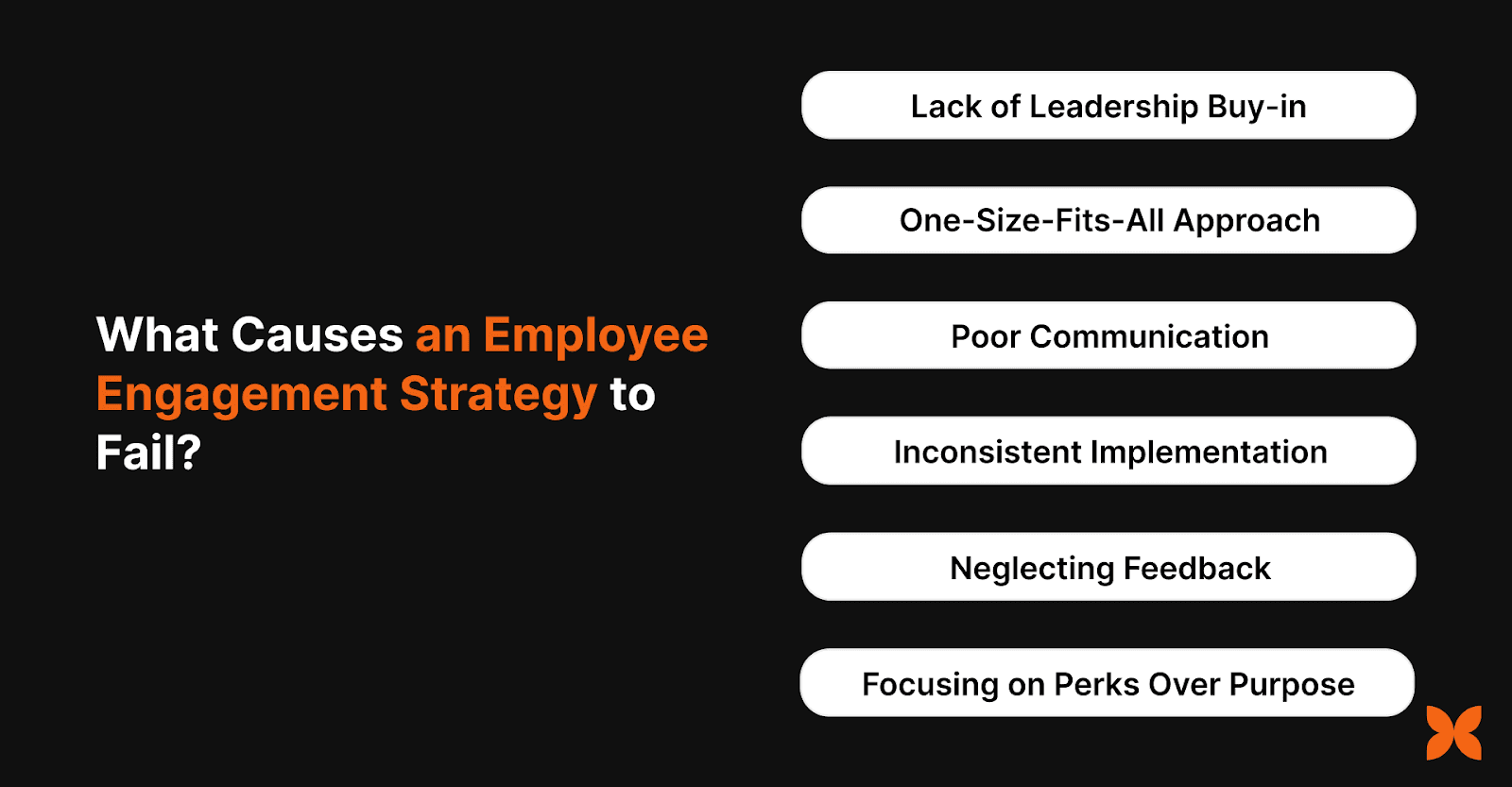
Lack of Leadership Buy-in
Without strong and visible support from leadership, engagement initiatives often struggle to gain traction. Leaders set the tone for the company culture, and if they don't actively endorse and participate in engagement efforts, these initiatives can quickly lose momentum and credibility.
One-Size-Fits-All Approach
Engagement is not a one-size-fits-all concept. Employees are diverse, with varying motivations, preferences, and departmental dynamics. Ignoring these differences and applying the same strategy across the board reduces its effectiveness, as it fails to address the unique needs of individuals and teams.
Poor Communication
Clear and transparent communication is essential for successful engagement. Failing to clearly articulate the goals, benefits, and expectations of an engagement programme can lead to confusion, disengagement, and low participation rates. Employees need to understand not just what is expected of them, but why it matters.
Inconsistent Implementation
Employee engagement should be an ongoing commitment, not a one-off initiative. Sporadic efforts that lack consistency can make engagement feel like a superficial trend rather than a core part of the company culture. Engagement should be embedded into the organisation's daily activities and values to achieve long-term results.
Neglecting Feedback
Employee feedback is the cornerstone of any successful engagement strategy. Failing to listen to employees or neglecting to act on the feedback gathered through surveys, meetings, or informal channels undermines trust and discourages future participation. Engagement is a two-way street in which employees need to feel that their voices are valued and acted on.
Focusing on Perks Over Purpose
While perks and incentives can temporarily boost morale, they don't lead to long-term commitment. Engagement strategies that focus solely on superficial rewards risk creating a culture of transactional relationships. Genuine engagement is driven by a more profound sense of purpose, alignment with company values, and opportunities for meaningful work.
Read More: Understanding 360-Degree Feedback and Performance Appraisal Methods
Understanding why engagement strategies fail helps highlight the areas that need attention. Let’s now explore practical, actionable strategies to improve employee engagement in your organisation.
Employee engagement is sustained when organisations embed thoughtful practices into leadership, culture, and daily workflows. These best practices go beyond surface-level perks, focusing on actions that genuinely motivate employees, strengthen commitment, and improve organisational performance.
1. Design Roles That Inspire
Engagement increases when employees feel their work is meaningful and aligned with their skills and abilities. Roles that challenge employees while allowing them to focus on their strengths foster ownership and pride in their contributions.
How to improve it:
Analyse individual strengths and assign tasks that match capabilities.
Provide autonomy, allowing employees to make decisions and solve problems independently.
Create transparent career paths that clearly show how current roles contribute to future growth.
Example: A software developer allowed to choose project components that suit their expertise often feels more invested and motivated.
2. Build Empathetic Leadership
Leadership directly impacts employee engagement. Managers who listen actively, provide guidance, and show genuine concern for their teams create trust, psychological safety, and higher motivation.
How to improve it:
Train managers in active listening and empathy.
Consistently recognise and advocate for team contributions.
Demonstrate integrity and fairness in decision-making.
Insight: Empathetic leadership reduces anxiety, encourages innovation, and increases loyalty.
3. Encourage Open Communication
Employees who understand the company's goals and feel their voices matter are more likely to contribute proactively and stay engaged. Poor communication creates confusion, disengagement, and errors.
How to improve it:
Schedule regular one-on-one and team meetings to discuss progress and concerns.
Use transparent messaging for organisational updates and strategic changes.
Implement anonymous feedback systems to allow candid input.
Example: A weekly “open forum” session lets employees share ideas directly with management, fostering trust and innovation.
4. Recognise and Reward Effectively
Recognition reinforces positive behaviours and demonstrates that contributions matter. When employees feel appreciated, motivation and retention improve.
How to improve it:
Celebrate achievements both formally (awards, bonuses) and informally (verbal praise).
Highlight success stories in newsletters or team meetings.
Tie recognition to company values and measurable outcomes, not just tenure.
Insight: Recognition strengthens morale, encourages high performance, and models behaviours others should emulate.
5. Support Continuous Learning and Growth
Employees stay engaged when they see opportunities for skill development and career progression. Organisations investing in learning signal that they value employee growth.
How to improve it:
Provide access to training programs, workshops, and mentorship.
Offer internal promotion opportunities and clearly communicate the available growth paths.
Encourage employees to set and pursue professional goals.
Example: A junior analyst participating in a mentorship program is more likely to innovate and remain committed to their role.
6. Promote Well-being and Work-Life Balance
Sustainable engagement requires attention to mental and physical well-being. Overworked employees risk burnout, which can lead to reduced productivity and increased turnover.
How to improve it:
Offer flexible work schedules and remote options where possible.
Encourage regular breaks, vacations, and support for mental health.
Introduce wellness initiatives such as fitness programs or counselling services.
Insight: Companies that prioritise holistic well-being tend to experience higher productivity, greater employee satisfaction, and lower absenteeism rates.
7. Cultivate Collaboration and Team Spirit
A collaborative culture strengthens organisational cohesion, trust, and engagement. Employees who feel connected to peers and teams are more committed and motivated.
How to improve it:
Encourage cross-functional projects and shared goals.
Organise team-building activities and company events to foster relationships.
Promote inclusion, respect, and knowledge sharing across teams.
Example: A marketing and product team collaborating on a campaign can generate more innovative solutions than isolated efforts.
By consistently applying these best practices, organisations can convert the key engagement drivers into actionable strategies, creating a workplace where motivation and commitment become part of the culture rather than a one-time initiative.
Also Read: Employee Satisfaction and Benefits Survey Questions
Next, we will explore methods to measure and track engagement, ensuring these strategies are effective.
Improving employee engagement only works if you track it. Many companies assume employees are engaged just because no one complains, but silence doesn’t always indicate satisfaction. Tracking engagement requires a mix of direct feedback and observable data.
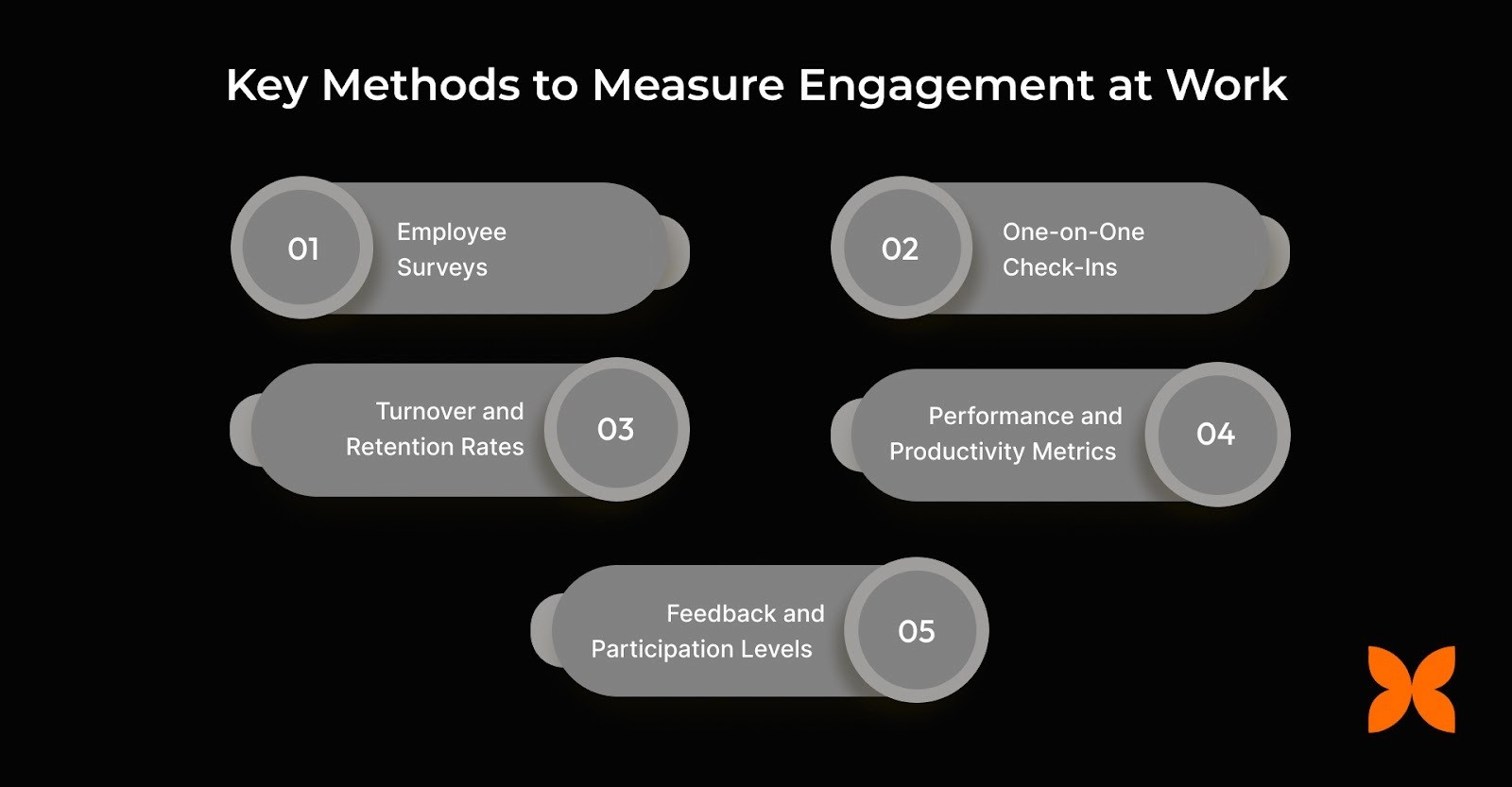
Here are the best ways to check how employees feel about their work:
1. Employee Surveys
Asking employees directly is one of the most reliable ways to gauge engagement. Short, anonymous surveys or performance reviews can reveal how motivated, satisfied, and connected employees feel.
Tips for effective surveys:
Avoid vague questions like “Are you happy at work?” They provide little insight.
Ask targeted questions such as:
Do you feel valued by leadership?
Do you have the tools and support you need to perform your job effectively?
Would you recommend this company as a great place to work?
2. One-on-One Check-Ins
Some employees may not share their concerns in surveys but will open up in conversation. Regular one-on-one meetings allow employees to discuss challenges, career goals, and workload issues.
Tips for Managers:
Ask open-ended questions like, “What’s one thing we could improve?”
Listen actively and follow up on concerns to build trust.
3. Turnover and Retention Rates
Frequent employee departures are a clear signal of engagement problems. High turnover often indicates low motivation, lack of recognition, or limited growth opportunities.
How to utilise this data:
Track exit reasons during interviews.
Identify patterns to address gaps in leadership, culture, or career development.
4. Performance and Productivity Metrics
Engaged employees are proactive, collaborative, and efficient. Conversely, delayed projects, missed deadlines, or minimal effort may indicate low engagement.
What to monitor:
Task completion rates and project timelines.
Initiative-taking and contributions beyond assigned duties.
Collaboration levels across teams.
5. Feedback and Participation Levels
Employees who feel invested are more likely to contribute ideas, provide feedback, and participate in team activities. Lack of involvement can signal disengagement.
Indicators to watch for:
Low participation in meetings or company events.
Rare idea submissions or suggestions for improvement.
Minimal enthusiasm for team or organisational initiatives.
Engagement doesn’t happen by chance. It requires exemplary leadership, workplace culture, and consistent practices. With these in place, employees are motivated, committed, and equipped to drive business success.
Read More: Guide to Human Resource Management Systems (HRMS)

Employee engagement is about creating an environment where employees feel valued, supported, and motivated to perform at their best. Engaged employees take initiative, collaborate effectively, and remain committed. When employees feel unheard, unappreciated, or stagnant, their performance declines, teamwork suffers, and turnover rates increase.
That’s where Craze can help. Craze allows businesses to identify employee needs, recognise contributions, and create a workplace where people stay and grow. Its platform also provides tools to enhance communication, maintain morale, and track engagement trends in real time.
If your team seems less motivated, productivity is slipping, or turnover is rising, it’s time to make a change. Book a demo with Craze to build a workplace where employees feel valued, stay longer, and give their best every day.
1. How often should employee engagement be measured?
Regular measurement is key. Quarterly surveys and monthly pulse checks, combined with one-on-one discussions and monitoring turnover, productivity, and participation, provide actionable insights. Frequent tracking enables leaders to identify engagement gaps early, adjust strategies effectively, and maintain a motivated workforce.
2. Can small businesses benefit from formal engagement programs?
Yes. Even without large budgets, clear communication, recognition, career growth, and flexible work arrangements improve motivation. Small teams can implement feedback loops, mentorship, and collaborative decision-making, often achieving faster results since initiatives can be personalised and implemented quickly.
3. How does leadership style influence employee engagement?
Leadership directly affects engagement. Empathetic, supportive managers foster trust, encourage initiative, and promote collaboration. Conversely, distant or authoritarian leadership lowers morale and participation. People-focused, consistent leadership sustains motivation and helps employees feel valued across teams.
4. Can technology improve employee engagement?
Technology supports engagement by streamlining communication, recognition, surveys, and performance tracking. Tools for learning and collaboration enhance growth. However, technology is only effective when paired with a culture that values employee input and prioritises meaningful interactions.
5. How do remote work arrangements impact engagement?
Remote work offers flexibility and better work-life balance, but can reduce connection. Maintaining engagement requires regular virtual check-ins, transparent communication, recognition, and team activities. Providing resources ensures employees stay supported, connected, and aligned with organisational goals.
