


Hiring can feel chaotic, especially in India, where skilled roles take 40–50 days on average to fill, and HR teams juggle hundreds of applications. CVs pile up across inboxes and spreadsheets, interview schedules turn into endless back-and-forth emails, and hiring managers often delay feedback. Candidates drop off, repeated data entry wastes time, and productivity suffers.
An applicant tracking system helps centralise candidate data, communication, and approvals, reducing manual work and making hiring faster, smoother, and more collaborative.
In this blog, you’ll find a shortlist of the top ATS software in India, a quick comparison table, and a practical checklist to choose the right tool for your workflow.
The best ATS depends on hiring volume, process maturity, and desired structure
Resume parsing, pipeline visibility, and hiring manager adoption are critical
Scheduling automation and structured feedback reduce time-to-hire
Reporting should highlight bottlenecks, stage conversion, and source quality
Include permissions, audit trails, approval flows, and pilot with real roles
An applicant tracking system is a software that helps teams manage the entire hiring lifecycle in a structured and organised way. It also provides insights and analytics on recruitment patterns, helping teams make informed hiring decisions.
Most ATS software includes the following core components:
Job requisitions and job postings across career pages and job boards
Candidate sourcing, resume import, and duplicate detection
Resume parsing to create clean, unified candidate profiles
Candidate pipeline stages with tags, notes, and team collaboration
Interview scheduling with reminders and interviewer coordination
Structured feedback forms and scorecards for consistent evaluation
Offer creation, approval workflows, and activity history
Recruitment analytics such as time-to-hire, funnel conversion, and source performance
Depending on your scale, many platforms offer advanced modules like automated skills assessments, AI video interviews, integrated background verification, and pre-boarding workflows to bridge the gap between hiring and day one.
With a clear view of ATS features, let’s explore the key factors to consider when choosing an ATS software.
Selecting the right ATS goes beyond a checklist of features. The best tools align with your workflow, improve collaboration, and reduce delays. Below are a few critical factors to consider when making your decision:
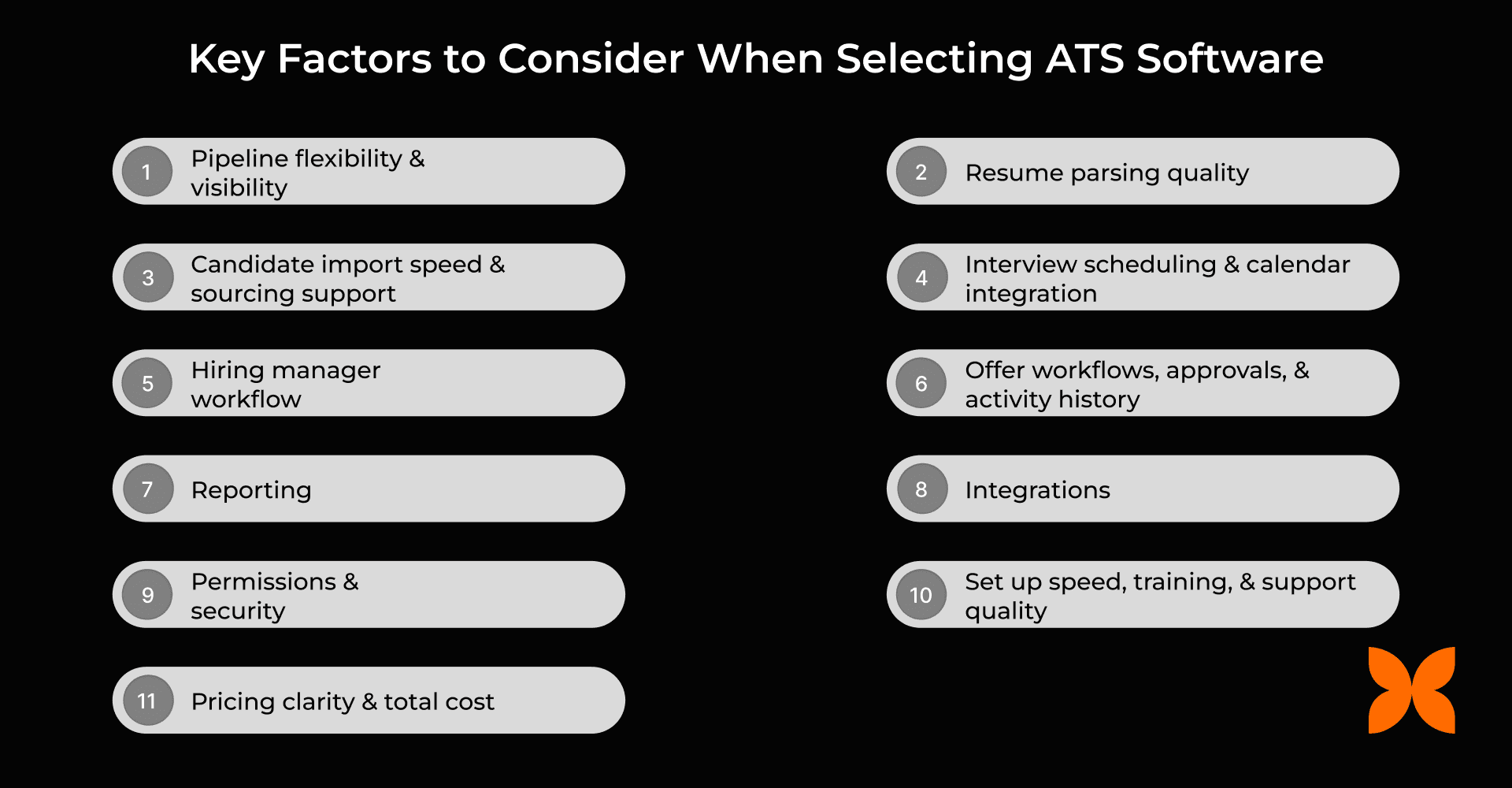
Pipeline flexibility and visibility: Can you customise stages and tags per role (e.g., a "coding test" for tech vs. a "pitch deck" for sales)? You need to see bottlenecks at a glance.
Resume parsing quality: Indian CVs come in many formats. Ensure the tool extracts data accurately and automatically flags if a "new" applicant is already in your database.
Candidate import speed and sourcing support: Check for one-click "candidate harvesting" from portals like LinkedIn, Naukri, or Indeed.
Interview scheduling and calendar integration: It must sync with Google or Outlook calendars, allow candidates to pick their own slots, and send automated reminders to interviewers.
Hiring manager workflow: If the UI is too complex, managers won't leave feedback. Prioritise tools with simple dashboards, mobile-friendly scorecards, and "one-click" approvals to keep the process moving.
Offer workflows, approvals, and activity history: Can you track the offer approval chain from the recruiter to the CFO? Look for an audit trail that records every change to salary or joining date for compliance purposes.
Reporting: Leadership needs more than just a list of hires. Demand real-time dashboards for time-to-hire, source quality (which job board gives the best candidates?), and recruiter productivity.
Integrations: Your ATS must seamlessly connect with your email, Slack/Teams, background check providers, and HRMS for a smooth "hired-to-onboard" transition.
Permissions and security: Protect sensitive data with role-based access. For example, an external interviewer should see the resume and scorecard, but not the candidate's previous salary or sensitive internal notes.
Set up speed, training, and support quality: Ask for a realistic implementation timeline and check if the vendor provides live support and training for your specific team size.
Pricing clarity and total cost: Beware of "feature gating" where essential tools like offer letters or reporting are locked behind higher tiers. Calculate the total cost, including seat licenses and add-ons, over 12 months.
These factors naturally lead to the next step: comparing the leading ATS options in India to help you shortlist quickly.
Understanding what each ATS can do makes shortlisting the right tool much simpler. Below are a few of the top ATS software options in India, summarised for a quick glance:
Tool | Key features | Best for |
Craze | Job requisitions, resume parsing, pipeline analytics, interview scheduling, and offer workflows | Growing teams seeking structured hiring and smooth onboarding |
Zoho Recruit | Customisable pipelines, candidate database, automation, Zoho integrations | Teams already using Zoho products |
Zimyo ATS | Candidate pipeline tracking, resume parsing, job posting, and reporting | India-based teams wanting a simple ATS setup |
Keka Hire | Hiring stage tracking, collaboration, job management, and reporting | Teams wanting ATS integrated with HR workflows |
Freshteam | Candidate pipeline, interview scheduling, feedback collection, basic reporting | Teams needing quick adoption and simple collaboration |
Recruit CRM | Candidate and client management, activity logs, and reporting | Recruitment agencies and staffing firms |
Ceipal | Resume parsing, automation, pipeline management, analytics | High-volume hiring teams |
Manatal | Candidate management, proactive sourcing, automation, integrations | Teams building talent pipelines alongside ATS tracking |
Workable | Collaborative workflows, scheduling, structured feedback, and reporting | Teams seeking a polished, process-driven ATS |
Greenhouse | Structured hiring, scorecards, analytics, process controls | Teams requiring consistent evaluation and governance |
Naukri RMS | Candidate tracking with Naukri sourcing, database management, and reporting | Teams sourcing primarily through Naukri |
Next, we take a closer look at each ATS software to understand its standout features.
From job posting to offer approvals, the right ATS brings structure, visibility, and consistency to the hiring process. Below are 11 of the best ATS software options in India, with key features, best-for scenarios, and what sets each tool apart.
1. Craze
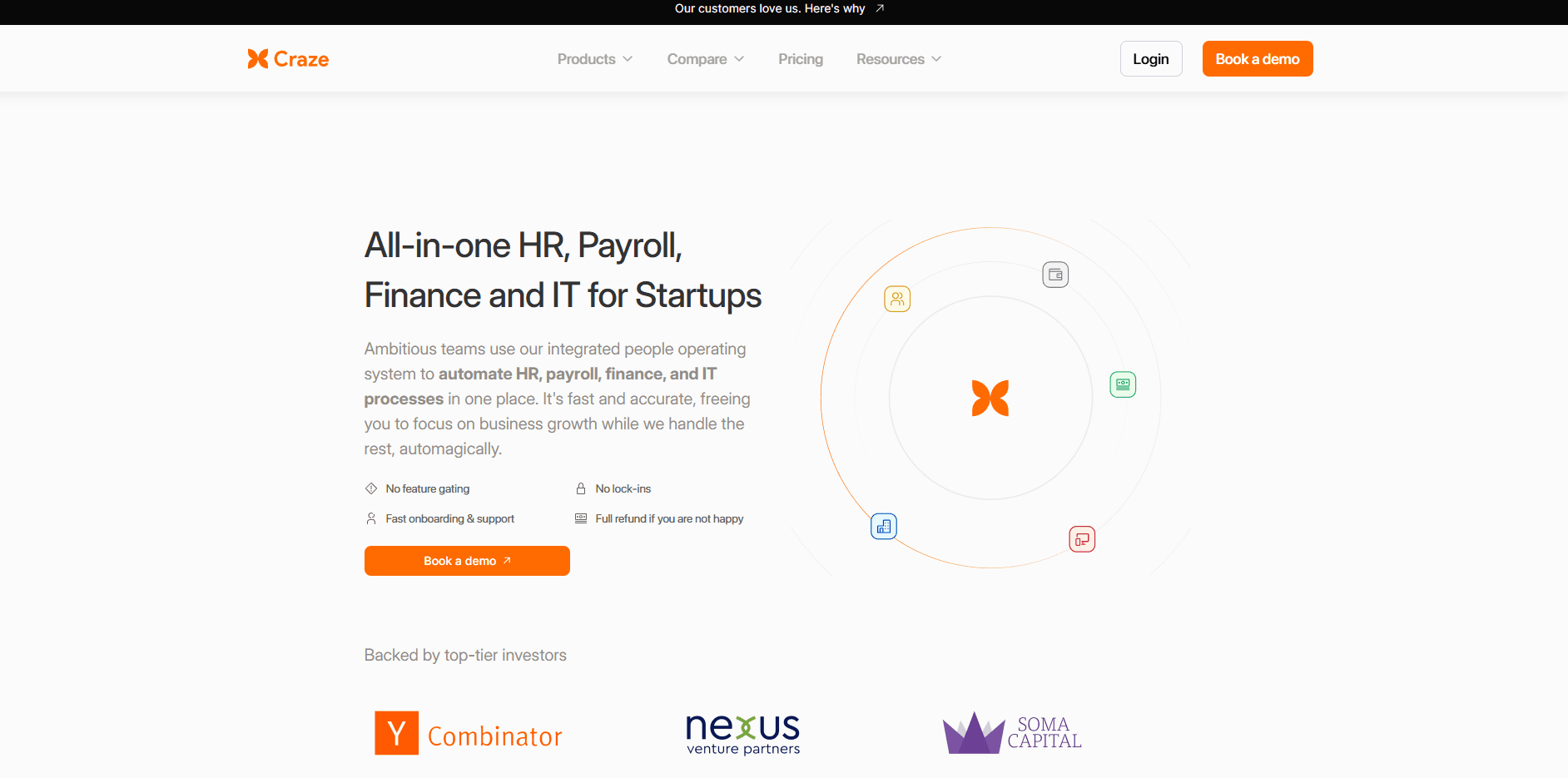
Craze ATS is built for teams that want hiring to run as one connected workflow, from requisition to offer to Day 1 onboarding. It is designed to reduce administrative work and avoid the common “handoff chaos” that often follows a hire.
Key Features:
Job requisitions, job postings, and application management
Resume parsing and unified candidate profiles
Custom pipelines per role with stage analytics and bottleneck visibility
Interview scheduling with calendar slot finding and automated reminders
Structured feedback and evaluations for hiring teams
Offer creation with approval workflows and complete activity history
Candidate to employee record conversion, onboarding triggers automatically
Permissions and audit trail for recruiters, hiring managers, and interviewers
Best for: Growing teams that want a structured ATS plus a smooth transition from hiring to onboarding, without duplicate data entry.

2. Zoho Recruit
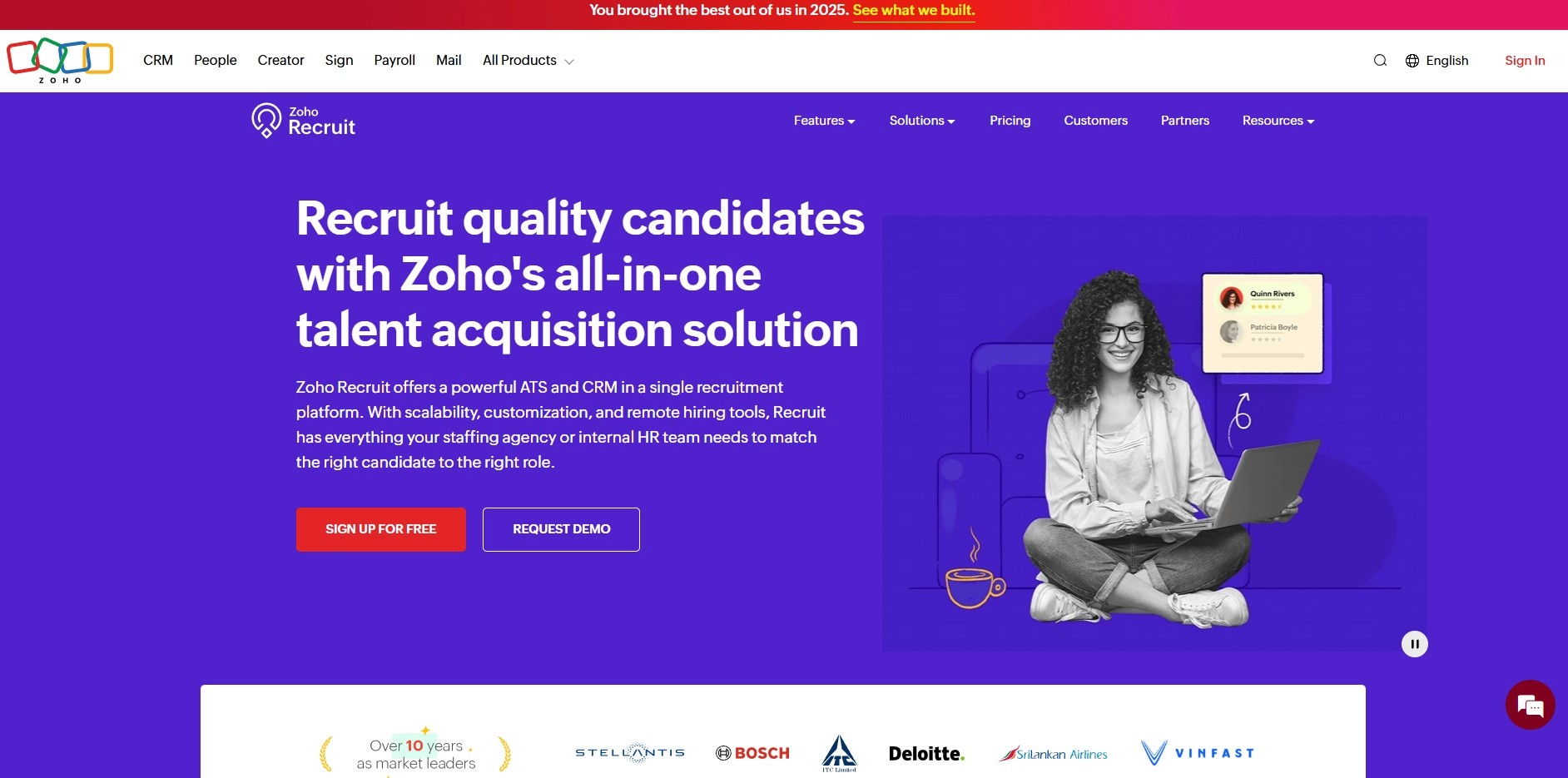
Zoho Recruit is a widely used ATS that blends applicant tracking with CRM-style recruiting workflows. It is often shortlisted by teams that already use Zoho products and want flexibility in how they set up pipelines and processes.
Key Features:
Customisable pipelines and recruiting workflows
Candidate database with tracking and collaboration
Automation for routine steps and communication
Integrations within the Zoho ecosystem
Reporting for pipeline and hiring activity
Best for: Teams that want a configurable ATS, especially those already on Zoho.
3. Zimyo ATS
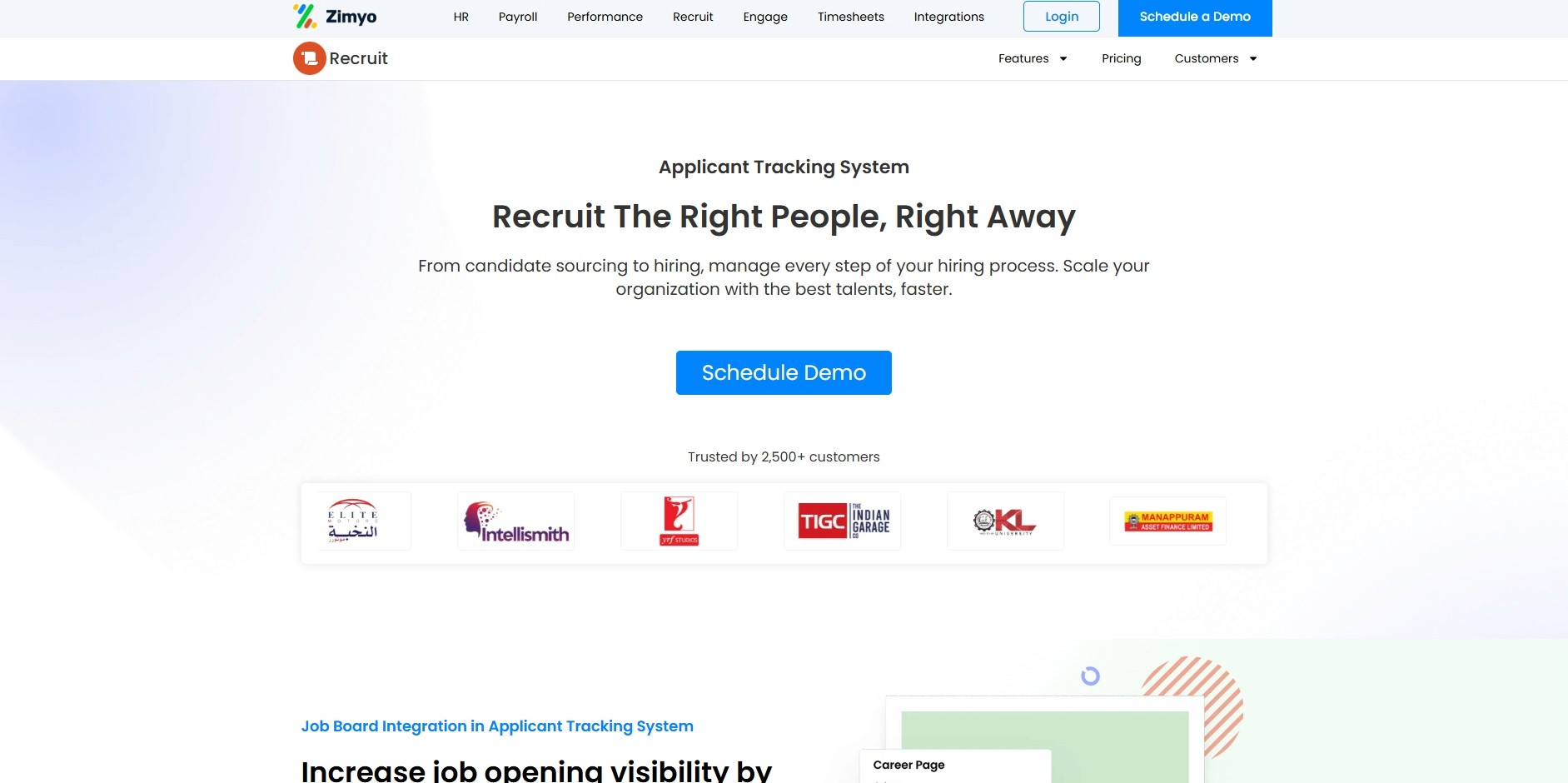
Zimyo ATS is well-suited for India-based teams seeking a straightforward ATS experience. It is typically shortlisted for ease of use, quick adoption, and a feature set aligned to common hiring workflows.
Key Features:
Candidate pipeline tracking and collaboration
Resume parsing and candidate profiles
Job posting and application management
Interview coordination and communication support
Reporting for hiring visibility
Best for: India-based teams looking for a simple ATS setup with a low learning curve.
4. Keka Hire
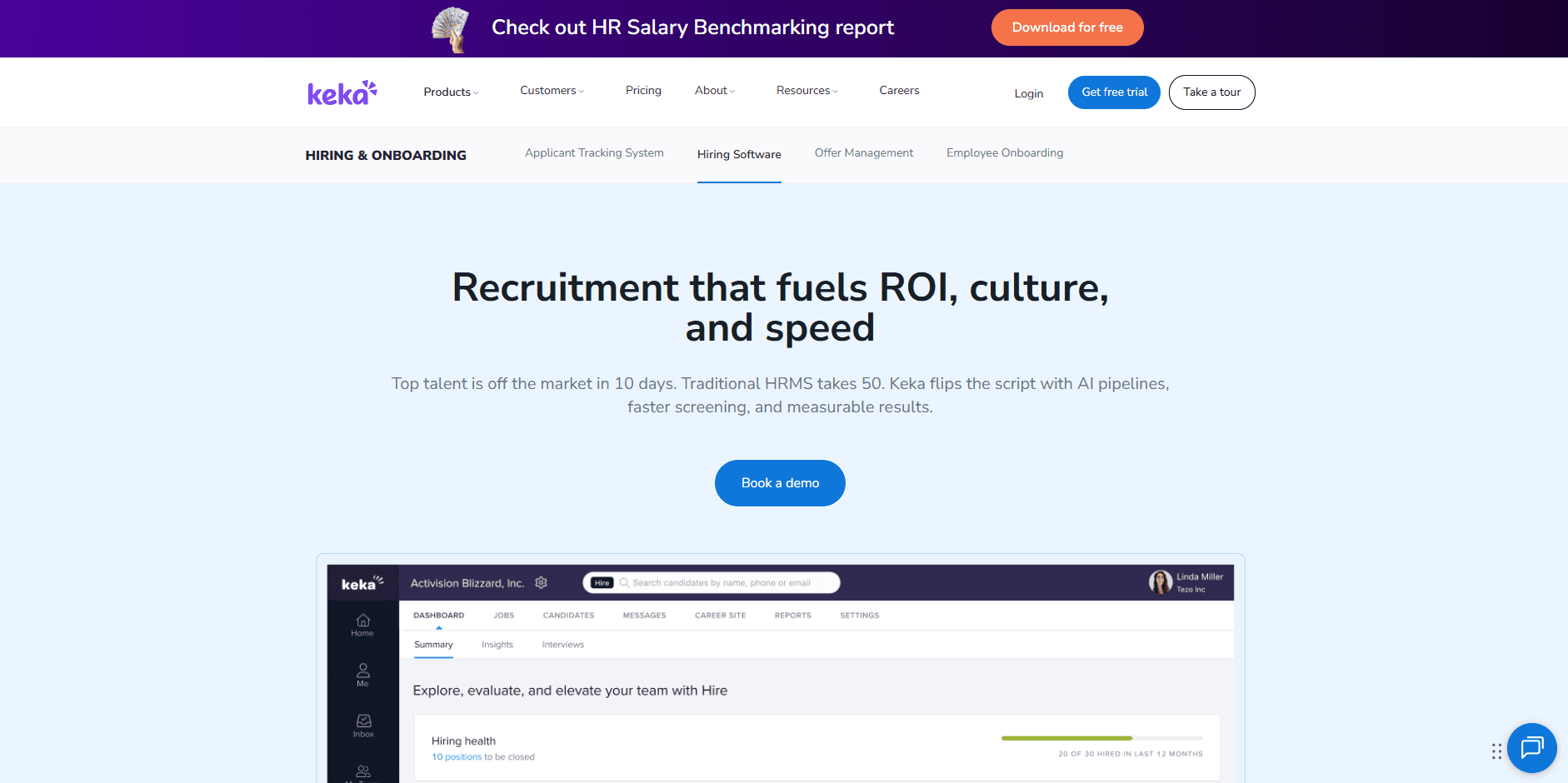
Keka’s ATS module is often considered by teams looking to integrate hiring workflows into their broader HR tooling. It supports structured hiring stages and collaboration while keeping day-to-day hiring organised.
Key Features:
Candidate tracking across hiring stages
Collaboration and hiring workflow support
Job and requisition management basics
Interview coordination features
Reporting for hiring progress
Best for: Teams that want ATS functionality alongside broader HR workflows and prefer India-first tooling.
5. Freshteam (Freshworks)
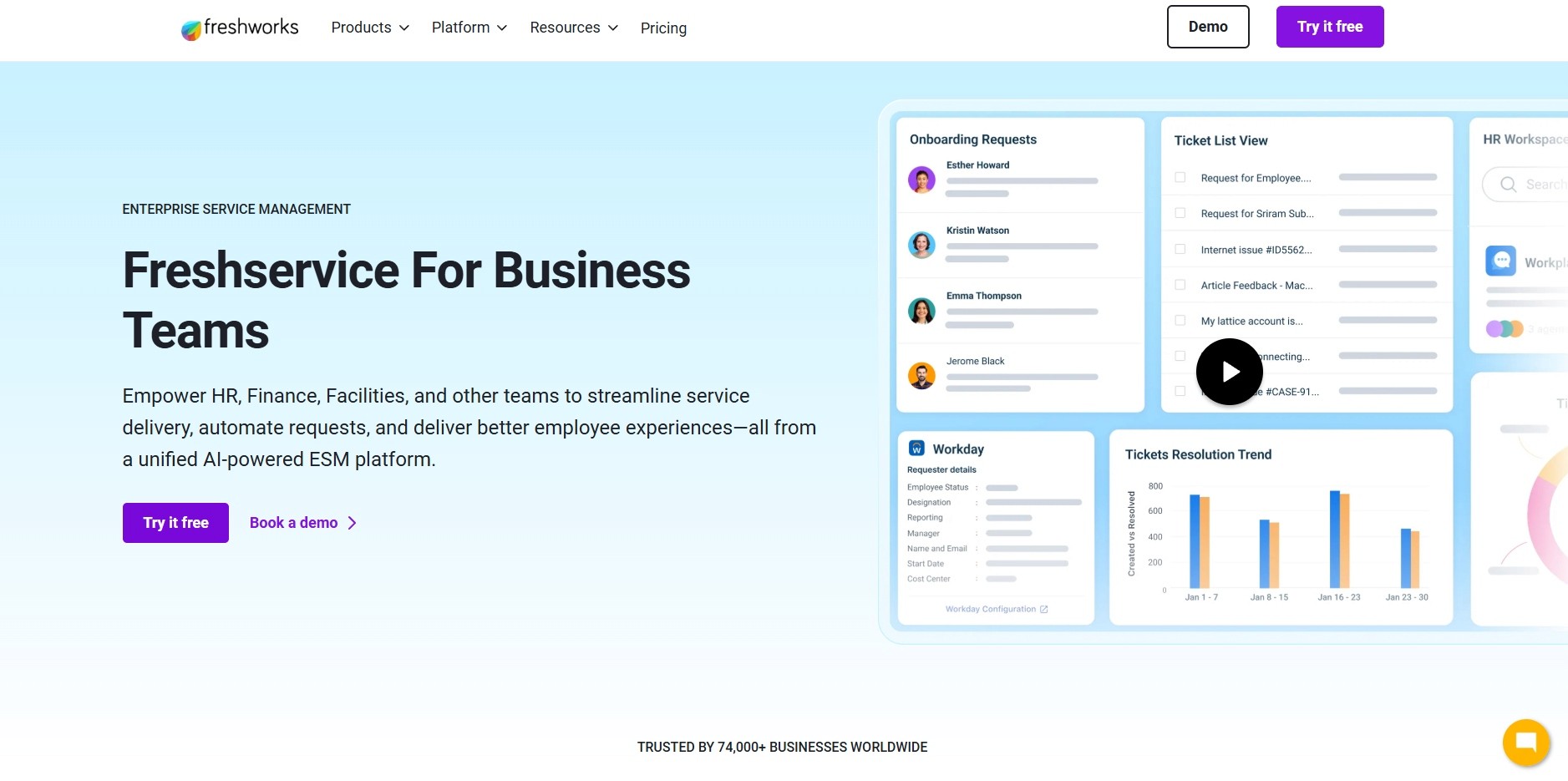
Freshteam is known for clean UX and straightforward hiring workflows. It is often chosen by growing teams who want a quick setup and strong day-to-day usability for recruiters and hiring managers.
Key Features:
Candidate pipeline management and collaboration
Interview scheduling support
Candidate profiles and communication workflows
Hiring team feedback collection
Reporting for basic hiring metrics
Best for: Teams prioritising fast adoption and simple, collaborative hiring.
6. Recruit CRM
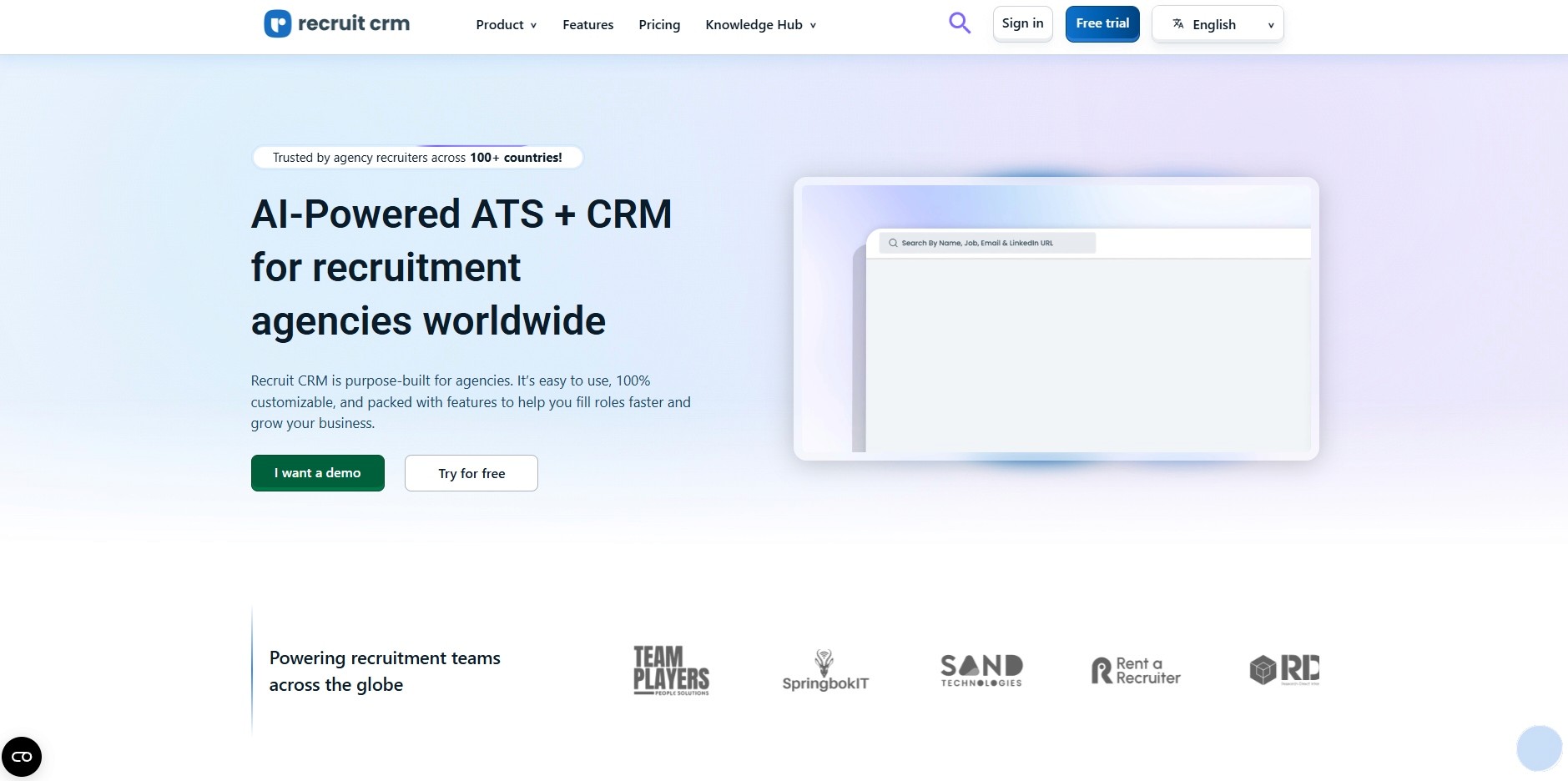
Recruit CRM is built for recruitment agencies and staffing firms, combining ATS workflows with CRM capabilities. It is especially useful when you manage both candidates and client roles in one place.
Key Features:
Candidate tracking plus client and job management
Activity logs and pipeline visibility
Communication tracking and task management
Reporting for recruiter productivity
Workflow structure designed for agency operations
Best for: Recruitment agencies and staffing firms managing multiple clients and roles.
7. Ceipal
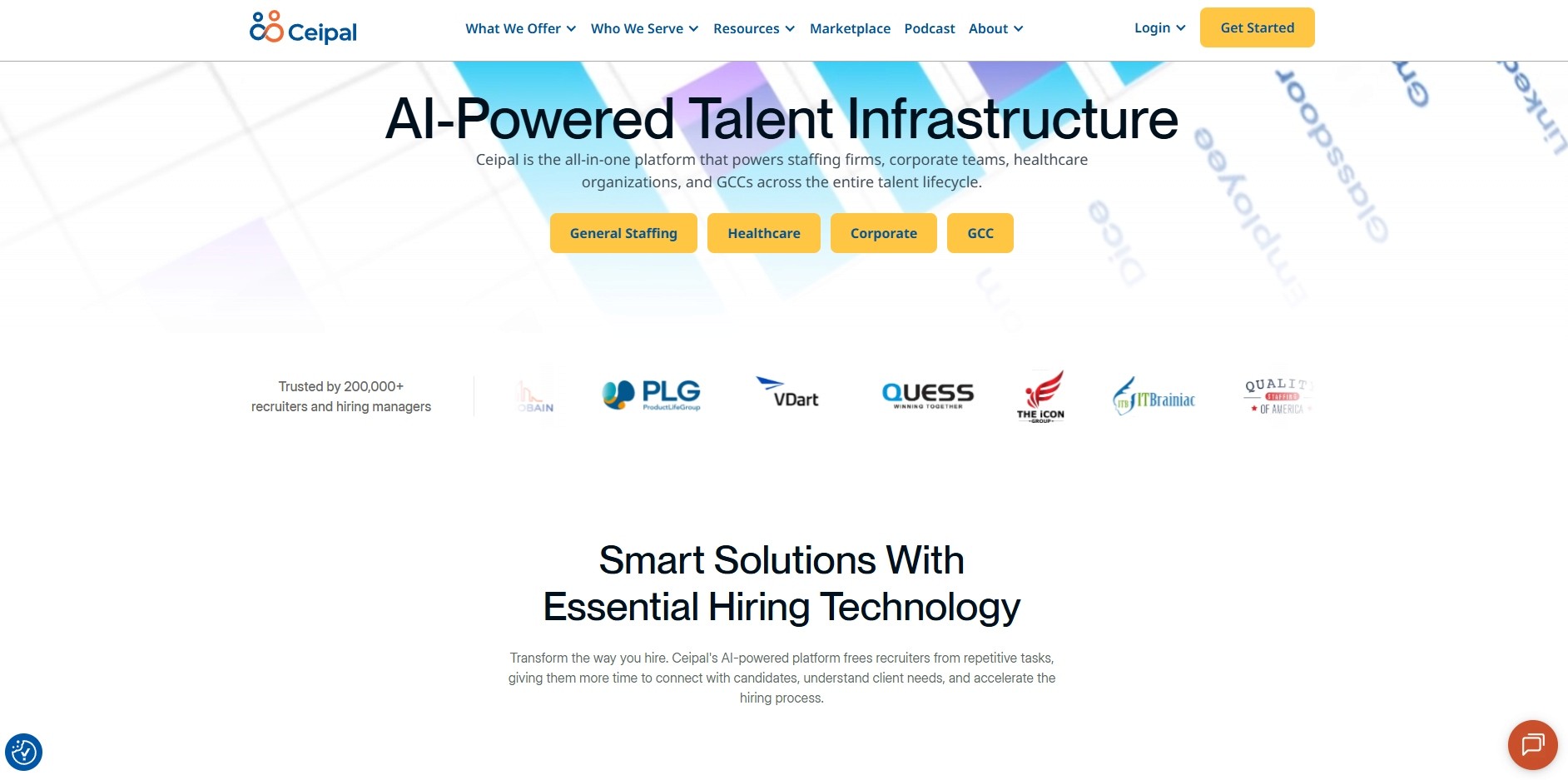
Ceipal is often positioned for high-volume recruiting environments, including staffing-heavy teams. It is typically shortlisted for automation, parsing, and managing large candidate pipelines.
Key Features:
Resume parsing and large-scale candidate tracking
Pipeline management and recruiter workflows
Automation for repetitive recruiting steps
Reporting and analytics for hiring performance
Tools to support high-volume hiring operations
Best for: High-volume hiring teams and staffing-led recruiting workflows.
8. Manatal
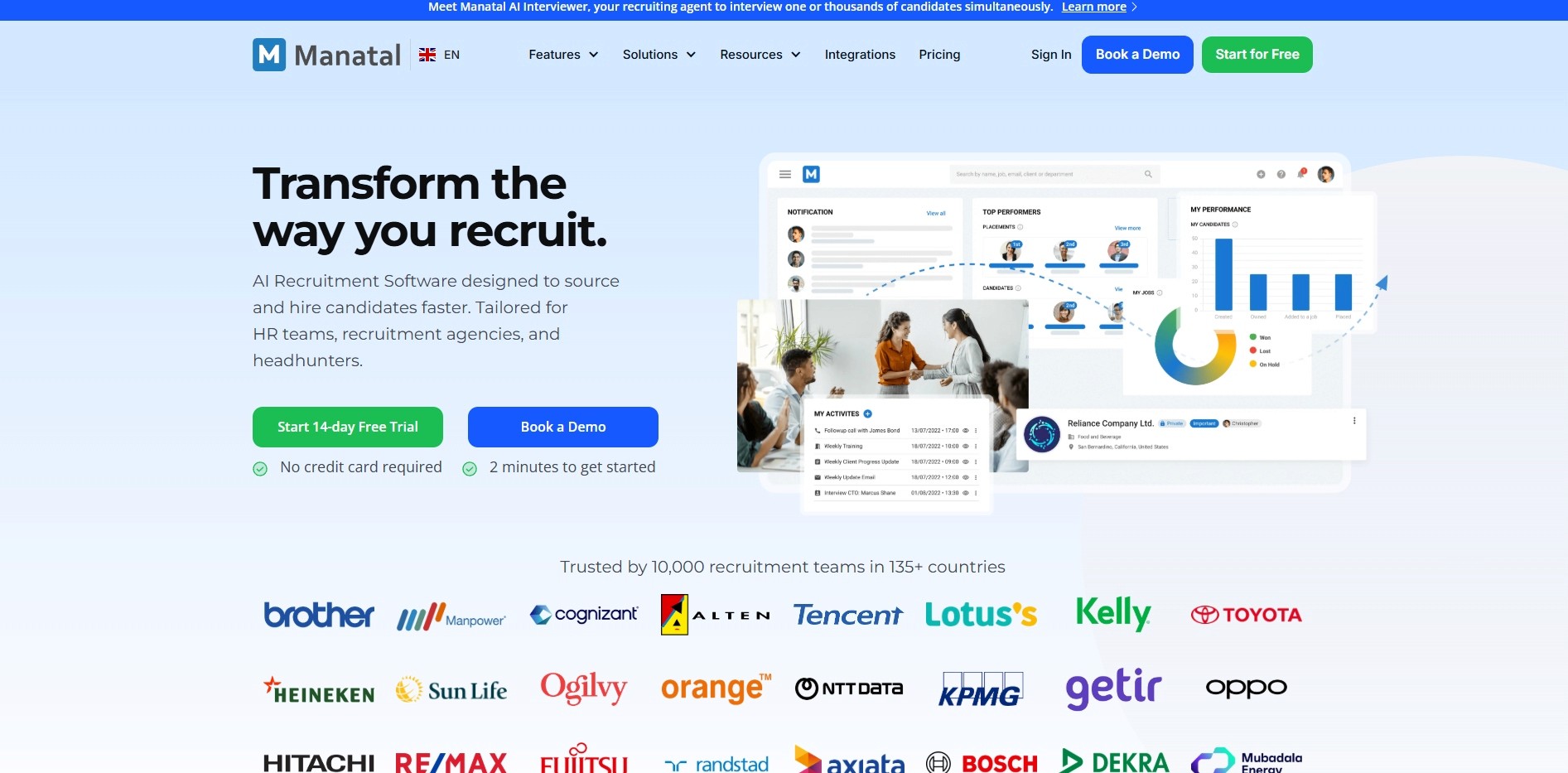
Manatal is a dedicated ATS often positioned around AI-assisted sourcing and candidate management. It is commonly considered by teams that want to build proactive talent pipelines, not just process inbound applicants.
Key Features:
Candidate pipeline management and collaboration
Sourcing and talent pool management
Automation support for recruiting workflows
Reporting for pipeline and performance metrics
Integrations to support recruiting workflows
Best for: Teams that want proactive pipeline building alongside ATS tracking.
9. Workable
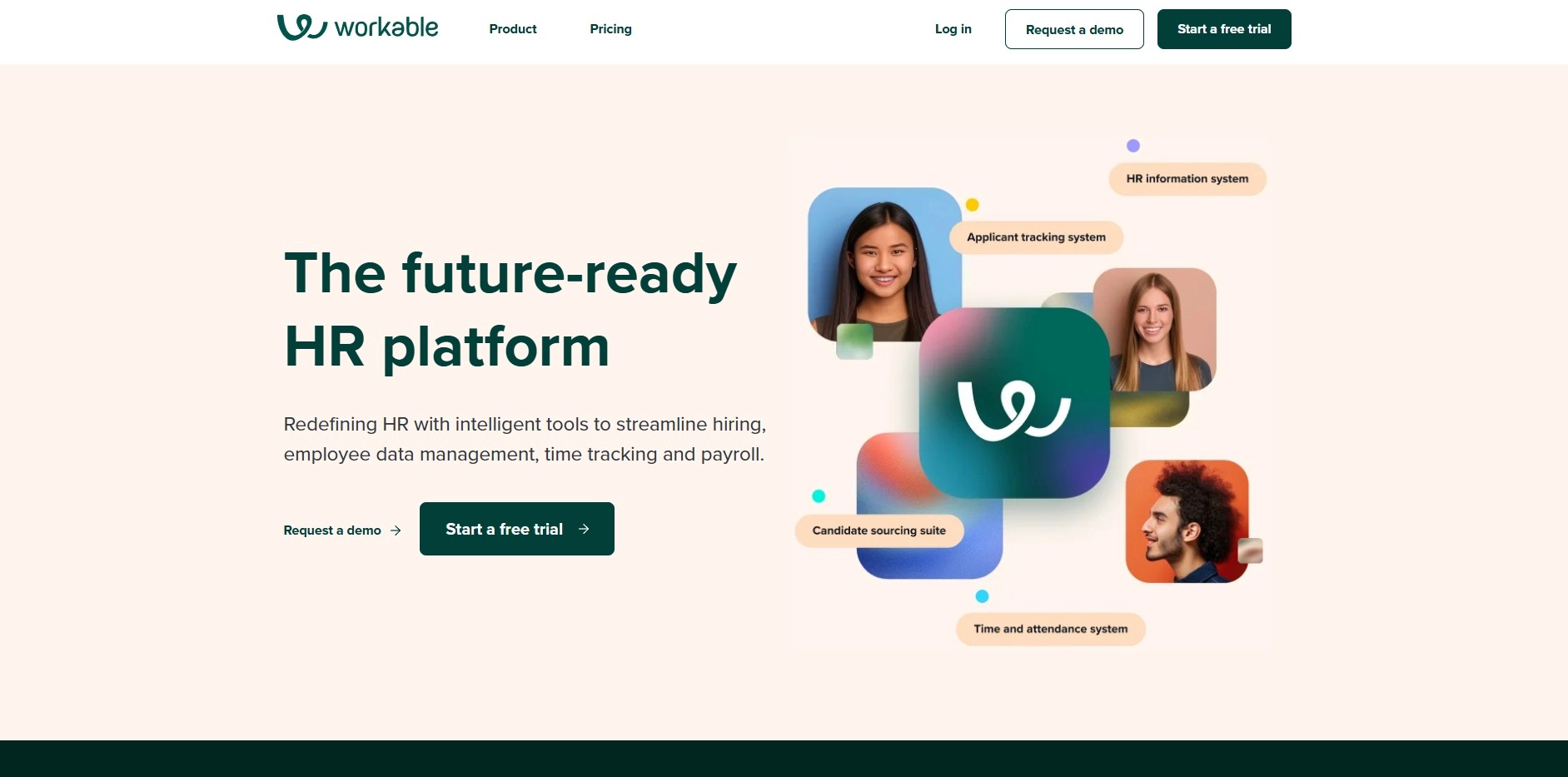
Workable is a globally recognised ATS known for structured hiring workflows and collaboration. It is typically chosen by teams that want a polished ATS experience with reporting and process consistency.
Key Features:
Collaborative hiring workflows and pipeline visibility
Interview scheduling and communication support
Structured feedback collection
Reporting for the funnel and hiring performance
Automation for common recruiting steps
Best for: Teams that want a proven, dedicated ATS for collaborative hiring.
10. Greenhouse
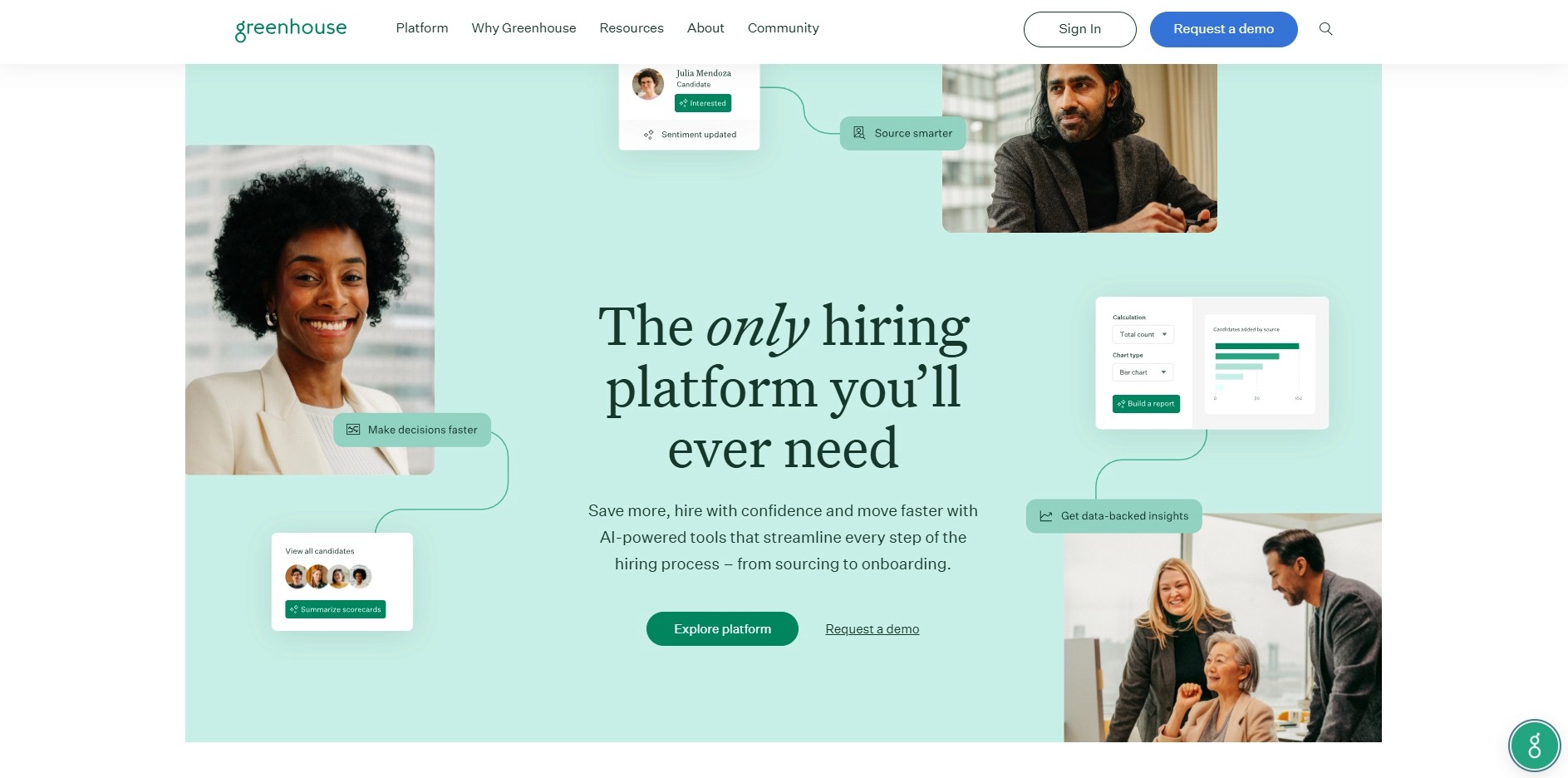
Greenhouse is best known for structured hiring, scorecards, and process rigour. It is often adopted by teams that want strong governance, consistent evaluations, and analytics to improve hiring quality.
Key Features:
Structured hiring workflows and scorecards
Hiring team collaboration and feedback discipline
Reporting and analytics for hiring performance
Process controls that support consistency
Integrations with recruiting stack tools
Best for: Teams that want highly structured hiring processes and consistent evaluation.
11. Naukri RMS
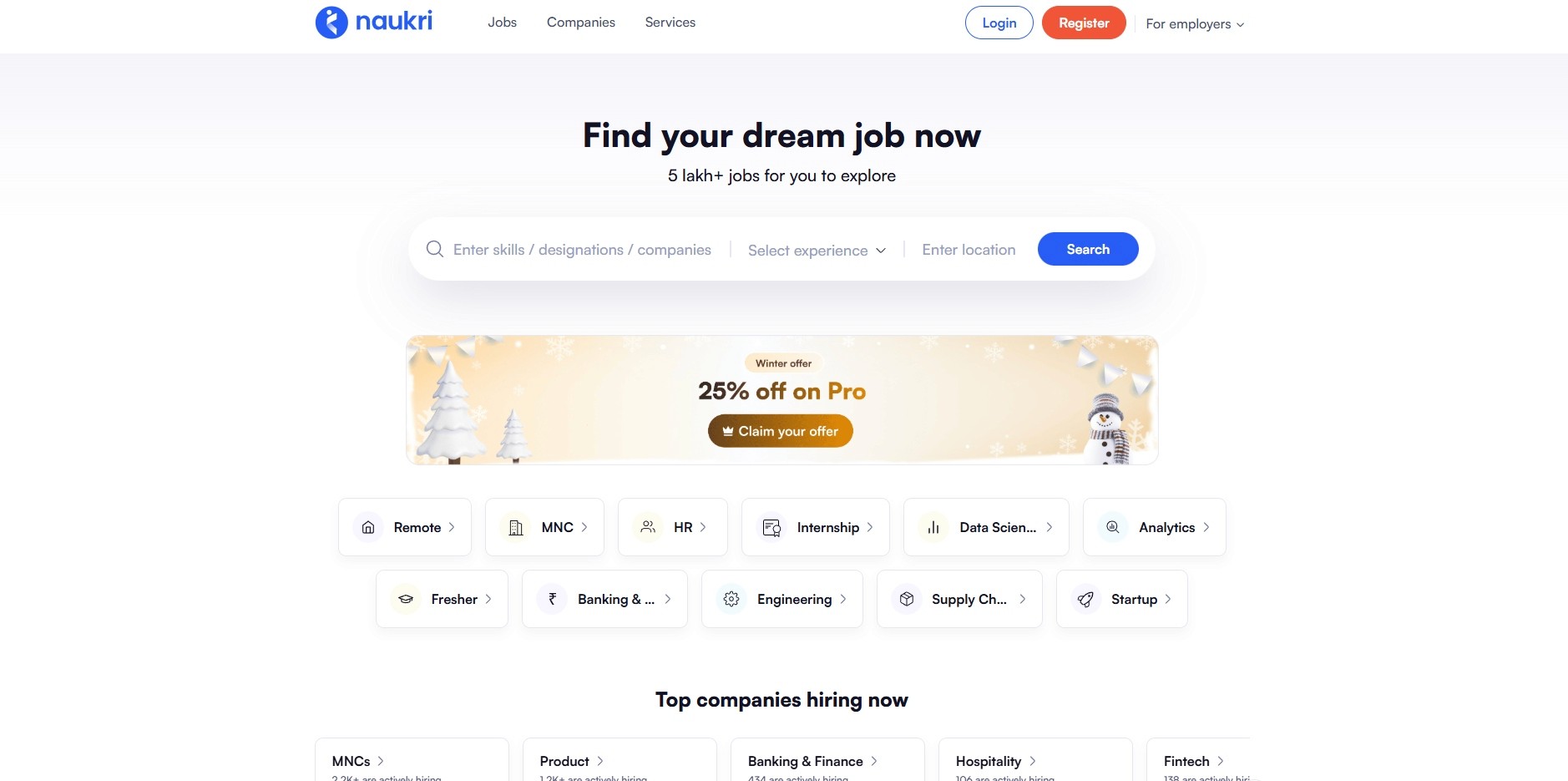
Naukri RMS is a familiar option for recruiters working heavily within the Indian job market, especially where Naukri is a primary sourcing channel. It can be useful when sourcing and database access from Naukri is central to the workflow.
Key Features:
Candidate tracking is tied closely to Naukri sourcing workflows
Database and pipeline management
Recruiter workflow support for sourcing-heavy hiring
Basic reporting and tracking
Familiarity with teams already using Naukri products
Best for: Teams sourcing heavily via Naukri who want tighter workflow alignment with that channel.
With the top ATS tools covered, the next decision is whether your hiring needs are better served by an HRMS suite with ATS or a standalone ATS.
Determining whether to use an HRMS suite with an ATS or a dedicated ATS depends on your current hiring and HR processes. The right solution should reduce handoffs, simplify workflows, and support real-world collaboration.
Below are the key scenarios to help you decide which approach best fits your organisation:
Choose an HRMS Suite with ATS if:
An HRMS with an inbuilt ATS works well when hiring is closely connected to HR and onboarding processes. It is suitable for teams that want continuity from candidate data to employee records without system handoffs.
You want one source of truth: Candidate information automatically flows into employee records, eliminating manual data entry.
HR handoffs are painful: Seamless transition from hiring to onboarding reduces errors and ensures continuity.
You prefer fewer tools: Consolidating ATS and HR processes in one system means fewer integrations and simpler workflows.
You need consolidated reporting: Access hiring and HR metrics together for clearer insights and faster decision-making.
Choose a Dedicated ATS if:
A dedicated ATS is a better fit when recruiting needs more depth, flexibility, and specialised workflows. It suits talent acquisition teams that already use an HRMS and want stronger control over hiring processes.
You already have an HRMS: Keep your existing HR system while adding specialised recruiting capabilities.
You need deeper recruiting features: Access advanced workflows, candidate sourcing, and evaluation tools not found in generic HRMS platforms.
Your talent acquisition team requires control: Manage pipelines, stages, and team responsibilities with tailored settings for your hiring process.
You can support integrations: Connect your ATS to HRMS and other tools while maintaining structured, disciplined processes.
Most teams see better outcomes when the ATS aligns with how hiring managers actually work, rather than forcing them to adapt to the tool.
Now that you understand how to choose the right ATS, it’s equally important to know the common pitfalls teams encounter when implementing and using these systems.
Even with the best ATS software, teams often stumble on avoidable pitfalls that reduce adoption, slow hiring, or create frustration. Being aware of these mistakes upfront can save time, improve user buy-in, and ensure your system delivers real value.
Below are a few common pitfalls teams make when selecting or implementing ATS software in India:
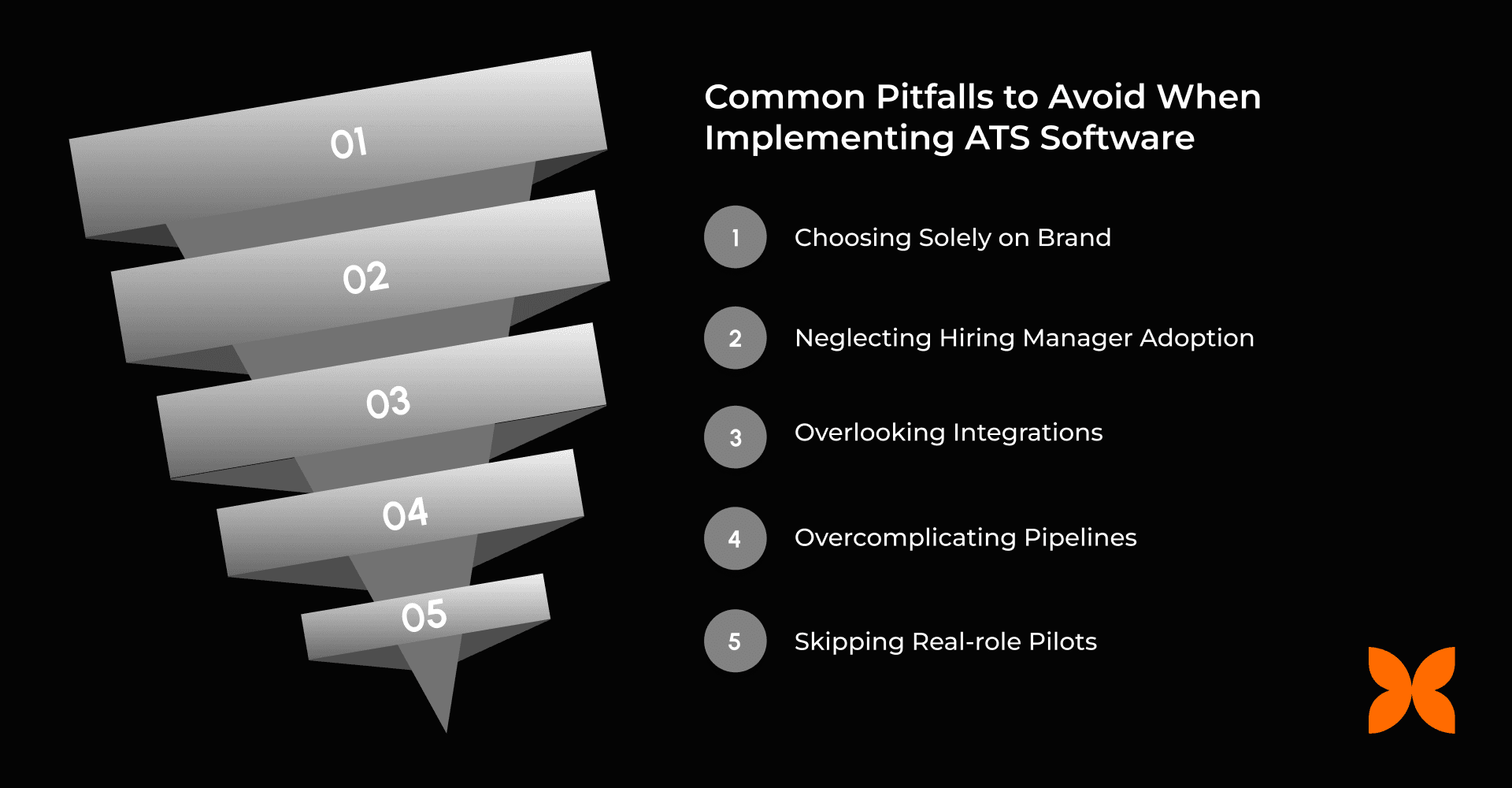
Choosing Solely on Brand: Selecting a tool because it’s well-known rather than because it fits your workflow can lead to wasted effort.
Neglecting Hiring Manager Adoption: Without manager buy-in, feedback loops and pipeline updates can stall.
Overlooking Integrations: Calendars, email, and HR system connections are critical for smooth scheduling and data flow.
Overcomplicating Pipelines: Adding too many custom stages too early can confuse recruiters and slow down hiring.
Skipping Real-role Pilots: Testing the ATS with actual job openings before full rollout uncovers hidden workflow issues.
Avoiding these mistakes ensures your ATS adoption is smooth, efficient, and impactful from day one.
The best ATS software is the one that your hiring managers actually use, and that fits your real workflow. Shortlist three tools from the comparison table, run demos using the same role and pipeline stages, and pilot for a few weeks to see how each performs. Track measurable improvements in feedback speed, time-to-shortlist, interview scheduling, and candidate drop-offs.
A thoughtfully chosen ATS transforms hiring from a scattered, manual process into a structured, collaborative, and data-driven workflow. It saves time, reduces errors, and enhances the overall candidate experience, making every stage of recruitment more efficient and measurable.
1. What is the best ATS software in India?
It depends on your workflow. For teams that want a connected hiring workflow from requisition to onboarding, Craze works well. For fast adoption and easy setup, Freshteam is a good choice. For structured hiring with scorecards and consistent evaluation, Greenhouse is ideal.
2. What features should the best ATS include?
Look for core capabilities like resume parsing, candidate pipelines, interview scheduling, structured feedback and scorecards, reporting dashboards, system integrations, and role-based permissions.
3. What is the difference between ATS and recruitment software?
An ATS is the core system for tracking candidates, stages, and hiring decisions. Recruitment software may include broader features such as sourcing, assessments, onboarding, and HR workflow integrations.
4. How much does ATS software cost in India?
Pricing models vary: per-recruiter, per-user, or tiered plans. Be mindful of hidden costs such as add-ons, integrations, implementation support, or premium analytics modules.
5. Can ATS software reduce time-to-hire?
Yes. Faster interview scheduling, automated reminders, structured feedback loops, and fewer manual bottlenecks all help shorten the hiring cycle.
6. How long does ATS implementation take?
Implementation can range from a few days for simple workflows to several weeks for complex processes, integrations, and team training.
