


Offboarding an employee involves several interconnected tasks, from paperwork and knowledge transfer to system access management and compliance checks. Without a structured approach, the process can become fragmented, time-consuming, and error-prone.
A defined offboarding process ensures all steps are completed efficiently, responsibilities are clear, and organisational standards are maintained. For Indian businesses handling complex workforces, a structured approach is essential to manage exits smoothly, maintain accountability, and conclude employment professionally.
This blog outlines the essential steps, best practices, and common pitfalls in the offboarding process. Following a structured approach helps organisations complete exits consistently, maintain standards, and reduce administrative challenges.
Structured offboarding acts as your final safeguard, protecting company data, ensuring legal compliance, and securing assets.
The process protects your reputation and future talent pipeline by maintaining positive relationships with departing staff (boomerangs).
Security is paramount; always revoke digital access immediately, before the employee's final working hour.
Effective offboarding requires coordination across HR, IT, and Finance, paired with timely final settlements and knowledge transfer.
Avoid key mistakes, such as inconsistent processes or ignoring exit feedback, which can sabotage security and future retention efforts.
A well-managed offboarding process is the formal, structured sequence of actions your organisation takes when any employee leaves the business, regardless of the reason, be it resignation, retirement, or termination. It acts as the company's final safeguard, ensuring that all tasks are formally handed over, responsibilities are clearly reassigned, and access is revoked.
The primary function of this process is to secure your interests. It guarantees that proprietary company data and physical property are returned, and all administrative duties, along with legal and final settlement requirements, are completed without error. By standardising these steps, you maintain operational control and compliance right up to the final day.
Understanding this formal process is crucial, but to grasp its significance, we must examine why structured offboarding matters to your organisation's security and reputation.
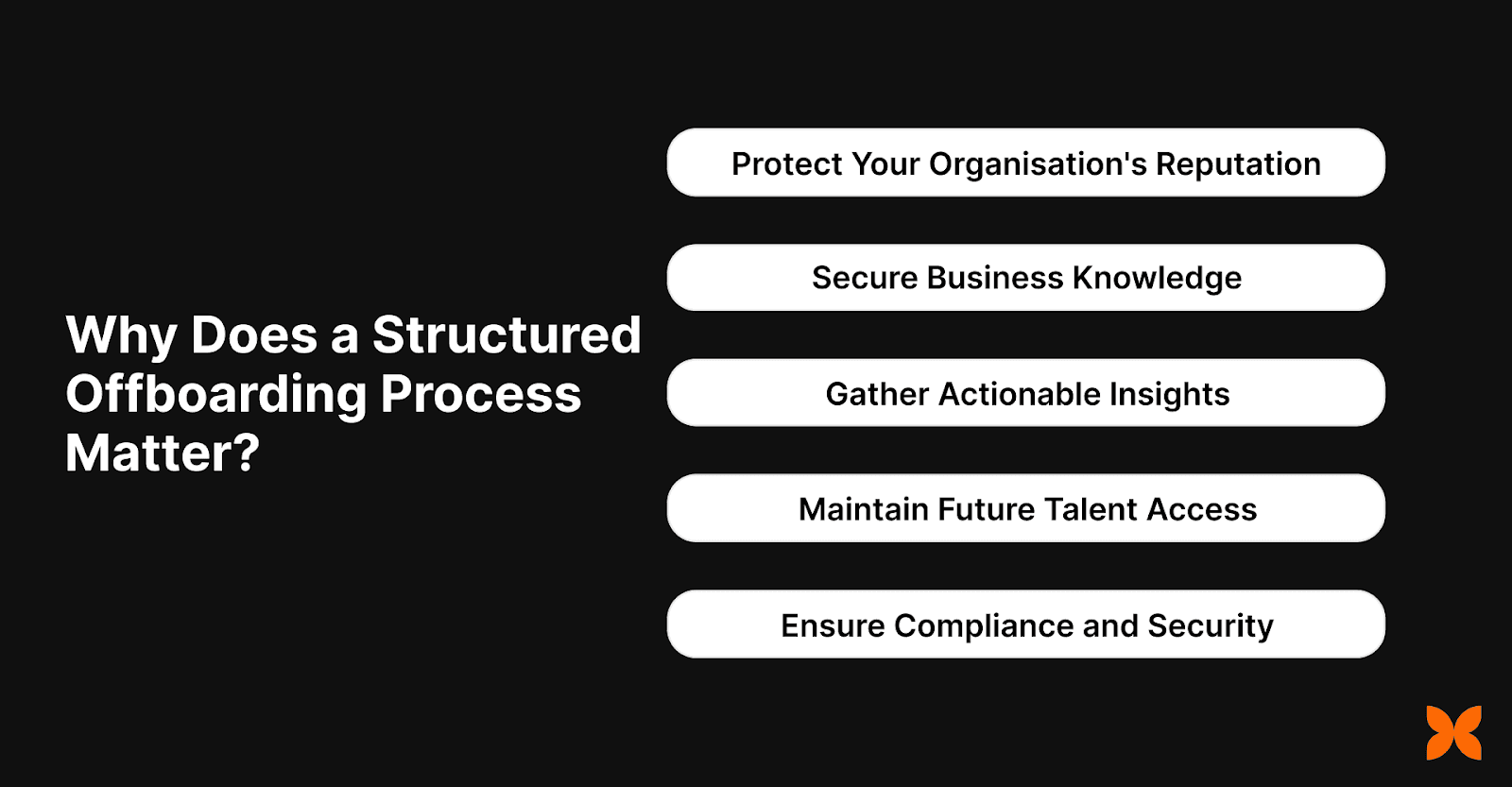
Offboarding is the critical final chapter that protects your organisation's financial stability and future talent pipeline. It provides the necessary controls to convert an unavoidable departure into a genuine business opportunity.
Here is why a meticulous offboarding process delivers significant return on investment:
Protect Your Organisation's Reputation: Professional, respectful offboarding demonstrates that your company values its people, even as they leave. This positive sentiment enhances your employer brand, making it much easier to attract and recruit future top talent.
Secure Business Knowledge: A formal process ensures that critical knowledge, responsibilities, and ongoing projects are fully transferred and documented before the final day, minimising operational downtime.
Gather Actionable Insights: Exit interviews provide unfiltered feedback on management practices, team dynamics, and operational gaps. Analysing this data helps you proactively fix problems that cause high staff turnover.
Maintain Future Talent Access: A smooth exit preserves positive relationships with alumni. Former employees who leave on good terms are valuable boomerangs, potential contractors, partners, or returning senior staff, reducing future hiring costs.
Ensure Compliance and Security: The process guarantees all legal, regulatory, and company policies are met. Crucially, it mitigates the risk of costly data breaches by ensuring all digital access is revoked immediately.
The practical benefits of handling employee exits are clear. Now, let's walk through the six essential steps to improve the offboarding process and ensure a secure, respectful exit every time.
Also Read: Mastering HR Policies: 8 Key Policies Every HR Leader Needs to Draft Well
Managing an exit involves more than just collecting a laptop; it's a careful orchestration of security, legal, and operational tasks. A systematic approach ensures you safeguard company interests while honouring the employee's contribution.
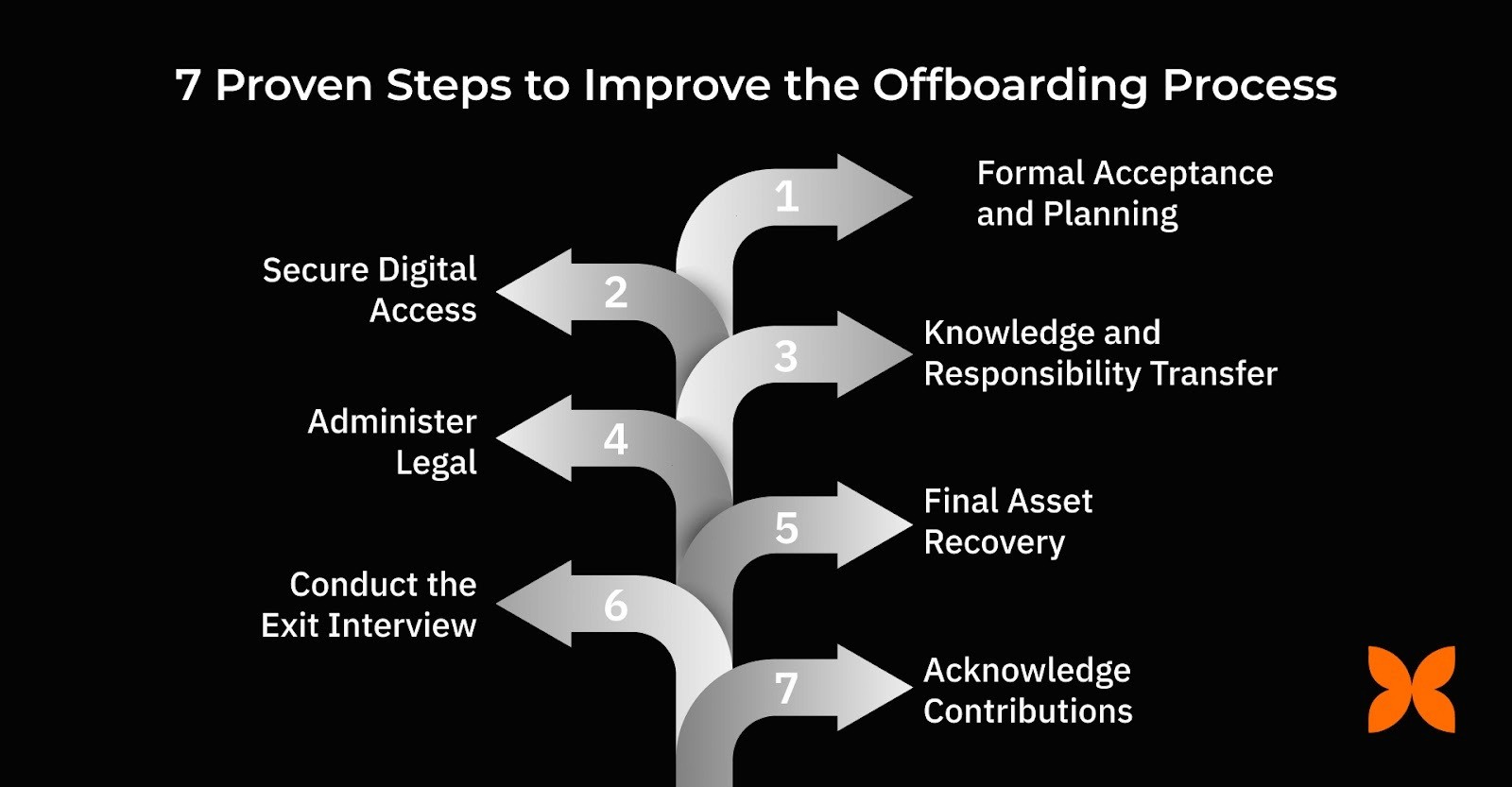
Here are the seven essential steps to structure your offboarding process effectively:
Step 1: Formal Acceptance and Planning
The process begins the moment you receive the resignation. Formally accept the departure and clarify the final working day and notice period. This official documentation sets the professional tone for the exit and immediately triggers the internal planning process for HR, IT, and the direct manager.
Step 2: Secure Digital Access
This is your priority security step. Immediately revoke or disable all digital access, including system logins, company email, internal communication channels, and access to proprietary databases and cloud storage. Ensure this happens before the employee's final working hour to eliminate any security gap.
Did you know? Modern HR systems, like Craze, eliminate this risk by consolidating access control. You can manage all digital system logins from one dashboard, granting or revoking access to one, multiple, or all related platforms in a single click. This crucial feature helps safeguard overall organisational data integrity immediately upon separation.
Step 3: Knowledge and Responsibility Transfer
Prevent operational gaps by organising a structured handover of critical institutional knowledge, passwords, and ongoing projects. This should involve detailed documentation, shadowing sessions, or the creation of comprehensive process guides, especially for specialised roles. Documenting this transfer protects the company from future dependency risks.
Step 4: Administer Legal and Compliance Paperwork
Ensure all necessary documentation is completed accurately and promptly. This includes non-disclosure agreements (NDAs), signing off on any final settlement forms, processing tax declarations, and completing compliance-related documents required under Indian labour laws. Legal accuracy prevents disputes and ensures regulatory adherence post-exit.
Pro Tip: Automate your offboarding workflow using HR software like Craze to ensure zero compliance errors in final settlement paperwork.
Step 5: Final Asset Recovery and Payroll Settlement
This dual step must be handled efficiently. Collect all company assets (laptops, mobile phones, access cards, confidential documents) and immediately calculate and release the final outstanding salary, benefits, and reimbursements. Prompt, accurate settlements reinforce trust and maintain your professional reputation.
Pro Tip: Utilise integrated HR and IT systems like Craze to streamline equipment management and tracking. This ensures a centralised inventory list, guaranteeing all company assets are noticed and recovered from the exiting employee without fail.
Step 6: Conduct the Exit Interview
The exit interview is your final, valuable opportunity for feedback. Hold a private, candid discussion to understand the employee’s genuine reasons for leaving and gather insights on workplace culture or management issues. Analysing this feedback helps you proactively improve retention for remaining staff.
Step 7: Acknowledge Contributions and Maintain Alumni Relations
Conclude the exit by formally acknowledging the employee’s contributions. Maintaining a respectful relationship is key; former employees can become valuable brand advocates or future referral sources. A positive final interaction strengthens your company’s talent network and employer brand.
While these seven steps outline the broader offboarding framework, teams still need a clear, itemised checklist to execute the process with accuracy. Let’s explore a structured checklist that HR, IT, and managers can follow to ensure nothing critical is missed.
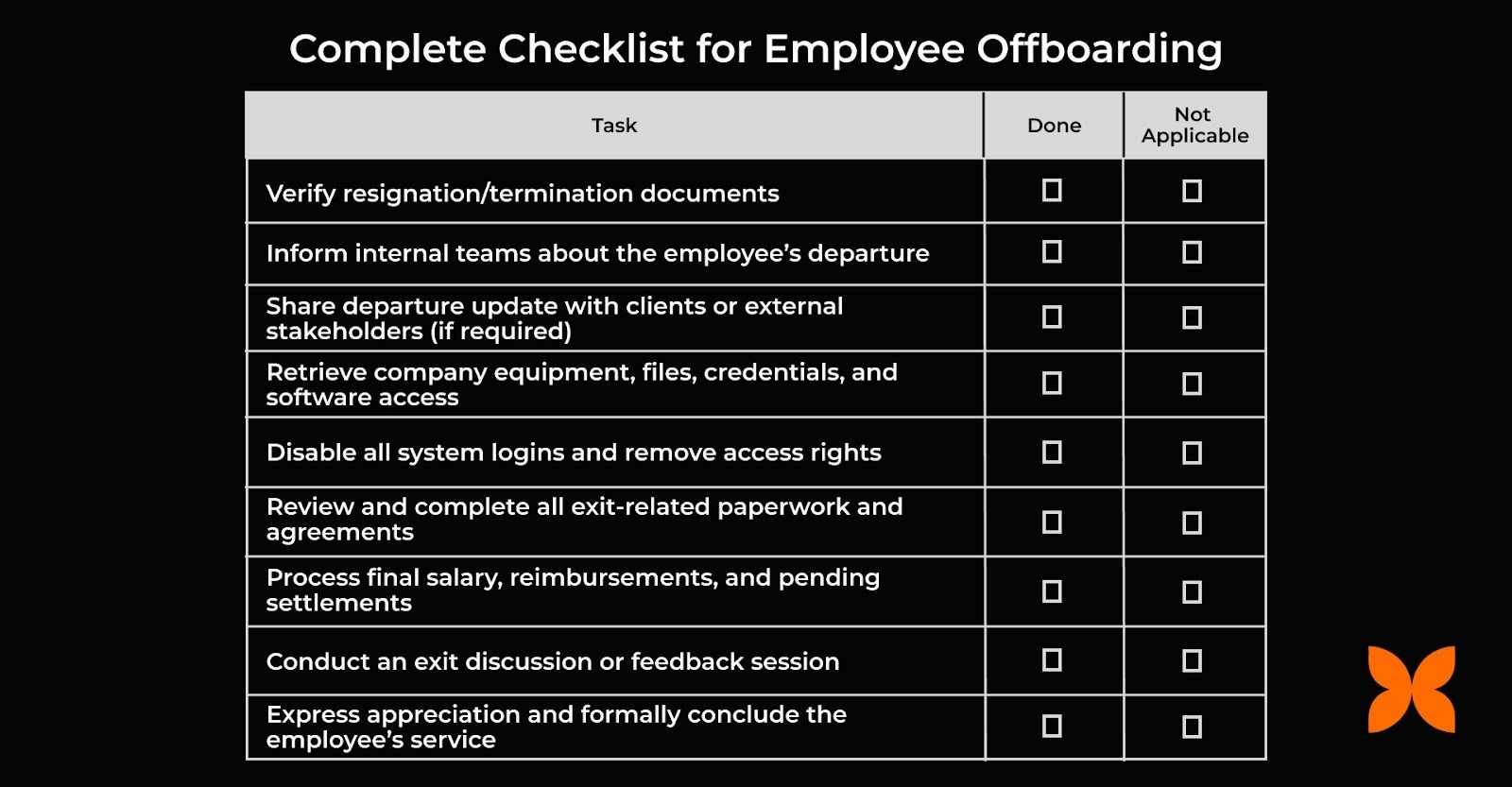
A structured offboarding process helps organisations maintain compliance, protect data, and ensure a positive exit experience for the departing employee. By following a clear checklist, HR teams, managers, and IT departments can complete all administrative, security, and communication tasks without missing critical steps.
The following table provides a simple, ready-to-use format that keeps the entire process organised:
Task | Done | Not Applicable |
Verify resignation/termination documents | ☐ | ☐ |
Inform internal teams about the employee’s departure | ☐ | ☐ |
Share departure update with clients or external stakeholders (if required) | ☐ | ☐ |
Retrieve company equipment, files, credentials, and software access | ☐ | ☐ |
Disable all system logins and remove access rights | ☐ | ☐ |
Review and complete all exit-related paperwork and agreements | ☐ | ☐ |
Process final salary, reimbursements, and pending settlements | ☐ | ☐ |
Conduct an exit discussion or feedback session | ☐ | ☐ |
Express appreciation and formally conclude the employee’s service | ☐ | ☐ |
This simple format ensures every step is tracked, completed, and documented, resulting in a smooth transition for both the organisation and the departing employee.
Next, we will cover the common pitfalls that often sabotage security and compliance efforts.
Even with a defined checklist, the process can fail if key oversights are made. Avoiding these mistakes is essential to prevent compliance issues, operational chaos, and damage to your company's image.
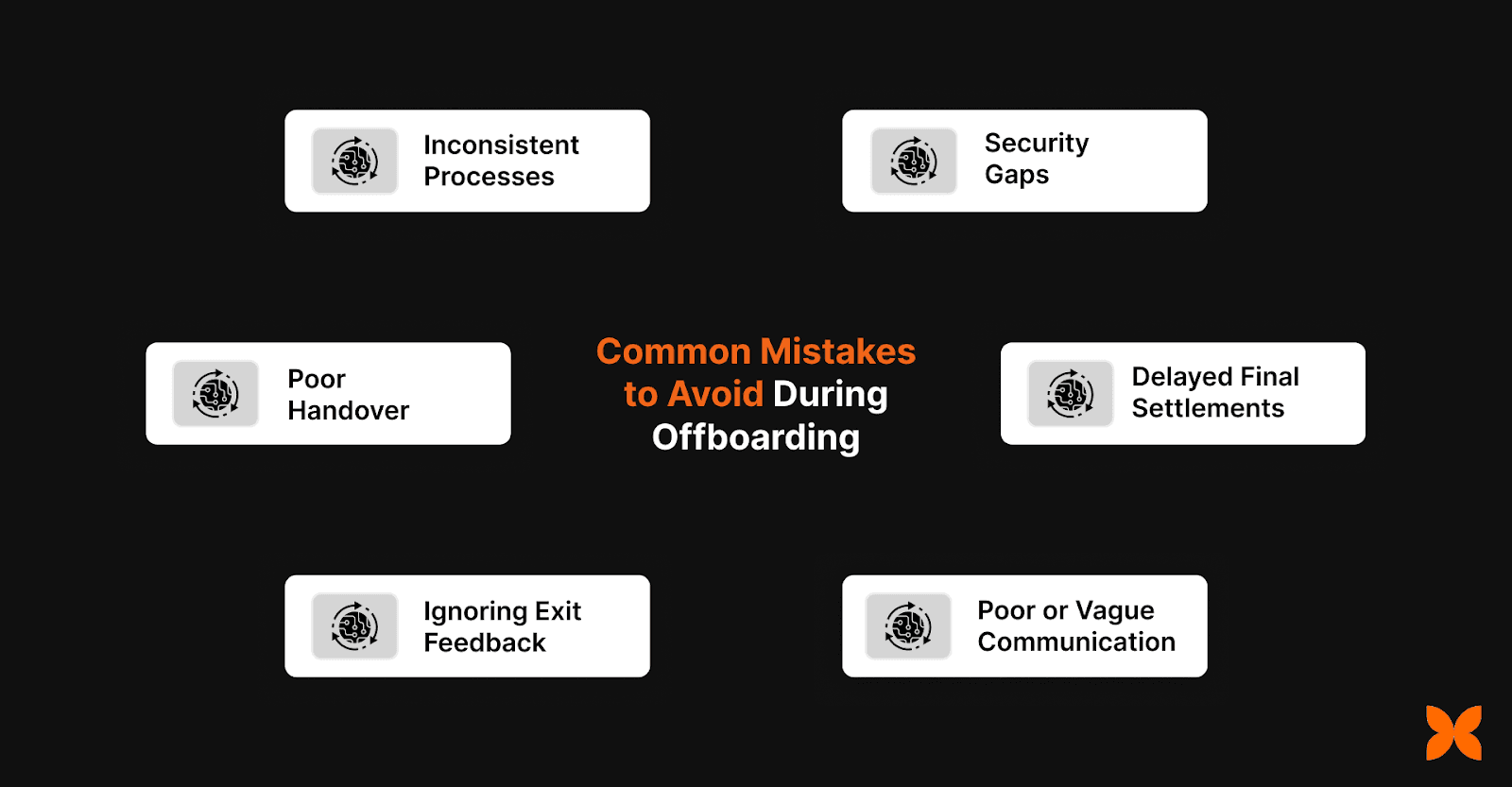
Here are the critical pitfalls you must proactively address:
Inconsistent Processes: Failing to standardise offboarding steps across all departments creates confusion and risks missing security or legal tasks. Consistency ensures clear accountability for HR and managers.
Security Gaps (Delayed Access Revocation): This is the most significant risk. Waiting until the last minute to disable digital access exposes sensitive company data to potential breach or misuse post-exit.
Insufficient Knowledge Transfer: Allowing employees to walk out without a structured handover of responsibilities and critical files disrupts operations. This leaves the remaining teams scrambling and vital knowledge lost.
Delayed Final Settlements: The late processing of final salaries, benefits, or reimbursements is unprofessional and erodes trust. Timely and accurate settlement is mandatory for legal compliance and reputation.
Ignoring Exit Feedback: Disregarding insights gathered during the exit interview wastes a free opportunity to improve workplace culture, retention policies, and team management practices.
Poor or Vague Communication: Failing to clearly communicate exit timelines, paperwork requirements, or asset return procedures leads to misunderstandings and a negative experience, tarnishing your employer brand.
Avoiding these common errors forms the foundation of a protective offboarding process. Now, let's look at the positive steps you can take to ensure every exit strengthens your company.
Moving beyond basic compliance, these best practices ensure your offboarding process is efficient, consistent, and actively protects your organisational knowledge and reputation long after the employee departs.
Focus on these key areas to turn employee exits into positive administrative experiences:
Create a Standardised Checklist: Develop a detailed, required checklist covering every step, from system access revocation to legal documentation. Standardisation ensures zero oversight and consistent handling of every exit.
Coordinate Across Departments: Ensure HR, IT, Finance, and the manager work together immediately. This collaboration is vital for secure access management and the timely completion of all administrative and financial tasks.
Support the Departing Employee: Consider offering resources like career guidance, networking support, or counselling. Supporting staff through their transition reflects professionalism and significantly strengthens your employer brand.
Maintain Transparent Communication: Keep open lines of communication throughout the process. Clearly address questions and clarify the final steps to ensure the employee leaves with clarity and respect.
Track and Review Outcomes: Monitor the process's effectiveness using feedback from exit interviews and compliance checks. Analysing this data enables you to improve the offboarding process and prevent future issues continuously.
Implementing these practices helps your organisation manage exits professionally, safeguard operational continuity, and secure strong relationships with former employees.
Managing offboarding manually can be time-consuming and error-prone. Craze centralises HR, IT, and payroll operations in a single system, making it easier to manage employee exits efficiently and accurately.
How Craze Helps:
Equipment Management: Track, provision, and recover company devices with ease, ensuring no assets are missed.
IT & App Access: Automate the revocation of software and system access to maintain security and compliance.
FNF & Final Payments: Streamline full & final settlements, including salary, reimbursements, deductions, and payouts, ensuring accurate and timely closure.
Document & Compliance Workflow: Complete exit paperwork, approvals, and legal forms using structured workflows.
Integrated HR Dashboard: Monitor all offboarding tasks from a single dashboard, reducing manual effort and errors.
With Craze, every employee exit is streamlined, secure, and fully compliant, giving HR teams complete control over the offboarding process.

Also Read: How HR Leaders and Founders Can Automate Employee Off-boarding
A formal, structured offboarding process is essential, not optional. Mishandled employee exits often lead to security breaches, loss of institutional knowledge, and unnecessary compliance risks. By implementing the professional steps, you safeguard your company's valuable assets and ensure every departing employee leaves with a positive final impression, ultimately protecting your reputation.
How can offboarding improve employee engagement for current staff?
A professional and fair offboarding process sets a clear example for remaining employees. Transparent exits build trust in management and reinforce a positive company culture, which directly boosts current staff morale and engagement.
Can offboarding data be used for strategic decision-making?
Yes. Exit interviews and turnover patterns provide candid insights into retention risks, management issues, and training gaps. Analysing this data helps you make informed decisions to fix problems and optimise your workforce.
Should contractors or temporary employees undergo offboarding?
Absolutely. Contractors and temporary staff often have critical system access and knowledge. Formal offboarding ensures that their digital access is revoked immediately and that all obligations are met, protecting company assets and security.
How can offboarding help with knowledge retention?
Offboarding forces the company to actively document processes, conduct proper handovers, and record institutional knowledge. This step reduces the team's dependency on the departing individual and ensures smooth operational continuity.
What role does HR software play in offboarding?
HR software is essential for tracking all required tasks, managing legal documentation, and scheduling interviews. Automation minimises human error, saves HR time, and provides clear visibility, making the entire process efficient and consistent.
