Compensation Policy: Meaning and Free Download
Learn about compensation policies, including salary, bonuses, benefits, and compliance. Download a free editable template for easy implementation. Read more.

Share
TABLE OF CONTENTS
A compensation policy is a formal document that provides a consistent, clear, and compliant structure for all aspects of employee remuneration, including salary, incentives, and benefits.
Key elements include a defined salary structure, eligibility criteria, variable pay rules, and statutory compliance clauses to ensure fairness and legal adherence.
The policy template covers the full employee lifecycle, detailing compensation from the initial pay structure and equity grants through to final severance pay provisions.
Implementing a clear policy secures tangible benefits, such as improved talent acquisition, higher employee retention, reduced legal risk, and accurate financial forecasting.
The goal is to replace pay uncertainty with clarity and objectivity, allowing your team to focus on performance and growth rather than pay disputes.
A compensation policy is the formal document detailing your organisation's official plan for employee pay and rewards. It clearly structures all elements of remuneration, including base salaries, variable pay, incentives, and benefits, ensuring complete consistency across the workforce.
This policy is an indispensable management tool that ensures pay decisions are fair, transparent, and compliant with current labour law. It serves as your guide to confidently attract and keep top talent while safeguarding the business against internal pay disputes and legal risks.
As the function of the policy is clear, let's look at the specific elements it must contain to be effective.
Also Read: Creating a Compensation Strategy: Steps and Benefits
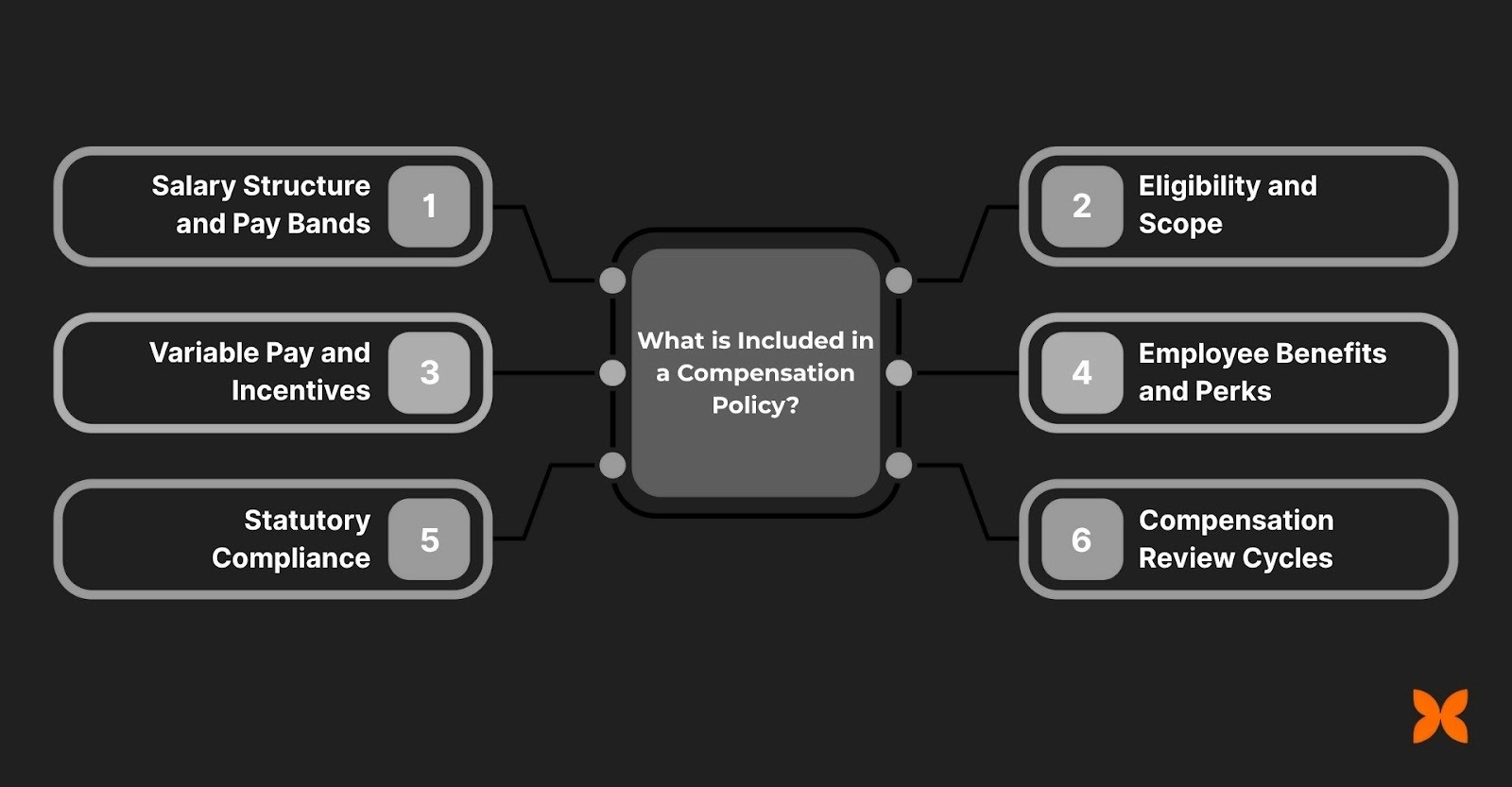
A policy’s effectiveness hinges on its detail and how consistently it is applied. It must cover every financial aspect of the employment relationship to prevent future ambiguity.
Here are the critical components your document must include to ensure comprehensive coverage:
Salary Structure and Pay Bands: Define clear, market-aligned pay scales for every job grade, ensuring consistent, equal pay for similar roles.
Eligibility and Scope: Specify exactly which employees (full-time, part-time, contractors) qualify for which benefits and rewards.
Variable Pay and Incentives: Outline the structure, calculation, and payout frequency for performance bonuses, commissions, profit-sharing, and project-based rewards.
Employee Benefits and Perks: Detail company offerings such as health insurance, retirement plans (like EPF), paid time off, and any additional perks (e.g., wellness or transport allowance).
Statutory Compliance: Guarantee adherence to all local and national labour regulations, including minimum wage, Payment of Gratuity Act, and social security contributions (like ESI).
Compensation Review Cycles: Establish the frequency and process for salary reviews, appraisals, and promotions to manage employee expectations.
With these elements defined, we can now look at how to structure them within a comprehensive, practical policy template.
Also read: Understanding the Importance and Challenges of Compensation Strategies in the Workplace
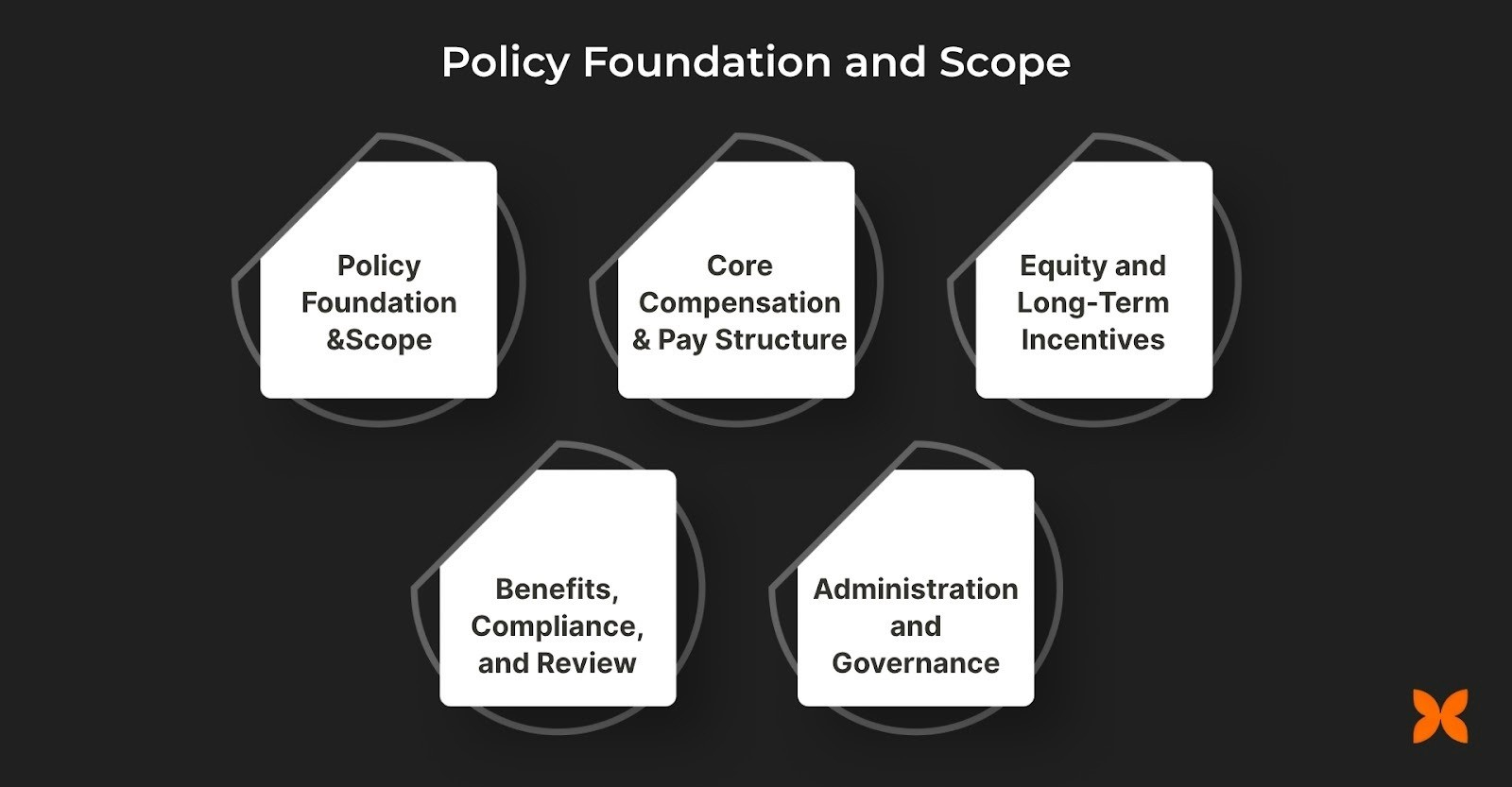
A policy is built on detailed sections that leave no room for guesswork regarding pay. Below is the framework of a comprehensive template, guiding you through the critical clauses necessary to formalise your pay practices. This structure ensures your policy is both fair and fully compliant.
Policy Foundation and Scope
This section lays the groundwork by establishing the policy's legal basis and defining who it covers. A clear scope prevents ambiguity in application across different employee types.
Objective & Purpose: Establish a fair, competitive, and transparent pay structure that drives employee motivation and ensures strict adherence to all applicable Indian labour laws.
Scope & Applicability: Specify that the policy governs the pay and benefits of all full-time employees, noting any specific extensions to part-time, temporary, or contract staff.
Core Compensation and Pay Structure
These clauses detail the mechanisms of pay, from fixed salary to performance-related bonuses. Defining these elements provides transparency to employees and consistency for management.
Compensation Components: Define the three main pillars of pay: Fixed Pay (base salary), Variable Pay (bonuses, commissions), and Benefits (statutory and non-statutory perks).
Salary Structure: Outline the system of pay grades or bands used, confirming that compensation decisions are aligned with market benchmarks and internal equity principles.
Eligibility Criteria: Clarify that eligibility for salary increments, promotions, or specific benefits is based on quantifiable metrics like role, tenure, and performance evaluation scores.
Performance-Based Pay: Detail how variable incentives are calculated and paid out, ensuring they are tied to measurable individual, team, and company-wide targets.
Equity and Long-Term Incentives
This section outlines the organisation's strategic approach to long-term wealth creation and employee retention by offering ownership stakes. The primary goal is to align the financial interests of employees directly with the growth and success of the organisation, rewarding sustained contributions that drive significant value over time.
Form of Incentives: The organisation may grant various long-term incentives, which typically include Stock Options, Restricted Stock Units (RSUs), or other similar equity schemes, to eligible personnel based on their role, seniority, and impact.
Eligibility and Terms: The comprehensive terms governing the long-term incentive program, including specific eligibility criteria, the methodology for grant size determination, detailed vesting schedules, exercise windows, and the rules regarding equity treatment upon various forms of termination, will be fully detailed in the specific Equity Plan Document.
Governing Document: In the event of any conflict or ambiguity between this Compensation Policy and the specific Equity Plan Document (which is approved by the Board/Compensation Committee), the Equity Plan Document shall supersede the terms outlined herein.
Benefits, Compliance, and Review
This section ensures your organisation meets all legal mandates and establishes a predictable cadence for salary reviews, which is essential for managing employee expectations.
Statutory and Company Benefits: Explicitly list all mandatory contributions (e.g., EPF, ESI, Gratuity) alongside all voluntary company-defined perks (e.g., health cover, parental leave, wellness programmes).
Salary Review Process: Set clear rules for the annual review cycle, stipulating that decisions are based on performance metrics, market data, and the company's financial position.
Overtime and Compliance: Commit the organisation to full compliance with all labour laws regarding overtime rules, minimum wages, and timely filing of statutory returns.
Termination and Severance Pay: Clearly define the compensation process upon separation, including final due calculations, mandatory notice periods, and eligibility criteria for severance pay.
Administration and Governance
Proper execution requires assigning ownership and establishing a clear escalation path for pay-related questions or disputes. This ensures accountability for policy upkeep and fairness.
Roles & Responsibilities: Clearly assign policy tasks: HR for communication and compliance, Finance for payroll and deductions, and Managers for objective performance feedback.
Communication & Transparency: Mandate that all pay structures, criteria, and individual compensation letters are communicated clearly to all employees to prevent disputes.
Exceptions & Review: Establish that any compensation exceptions must be approved by senior leadership and define the process for employees to escalate pay-related concerns to HR.
This detailed structure provides the necessary guidance; secure the final, editable document now to formalise your pay practices immediately.
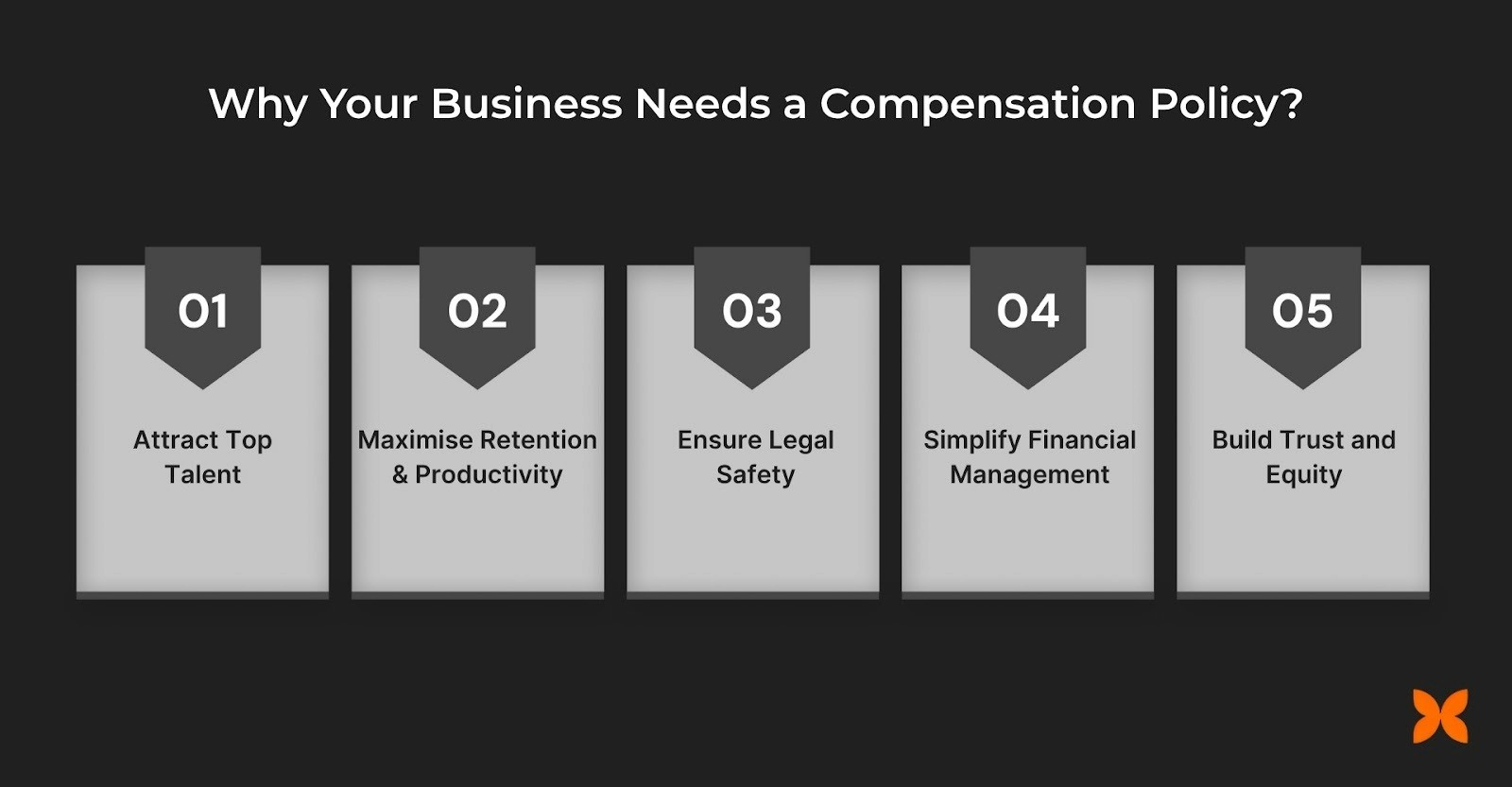
Paying your team fairly and consistently is more than just good practice; it’s essential for securing your best people and protecting your bottom line. A formal pay policy shifts compensation from simply an expense to a foundation of trust and stability for your entire staff.
Here are the direct and measurable benefits of implementing a clear compensation policy:
Attract Top Talent: A well-defined, competitive pay structure significantly boosts your reputation, making it easier to attract and secure high-calibre candidates in a competitive market. It shows prospective employees exactly how they'll be valued.
Maximise Retention and Productivity: By clearly linking performance to pay increases and bonuses, the policy motivates employees to stay engaged and ensures your rewards are driving maximum output toward company goals.
Ensure Legal Safety: The document guarantees all wages, overtime, and statutory benefits strictly comply with local and national labour laws, shielding your business from costly disputes and penalties.
Simplify Financial Management: It provides a clear, structured model for all current and future payroll expenses, allowing the finance team to forecast budgets accurately and manage costs without surprises.
Build Trust and Equity: By establishing objective standards for pay grades and criteria, the policy prevents accidental bias and promotes a workplace where equal work receives equal compensation.
Implementing this policy moves you beyond simply paying people to strategically investing in your company's most important asset.
Also Read: Talent Retention: Key Strategies & Benefits for Employers
Conclusion
The true benefit of a compensation policy is that it replaces uncertainty with clarity. When every person on your team understands exactly how their salary and bonuses are calculated, the guesswork and costly rumours vanish, allowing employees to focus entirely on their work.
A clear, documented pay policy is one of the best ways to protect your business legally while securing your best talent long-term. Don't wait for a pay dispute to happen; use this template now to lock in fairness and establish the consistency necessary for sustained company growth.
Disclaimer
The downloadable template and the information provided in this article are intended for general guidance and educational purposes only. They do not constitute legal advice or a legally binding document. Craze does not accept any responsibility or liability for any decisions made or actions taken based on this content. We recommend reviewing your final policy with legal or HR professionals before implementation.