Employee Exit Interview Policy: Free Sample Template Download
An Exit Interview Policy sets clear guidelines to gather feedback from departing employees, improving workplace culture, retention, and HR practices. Read more.
Share
TABLE OF CONTENTS
Exit Interview Policy: Provides a structured process to gather feedback from employees leaving the organisation.
Why it matters: Identifies workplace issues, improves retention, and ensures consistent, unbiased feedback collection.
What an Exit Interview Policy Looks Like: Outlines purpose, scope, confidentiality, interview formats, and common questions.
How to apply Exit Interview Policy: Schedule timely interviews, assure confidentiality, record feedback, and share insights with management for action.
Support to get started: Use the free downloadable template in this article to create and implement a standardised policy.
An Exit Interview Policy is a formal HR framework that outlines how interviews with departing employees should be conducted. It specifies the purpose of the process, who is responsible for conducting the interviews, when they should take place, and how feedback will be documented.
The policy establishes clear procedures around confidentiality, interview format (face-to-face, virtual, or written), and the type of questions to be asked. It also standardises how records are maintained and ensures that feedback is collected in a consistent and structured manner.
Read More: Understanding Employee Exit Formalities
With the structure clear, let’s turn to the reasons employers in India benefit from putting it in place.
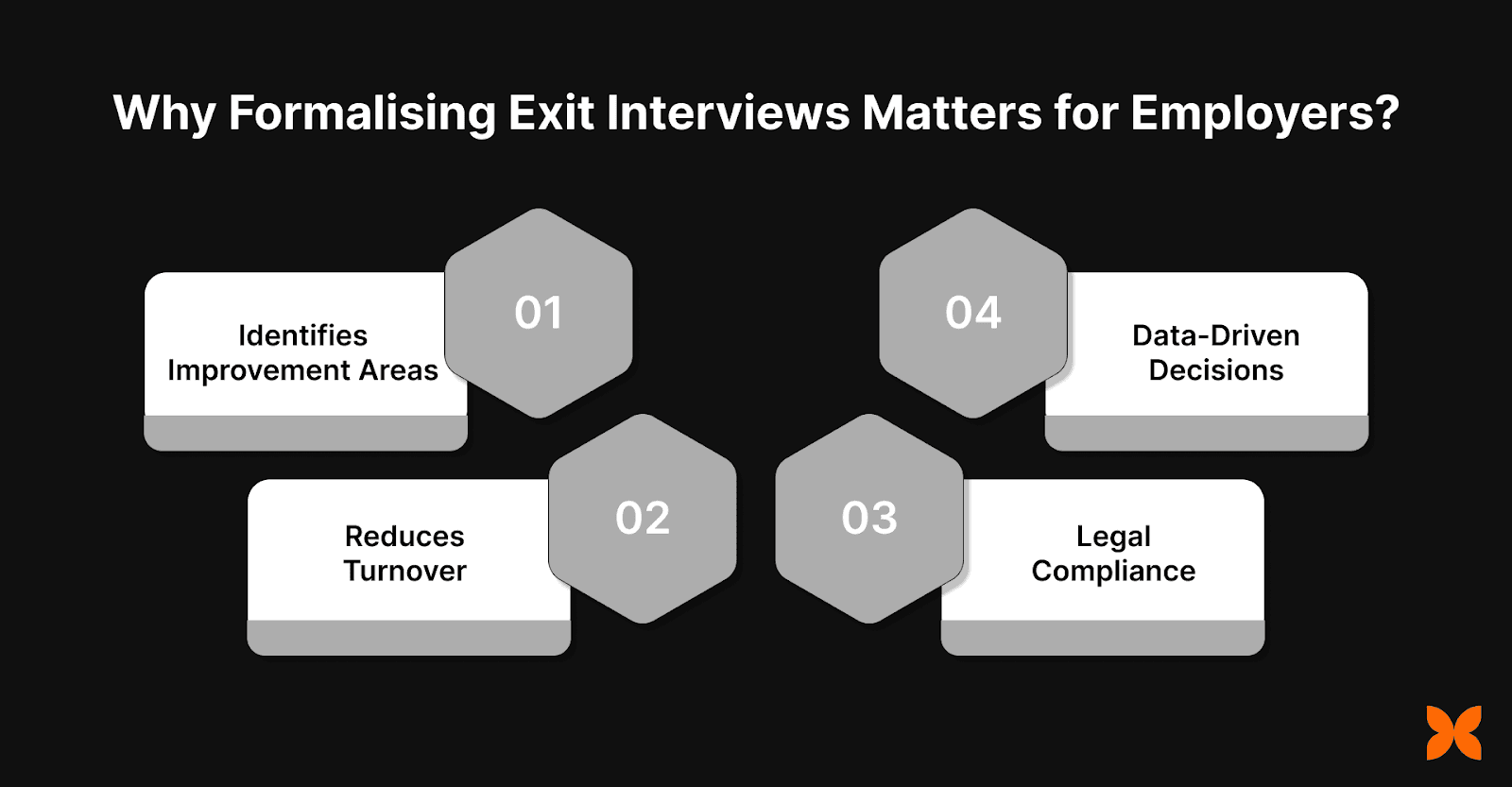
Without structure, exit interviews risk being inconsistent, biased, or entirely skipped. A defined policy ensures that organisations not only collect feedback but also act on it in a meaningful way.
Identifies Improvement Areas: Exit interviews reveal trends or recurring issues that need addressing, whether it’s about company culture, management practices, or job satisfaction.
Reduces Turnover: Understanding why employees leave, helps organisations take preventive measures to retain top talent.
Legal Compliance: Ensures a structured, legally compliant method of gathering feedback while protecting the company’s interests.
Data-Driven Decisions: The policy enables HR teams to compile actionable insights, thereby improving HR practices, recruitment strategies, and employee engagement.
Also Read: Offboarding Process: Best Practices & Steps for HR Experts
Now after knowing the importance, here’s a ready-to-use sample Exit Interview Policy template that provides a structured framework for your organisation.
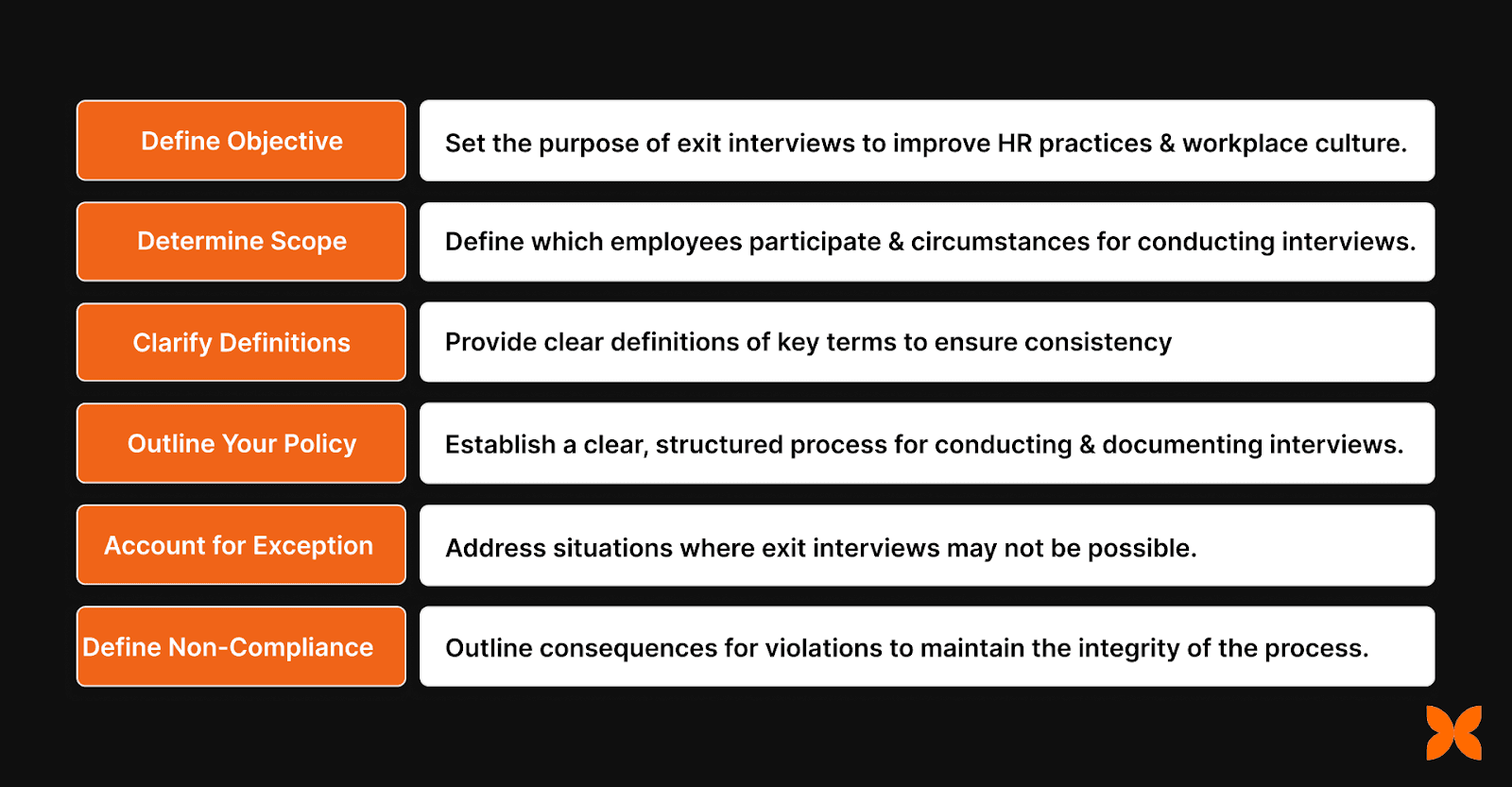
This structured Exit Interview Policy template can be adapted by businesses to standardise employee departures, ensure consistent feedback collection, and clearly define HR and employee responsibilities.
1. Define Your Objective
Exit interviews collect structured feedback from departing employees to identify attrition causes, operational gaps, and areas for improving workplace culture. This data helps refine HR strategies, enhance talent retention, and enhance the employee experience.
Identify Improvement Areas: Analyse employee feedback on work environment, management, processes, and culture.
Enhance HR Practices: Use insights to refine recruitment, onboarding, and retention strategies.
Build Positive Employer Brand: Conducting structured exit interviews demonstrates that the organisation values feedback and continuous improvement.
2. Determine Scope and Applicability
Decide which employees will participate and under what circumstances exit interviews will be conducted. Participation is voluntary, but clear communication ensures employees know their input is valued.
Who Should Participate: All permanent, part-time, and contract employees voluntarily leaving the organisation.
Timing: Conduct interviews ideally during the final week of employment; avoid scheduling on the last day unless unavoidable.
Critical Disclosures: Inform employees that while feedback is confidential, serious issues like harassment or fraud will require internal escalation.
3. Clarify Definitions and Terms
Ensure everyone understands the key terms used in exit interviews and the policy to avoid confusion.
Glossary: Include definitions of “exit interview,” “critical disclosure,” “confidentiality,” and other HR terms relevant to the process.
Consistency: Use standard terminology across departments to maintain clarity for HR teams and employees.
4. Outline Your Policy and Procedures
Define a clear process for conducting exit interviews that ensures consistency, fairness, and actionable insights.
4.1 Schedule and Initiate the Interview
A well-timed and properly initiated exit interview sets the tone for honest, constructive dialogue. Scheduling consistency helps HR maintain professionalism and ensures key insights are not missed during rushed last-day interactions.
Notification Process: HR should contact employees after receiving resignation approval from reporting managers.
Timing Guidelines: Ideally, conduct interviews in the employee’s final week, whenever possible, to avoid last-day interviews.
Follow-up: Regularly compile feedback and present actionable management insights.
4.2 Conducting the Interview
The exit interview should encourage open communication while maintaining neutrality and respect. This phase focuses on gathering detailed feedback to assess workplace culture, leadership effectiveness, and areas needing improvement.
Focus Areas: Collect feedback on safety, security, pay, culture, work environment, and management practices.
Do Not:
Persuade the employee to stay.
Respond defensively to criticism.
Exaggerate or misrepresent feedback.
Duration: Typically 45-60 minutes, completed in one sitting.
Closing: Thank the employee sincerely and maintain a positive tone.
4.3 Handling Critical Disclosures
Some exit interviews may reveal serious workplace issues requiring immediate attention. Proper escalation and documentation safeguard the organisation’s integrity and ensure compliance with legal and ethical standards.
Escalation: Issues such as harassment, discrimination, or fraud must be reported immediately to senior management.
Documentation: Record incidents accurately and maintain secure records for future reference and follow-up.
4.4 Ensure Confidentiality
Maintaining confidentiality builds employee trust and encourages honest participation during exit interviews. Protecting sensitive feedback also shields the organisation from data breaches and reputational risks.
Employee Assurance: Feedback will be presented to management anonymously where possible.
Data Protection: Keep exit interview data secure to prevent leaks or misuse.
5. Account for Special Circumstances and Exceptions
Recognise scenarios where exit interviews may not be feasible and establish clear handling rules.
Declined Interviews: Treat voluntary refusal as an exception.
Absconding Employees: No interview possible, document the exception.
Exceptional Situations: Use discretion for unique cases but maintain consistent policy application.
6. Define Non-Compliance and Consequences
Protect the integrity of the exit interview process and enforce accountability.
Policy Violations: Any tampering with documents, altering statements, or breaching confidentiality constitutes a violation.
Disciplinary Measures: Violations may lead to corrective actions up to and including termination.
Maintaining Integrity: Emphasise the importance of honesty and accuracy in collecting feedback.
Also Read: Best Employee Offboarding Software in India
Here’s a practical, ready-to-use template that you can easily customise for your organisation.
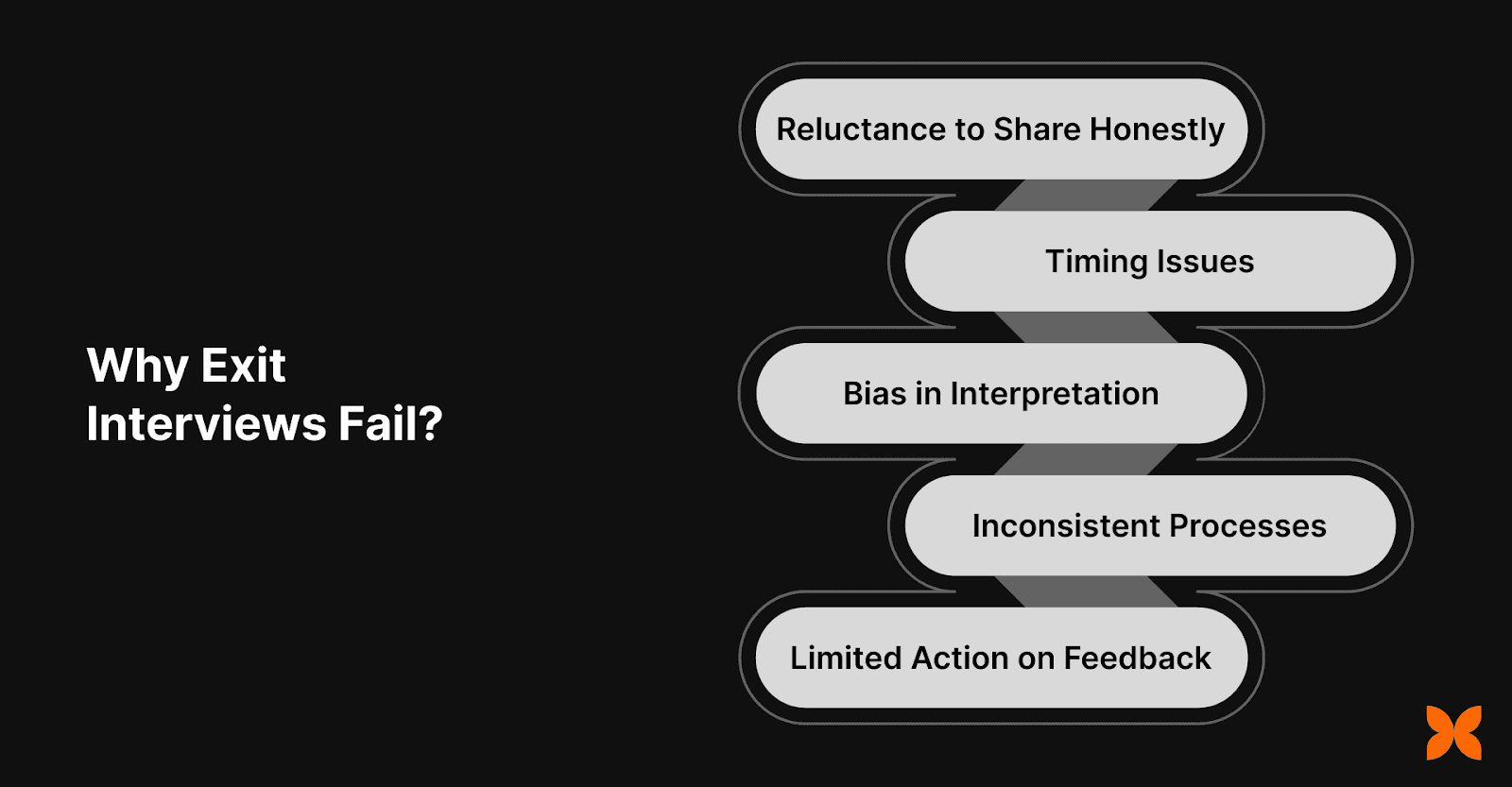
Even with a structured process, exit interviews can face hurdles that affect the quality of insights. Understanding these challenges enables employers to take proactive steps and gather meaningful feedback.
Reluctance to Share Honestly: Departing employees may hesitate to provide truthful feedback due to fear of repercussions or strained relationships. Employers need to emphasise confidentiality and a neutral, safe environment.
Timing Issues: Scheduling interviews too early or too late in the notice period can lead to incomplete or rushed feedback. Conducting the interview ideally in the final two weeks helps balance reflection and accuracy.
Bias in Interpretation: Managers or HR may unintentionally filter or misinterpret responses. Using structured questionnaires and documenting feedback objectively can reduce bias.
Inconsistent Processes: Without a standardised approach, feedback collection can vary across departments, making it challenging to identify trends. A uniform policy ensures all employees are interviewed consistently.
Limited Action on Feedback: Collecting insights without follow-up can demotivate employees from sharing openly. Organisations must have a clear system to analyse feedback and implement changes.
By recognising these challenges upfront, employers can refine their exit interview strategy to maximise value, improve retention, and inform organisational improvements.
Final Thoughts
Employee exits are a critical moment for any organisation, providing a chance to understand employee experiences and identify areas for improvement. A well-structured Exit Interview Policy ensures that feedback is collected systematically, offering insights into workplace culture, management practices, and operational processes.
By capturing this information consistently, organisations can turn departures into opportunities for growth. An effective exit interview process not only supports continuous improvement but also helps foster a more positive work environment for current and future employees.
Disclaimer
The downloadable template and the information provided in this article are intended for general guidance and educational purposes only. They do not constitute legal advice or a legally binding document. Craze does not accept any responsibility or liability for any decisions made or actions taken based on this content. We recommend reviewing your final policy with legal or HR professionals before implementation.