Employee Attendance Policy Sample Template [+Free Download]
Design an effective employee attendance policy for your organisation. Set clear objectives, track attendance accurately, and manage absences. Read more.
Share
TABLE OF CONTENTS
The need for an attendance policy: A clear attendance policy ensures smooth operations by managing employee presence and absences effectively.
Transparency in leave management: It covers various leave types, including planned, unplanned, and authorised absences, providing transparency for both employees and HR.
Accountability and compliance: Outlines the consequences of non-compliance, helping to reduce absenteeism and promoting accountability.
Improved punctuality: Clear attendance expectations improve punctuality, creating a more efficient and productive work environment.
An employee attendance policy is a formal document that outlines the expectations for employee attendance and punctuality within an organisation. It sets clear guidelines on how employees should report absences, how to manage leaves (sick leave, vacation, etc.), and the consequences of non-compliance.
The purpose of the policy is to maintain consistency, minimise disruptions, and ensure fair treatment of all employees. By having a well-documented attendance policy, employers can hold employees accountable for their time at work while also respecting their personal time off.
Why Should You Have an Employee Attendance Policy?
A strong attendance policy is essential for the smooth functioning of any organisation. Here’s why having one in place is crucial:
Prevents Miscommunication: With clear guidelines on attendance, both employers and employees are aligned on expectations, reducing misunderstandings.
Promotes Consistency: A standardised policy ensures that all employees are treated equally when it comes to attendance, time off, and absenteeism.
Boosts Productivity: By tracking employee attendance, employers can identify patterns of absenteeism, manage productivity, and take corrective actions when necessary.
Supports Employee Well-being: By addressing various types of leaves and managing absences efficiently, the policy helps employees feel supported when they need time away from work.
Ensures Compliance: A policy ensures the organisation adheres to labor laws, such as those related to paid time off, sick leave, and family leave.
Also Read: 13 Best Attendance Software in India 2025 for Startups & SMEs [Updated]
An effective employee attendance policy sets clear expectations and provides a structured approach to managing employee attendance, ensuring consistency and fairness across the organisation.
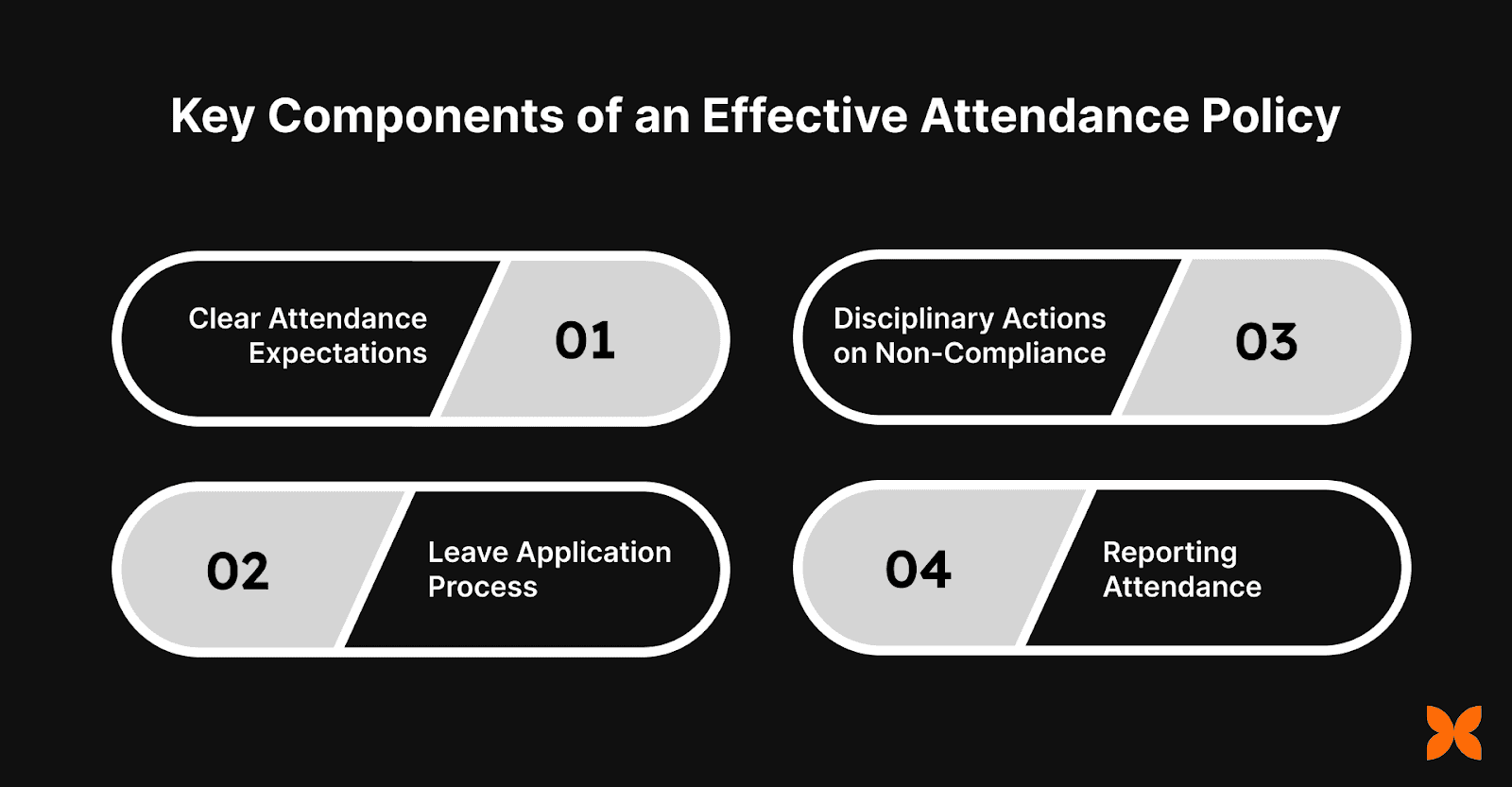
Below are the key components that should be included in a comprehensive attendance policy:
1.Clear Attendance Expectations
Defining clear attendance expectations is essential for setting boundaries and ensuring employees understand their responsibilities. This section should include:
Work Hours: Clearly state the expected work hours for employees (e.g., 9:00 AM to 6:00 PM), along with guidelines on breaks and flexibility (if applicable).
Tardiness Policy: Outline acceptable levels of tardiness (e.g., 5 minutes late is allowed, beyond that may require documentation), and the procedure employees must follow if they are late (e.g., informing their manager ahead of time).
Absenteeism Limits: Define the maximum number of unplanned absences allowed within a specific period (e.g., three sick days per quarter) and how these will be tracked.
Business Needs Alignment: Ensure that the attendance expectations align with operational requirements, particularly in customer-facing roles or positions with strict project deadlines.
By setting these expectations, the policy prevents ambiguity and helps employees understand the importance of being punctual and present.
2.Leave Application Process
A streamlined and easy-to-understand leave application process helps maintain transparency and reduces confusion. The process should be well-defined and include:
Leave Request Guidelines: Outline how employees can request leave, including timelines (e.g., submit leave requests at least one week in advance for vacation leave).
Leave Documentation: Specify any required documentation (e.g., medical certificates for sick leave, proof of a family emergency for emergency leave) to ensure legitimacy and avoid misuse.
Leave Approval Process: Clearly define the approval process for leave requests, including who is responsible for approving leave (e.g., direct manager or HR department) and the timeline for decisions.
Emergency Absences: Define the process for emergency leave requests, such as calling in sick, and provide guidelines on how soon an employee should inform their manager if they cannot attend work due to unforeseen circumstances.
Leave Tracking System: Employees should be aware that their leave requests will be tracked in the company's leave management system for transparency and accountability.
This component ensures that employees can easily request leave while maintaining smooth operations for the business.
3.Disciplinary Actions for Non-Compliance
It is important to address the consequences of habitual absenteeism or tardiness to maintain fairness and accountability within the workplace. The policy should outline:
Consequences of Unauthorised Absences: Define the consequences for failing to follow the proper leave request process or taking unapproved leave (e.g., verbal warnings, written warnings, or even termination for repeated violations).
Tardiness Penalties: Specify penalties for repeated tardiness, such as docking pay after a certain number of late arrivals or requiring employees to make up lost time.
Excessive Absenteeism: Outline the consequences of excessive absenteeism, especially if it impacts business operations (e.g., additional documentation required after a certain number of sick days, or probationary review for frequent absences).
Appeal Process: Provide employees with an opportunity to appeal any disciplinary action taken against them, ensuring that they have a chance to explain extenuating circumstances (e.g., a family emergency).
This section ensures that there are clear, fair, and consistent penalties for non-compliance, encouraging employees to adhere to the policy.
4.Monitoring and Reporting Attendance
Regular monitoring and reporting mechanisms are essential for maintaining compliance with the attendance policy and ensuring that attendance-related data is up-to-date and accurate. This should include:
Attendance Tracking Systems: Implement an automated or manual system to track attendance, such as electronic time clocks, attendance management software, or spreadsheets. This helps managers quickly identify patterns in attendance, such as frequent tardiness or absenteeism.
Regular Attendance Audits: Conduct regular audits of employee attendance records to identify issues before they become problematic. This ensures that employees are following the policy and that absences are properly documented.
Reporting Mechanisms: Provide a clear system for reporting attendance data, both for employees (e.g., submitting leave requests) and managers (e.g., reviewing team attendance). Managers should receive regular updates on their team’s attendance records to quickly identify and address any potential issues.
Privacy and Confidentiality: Ensure that attendance data is handled confidentially and that only authorised personnel have access to it. Employee attendance records are sensitive, and it is essential to protect this data in compliance with data protection regulations.
Having these tracking and reporting mechanisms in place enables timely intervention and ensures that the policy is being followed consistently across the organisation.
Also Read: How to Track Employee Attendance Efficiently?
The next step is to put the policy into action with a detailed sample attendance policy template, which you can easily customise for your organisation’s needs.
A well-written employee attendance policy ensures clear expectations, smooth operations, and legal compliance in the workplace.
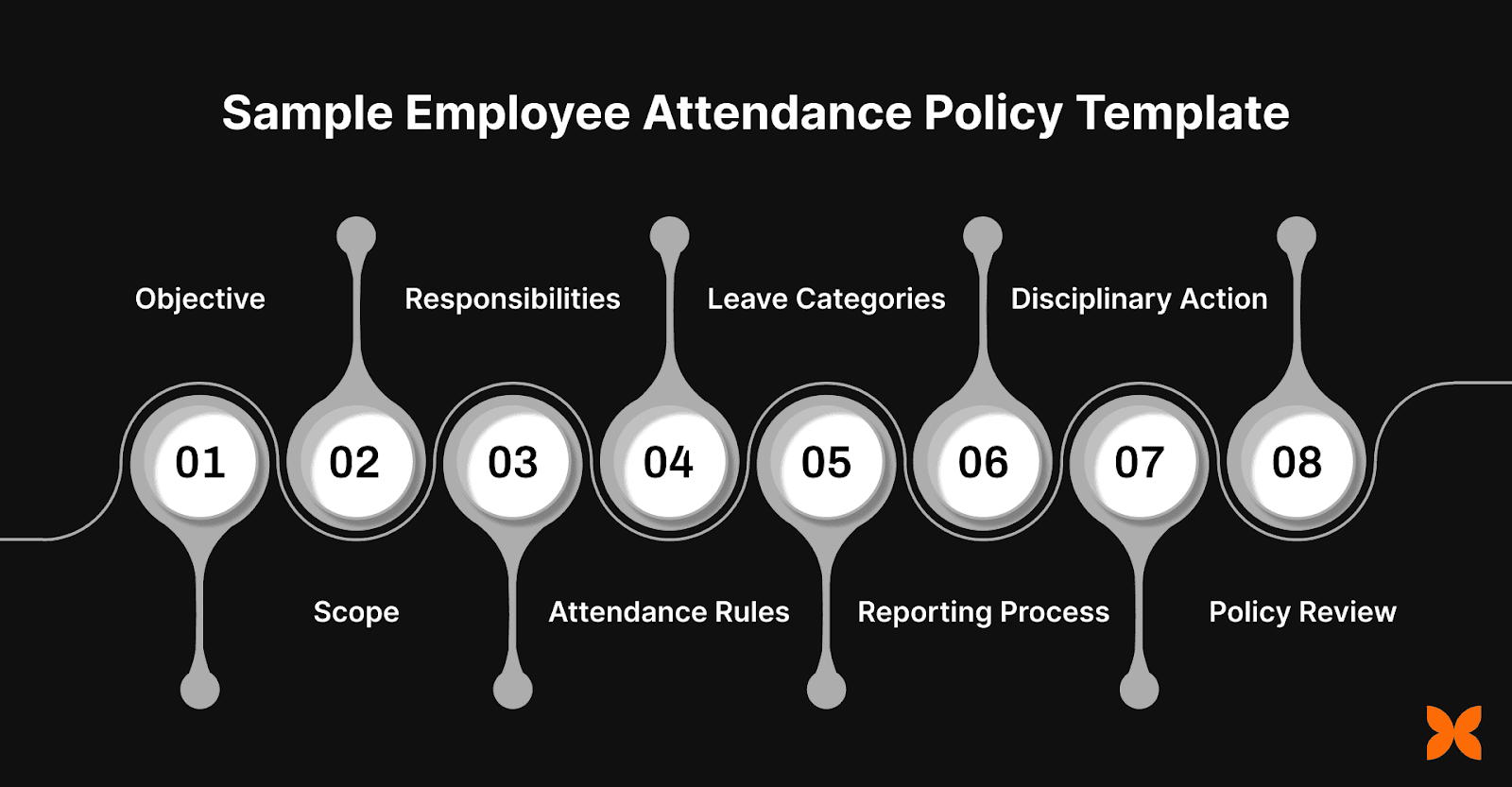
Below is a comprehensive sample template that you can use to create your own policy:
1.Objective
The objective of this policy is to outline the company’s expectations regarding employee attendance, punctuality, and absences. It aims to promote fairness, consistency, and accountability while ensuring minimal disruption to business operations.
2.Scope
This policy applies to all full-time employees of [Company Name], who are subject to the company's attendance requirements. Part-time employees, contractors, and temporary staff may be governed by separate policies as applicable.
3.Responsibilities
When employees and employers both understand their responsibilities, it ensures that your organisation runs smoothly and fairly while keeping employees accountable and engaged.
Employee Responsibilities:
Arrive on time for scheduled shifts.
Notify the supervisor promptly when unable to attend work or if running late.
Follow the proper leave application process for planned or unplanned absences.
Employer Responsibilities:
Communicate the attendance policy clearly to all employees.
Ensure all attendance records are accurate and up-to-date.
Address any attendance issues in a timely and fair manner.
4.Attendance Rules
Clear attendance rules help ensure that all employees adhere to the expected standards. These rules are crucial for maintaining productivity and avoiding disruptions.
Work Hours: Define the standard work hours and break times (e.g., 9 AM to 6 PM, Monday through Friday).
Tardiness: Clearly state acceptable limits for tardiness (e.g., arriving 10 minutes after the scheduled start time is considered tardy).
Absenteeism: Specify how many days of unexcused absenteeism are allowed before further action is taken.
Flexible Working: If applicable, explain the procedure for flexible hours or remote work.
5.Types of Leave
This section provides an overview of different types of leave that employees can request, along with the procedures for each.
Annual Leave: Employees are entitled to [X] days of paid annual leave each year. Employees must submit leave requests at least [Y] days in advance.
Vacation Leave: Employees are entitled to [X] days of paid vacation leave per year.
Sick Leave: Employees must notify their supervisor on the first day of illness and provide a medical certificate for absences exceeding [Z] days.
Personal Leave: Up to [X] days of unpaid leave can be requested for personal reasons with prior approval.
Emergency Leave: In cases of personal emergency, employees should inform their manager as soon as possible and provide relevant documentation if requested.
6.Reporting Procedures
Clear reporting procedures are essential to manage absences and ensure accurate record-keeping.
Leave Requests: Employees must submit leave requests through the company’s designated HR system or via email at least [Y] days in advance, except in emergencies.
Notification of Absence: Employees should notify their direct supervisor before the start of their shift if they are unable to attend work due to illness or an emergency.
Return to Work: Upon returning from an extended leave, employees must notify HR and submit any required documentation.
7.Disciplinary Action
It is important to outline the consequences of non-compliance with the attendance policy. This ensures accountability and fairness in handling attendance issues.
Verbal Warning: For first-time or minor violations (e.g., tardiness or short-term absenteeism), employees will receive a verbal warning.
Written Warning: After multiple violations or prolonged absences, a written warning will be issued.
Suspension: Continued failure to comply with the attendance policy may result in temporary suspension.
Termination: If absenteeism or tardiness continues despite warnings, termination may be considered after consultation with HR.
8. Policy Review
This policy should be reviewed regularly to ensure it remains aligned with the company’s operational needs and complies with any legal updates.
Annual Review: The attendance policy will be reviewed annually to ensure its effectiveness.
Legal Compliance: Any updates to labour laws or local regulations will be incorporated into the policy.
Employee Feedback: Feedback will be collected periodically from employees to identify any challenges or improvements in the policy.
This employee attendance policy template ensures clarity and fairness in managing attendance. Below is a free template that provides a clear and structured framework to manage attendance efficiently, ensuring consistency and fairness across your organisation.
Also Read: Improving Employee Attendance at Work: A Simple Guide
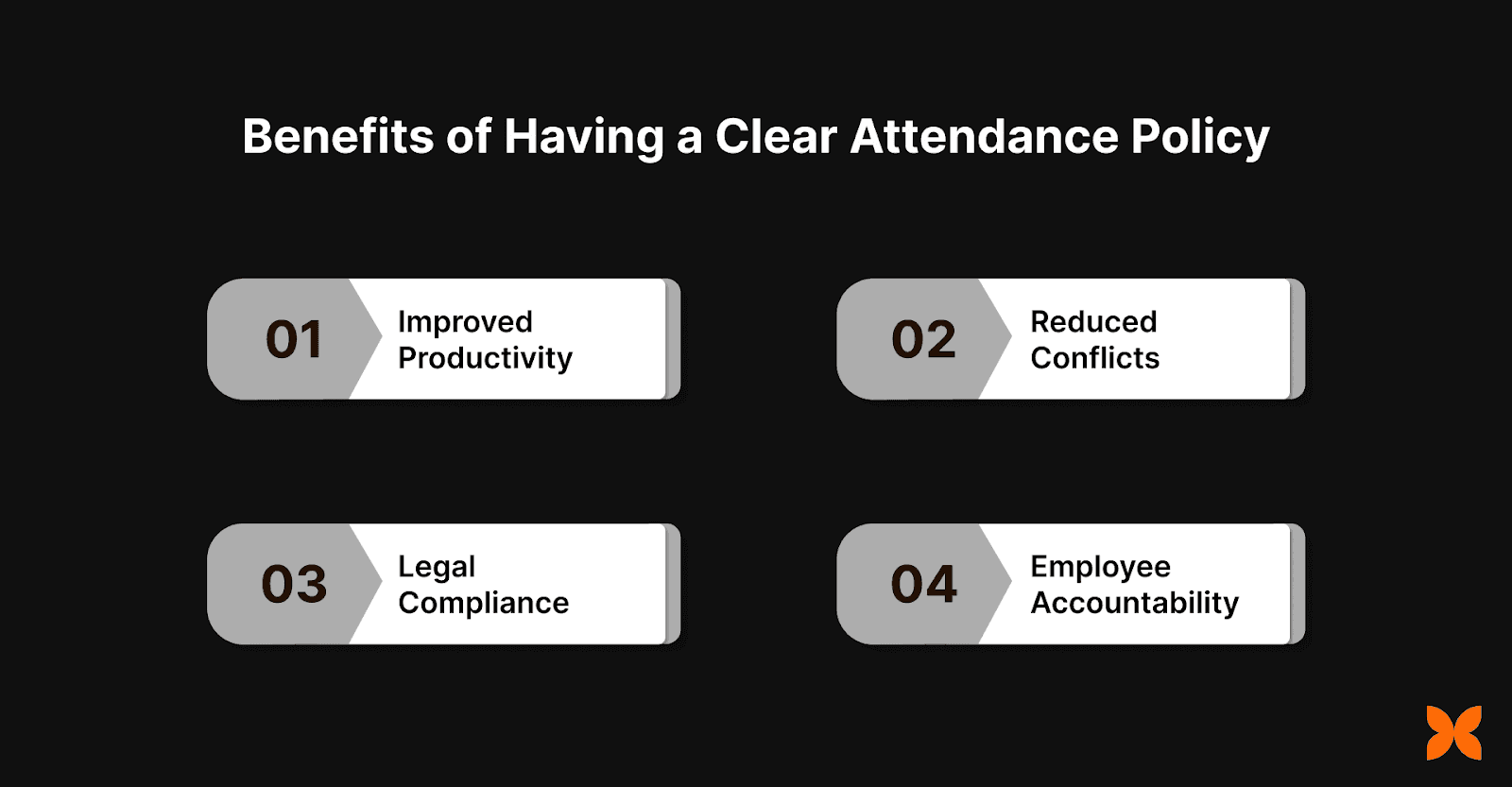
A well-defined attendance policy offers several key benefits that can positively impact both employees and the organisation.
Improved Productivity: Reduces absenteeism, increases focus on work and enhances productivity.
Reduced Conflicts: Helps prevent misunderstandings or disputes between employees and management, creating a more harmonious work environment.
Legal Compliance: Ensures that the organisation stays compliant with labour laws and protects employee rights, reducing the risk of legal issues.
Enhanced Employee Accountability: Promotes a culture of responsibility, where employees are more likely to take ownership of their attendance and punctuality.
Also Read: What is an Attendance Management System? Key Features & Benefits
How to Implement Employee Attendance Policy in Your Organisation
Implementing a successful employee attendance policy requires careful planning, clear communication, and ongoing monitoring. Here’s a structured approach to ensure the policy is effectively put into practice:
1. Draft the Policy
Begin by clearly defining the scope of your attendance policy. Ensure that it addresses all key aspects, including work hours, reporting procedures for absences, sick leave, vacation leave, and tardiness. The policy should align with your company’s values, culture, and legal requirements. Be sure to include definitions for acceptable and unacceptable attendance, as well as clear guidelines for leave applications.
2. Consult Legal Advisors
Ensure that your attendance policy complies with local labor laws, including regulations regarding sick leave, holiday entitlements, and family leave. Legal counsel can help ensure the policy protects both the employer’s and employees’ rights and that the company is compliant with relevant regulations.
3. Communicate the Policy to Employees
Once the attendance policy is finalised, communicate it to all employees through a formal announcement or meeting. Make sure employees fully understand the policy by holding training sessions or providing an FAQ document. Employees should be informed about the expectations, the reporting process, and any penalties for non-compliance.
4. Set Up Attendance Tracking Systems
Implement an efficient system to track employee attendance. This could be an automated system or software that logs work hours, absences, and tardiness. Ensure that the system is user-friendly and allows for easy access and monitoring. For example, you might use biometric time clocks, online attendance management tools, or simple spreadsheet trackers.
5. Enforce the Policy Consistently
For the policy to be effective, it needs to be applied consistently. Supervisors and HR personnel should regularly monitor attendance data and address any issues promptly. Ensure that disciplinary actions for non-compliance are clear and followed through. This includes addressing frequent tardiness, unauthorised absences, or failure to report in a timely manner.
6. Review and Adjust the Policy Regularly
The work environment is constantly evolving, and so are employees’ needs. Review the attendance policy regularly to ensure that it remains relevant and addresses any changes in business operations, labour laws, or employee needs (e.g., remote work or flexible scheduling). Seek employee feedback to improve and adapt the policy when necessary.
7. Make it Part of the Company Culture
Incorporate the attendance policy into your company’s broader culture by emphasising the importance of punctuality, reliability, and responsibility. Recognise employees with excellent attendance records and encourage a healthy work-life balance to prevent burnout.
Conclusion
A well-defined employee attendance policy is crucial for creating a productive, accountable, and transparent work environment. By clearly outlining attendance expectations, leave procedures, and consequences for non-compliance, the policy helps to minimise absenteeism, reduce conflicts, and ensure smooth operations across the organisation. It also ensures compliance with labour laws, protecting both employees and the company from legal risks.
Disclaimer
The downloadable template and the information provided in this article are intended for general guidance and educational purposes only. They do not constitute legal advice or a legally binding document. Craze does not accept any responsibility or liability for any decisions made or actions taken based on this content. We recommend reviewing your final policy with legal or HR professionals before implementation.